

Sheet Metal Duct Production Solutions
HVAC Duct Fabrication Machines
Machinery for producing rectangular, round and spiral HVAC ducts, selected according to the duct drawings, material, thickness, connection system, production workflow and required output.
Types in this category
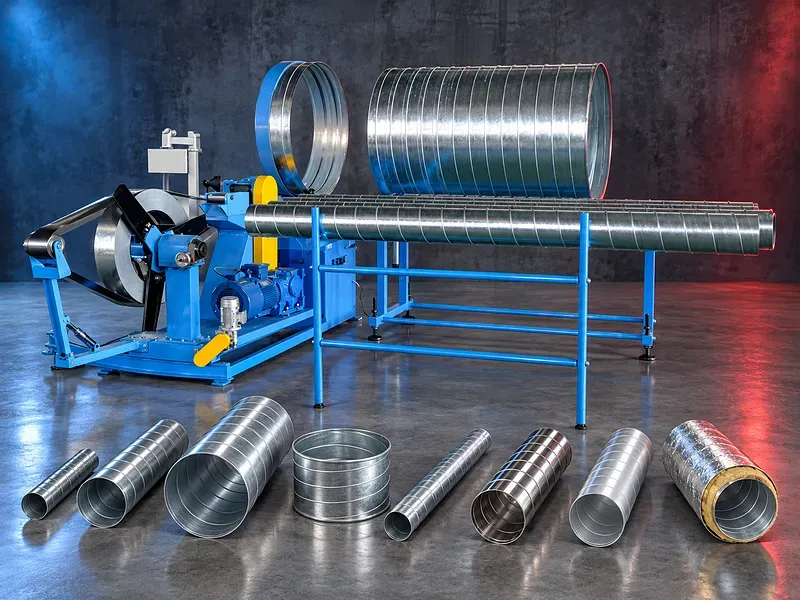 Spiral Duct Forming MachineA forming machine for producing round spiral air ducts from compatible metal strip. Machine selection depends on duct diameter, material, strip thickness and width, seam type, cut length, and production target.
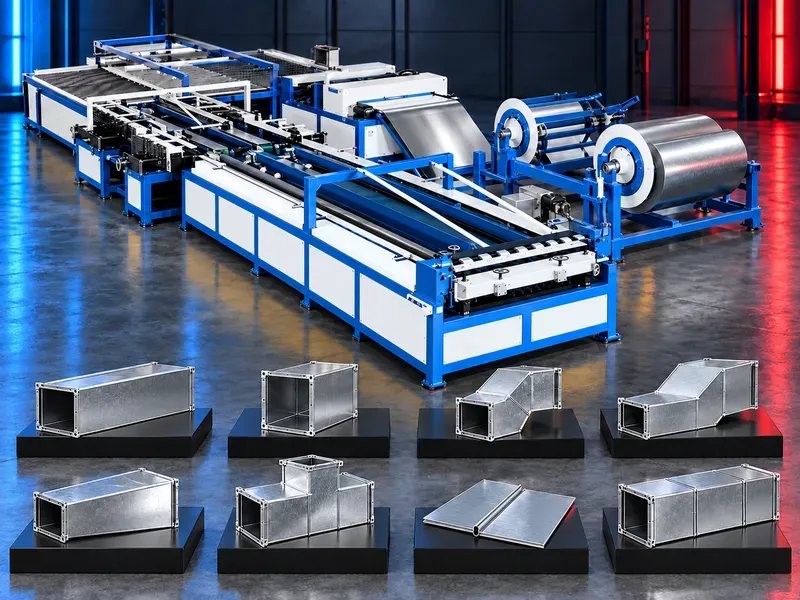 U Shape Automatic Duct Production LineA U shape automatic duct production line converts approved sheet metal coils into prepared duct sections through a coordinated sequence that may include uncoiling leveling beading punching shearing locking flange forming and folding. The correct configuration depends on duct type material thickness dimensions flange system output target and factory layout.
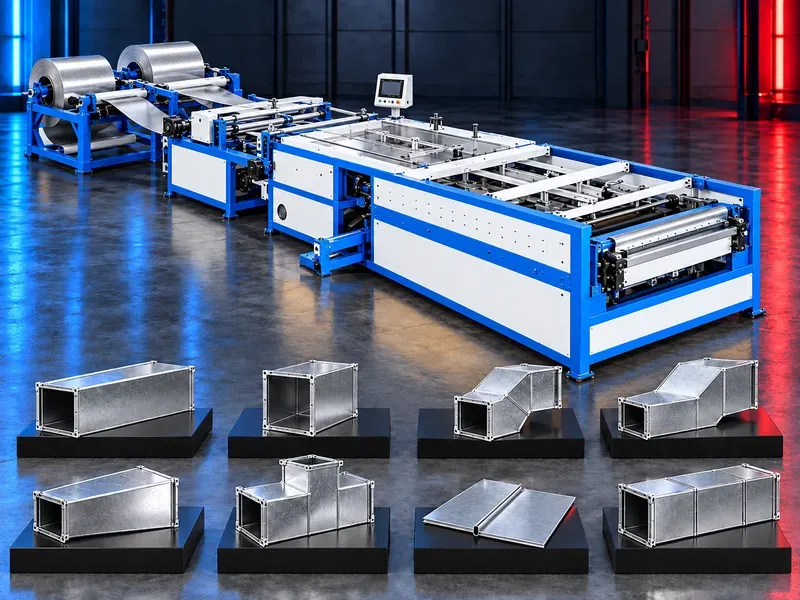 Automatic Duct Production LineAn automatic duct production line converts approved sheet metal coils into prepared rectangular HVAC duct blanks and folded sections through a coordinated linear workflow. Depending on the verified configuration it may integrate uncoiling leveling beading punching shearing transfer locking flange forming and folding
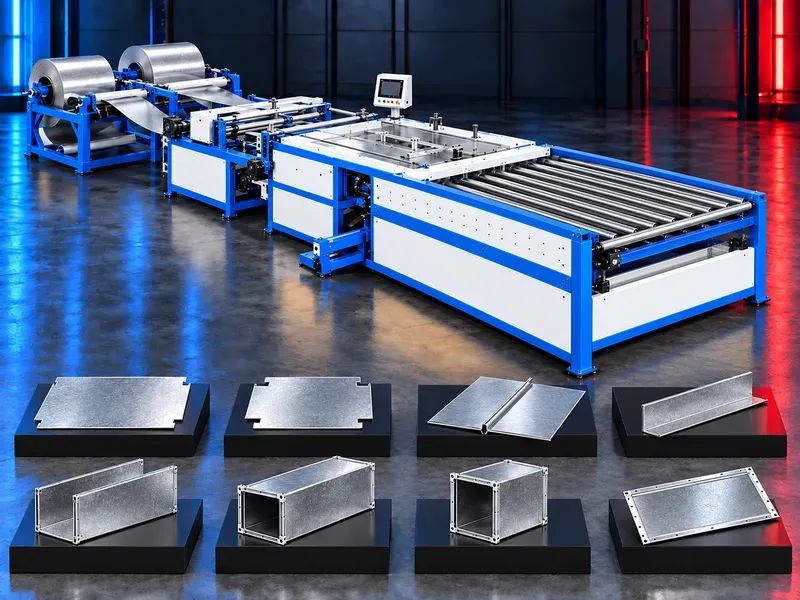 Automatic Duct Blanking and Folding LineAn automatic duct blanking and folding line converts approved sheet metal coils into prepared rectangular HVAC duct blanks and folded sections. The verified configuration may combine decoiling leveling beading corner notching shearing and hydraulic folding under CNC control.
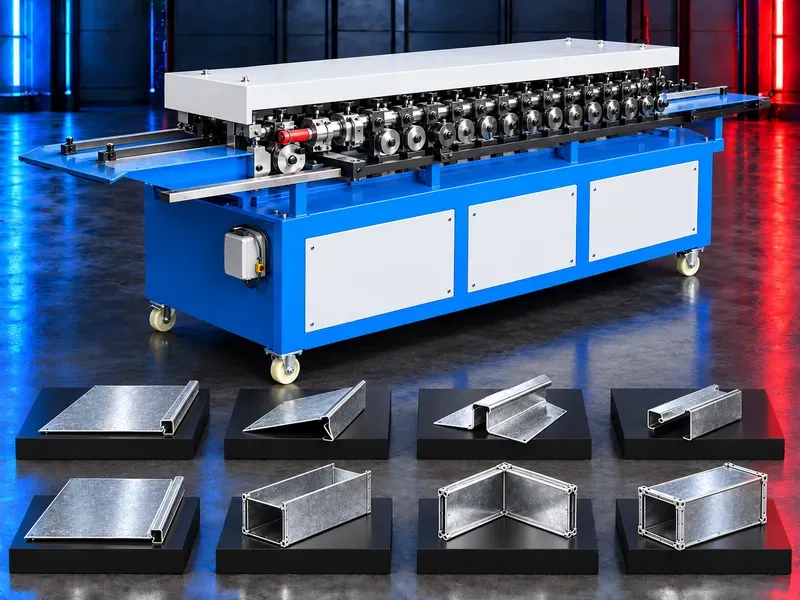 Duplex TDF Flange Forming MachineA duplex TDF flange forming machine forms matching flange profiles along two sides of an approved sheet metal duct blank in one coordinated pass. The two side arrangement can reduce repeated handling when sheet width thickness flange geometry and downstream assembly requirements match the verified machine configuration
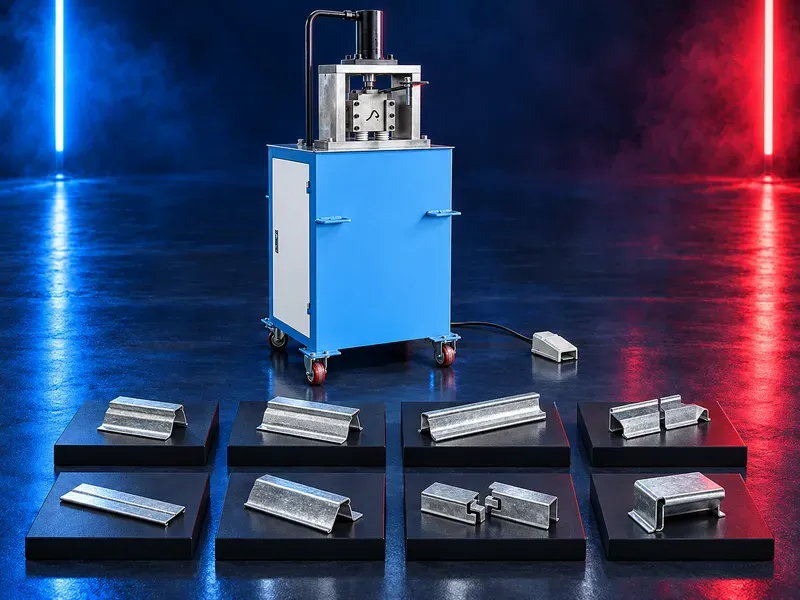 TDF Flange Forming MachineA TDF flange forming machine progressively forms an integral flange along one selected edge of a rectangular duct blank. Depending on the verified roll configuration the opposite forming side may produce a compatible clip profile for duct assembly.
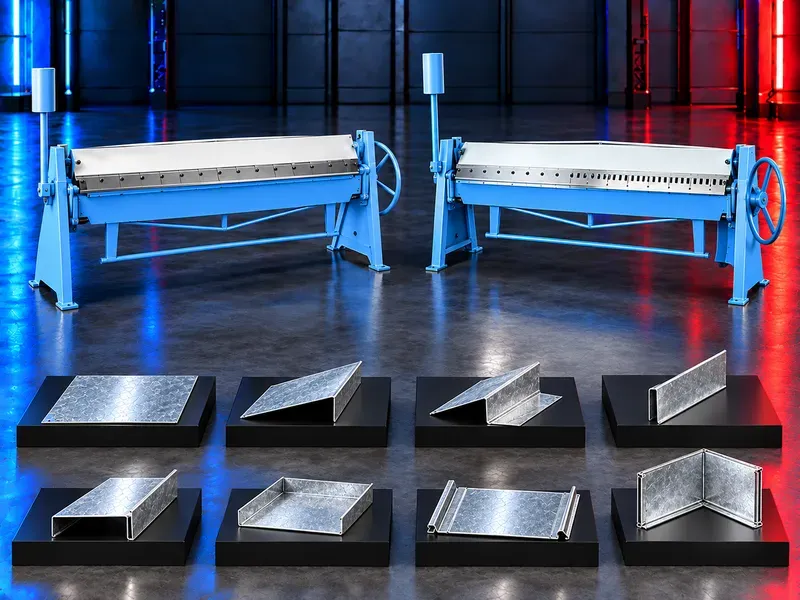 Manual HVAC Duct Folding MachineA manual sheet metal folding machine bends prepared duct blanks and flat sheet along a straight line using operator applied handle movement. Depending on the verified clamping beam and tooling it may fold TDF flanged blanks or plain sheet for rectangular HVAC duct production.
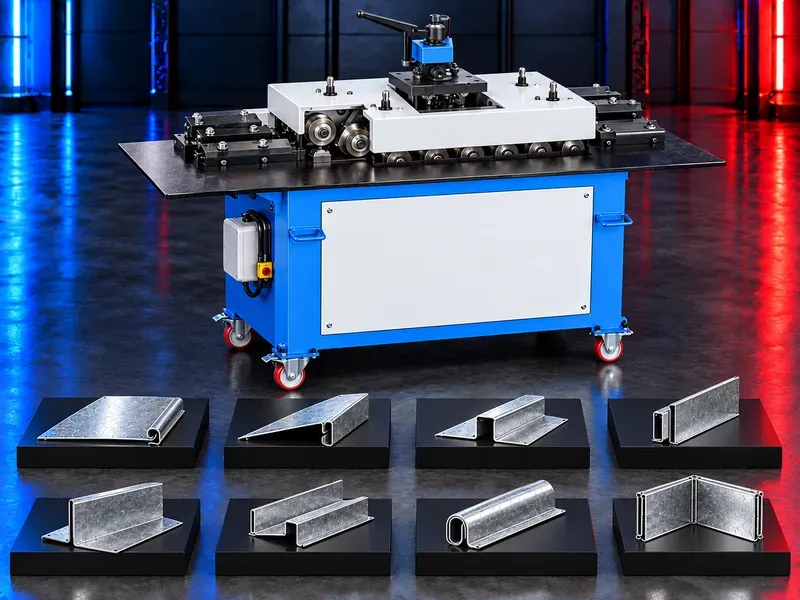 Duct Lock Forming MachineA duct lock forming machine uses progressive roll forming to create mating seam profiles along approved sheet metal edges. The available roll stations may support several rectangular or round duct joint shapes according to the verified machine and tooling configuration.
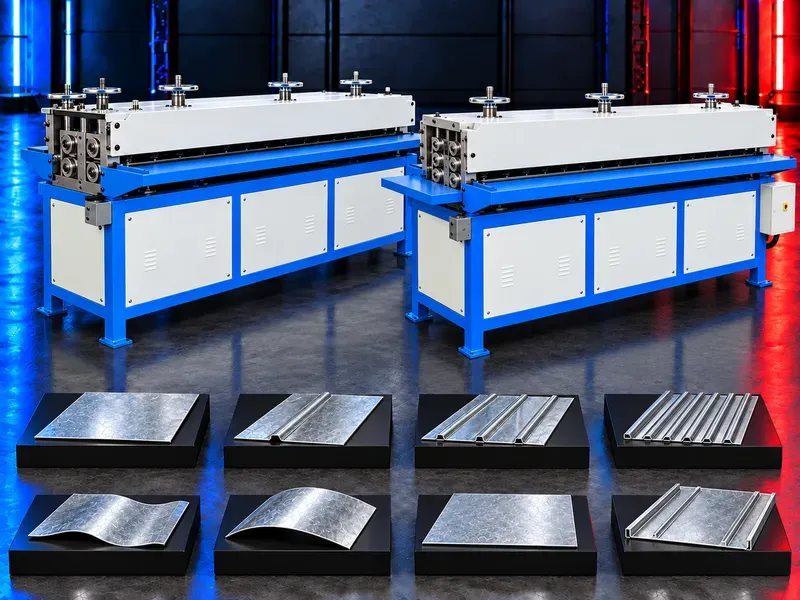 HVAC Duct Beading MachineA sheet metal beading machine forms parallel reinforcing ribs in prepared HVAC duct blanks through progressive rolling. The rib pattern helps increase panel stiffness and control vibration when it matches the approved duct design material thickness and downstream forming process.
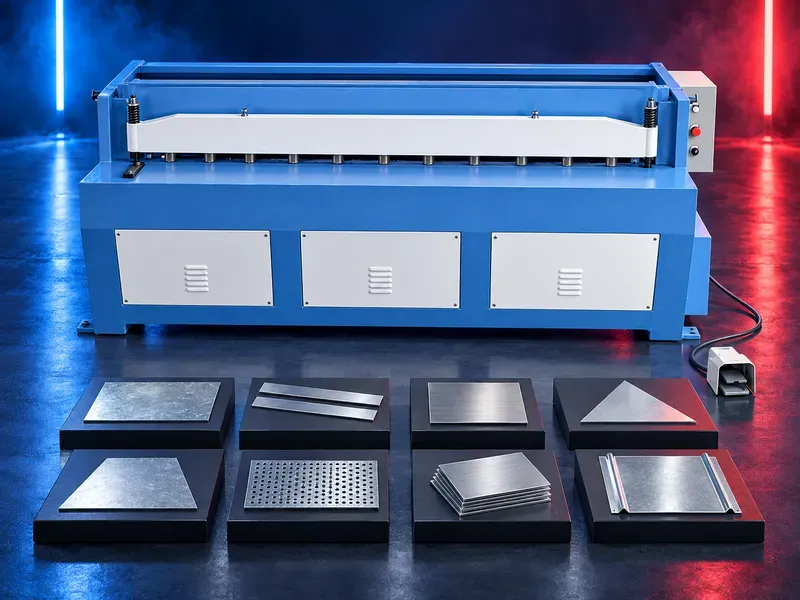 Electric Sheet Metal Shearing MachineAn electric guillotine shearing machine cuts prepared sheet metal along a straight line using a powered blade stroke. It can support HVAC duct workshops and general sheet metal production when material type thickness cutting length accuracy and handling requirements match the verified machine capacity.
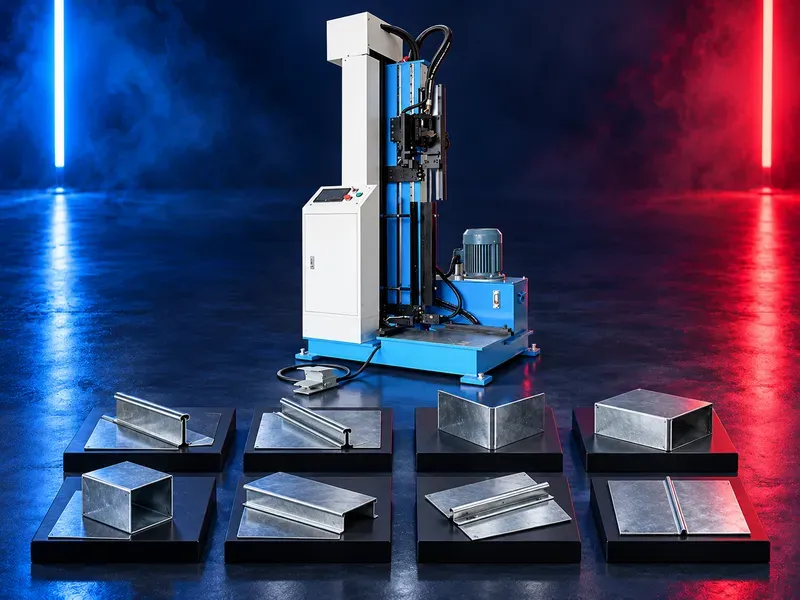 Hydraulic Duct Lock Seam Closing MachineA hydraulic lock seam closing machine closes a prepared longitudinal seam on rectangular HVAC duct sections using controlled hydraulic force and guided tooling. Correct selection depends on seam profile sheet material thickness duct length section geometry required tightness and production workflow.
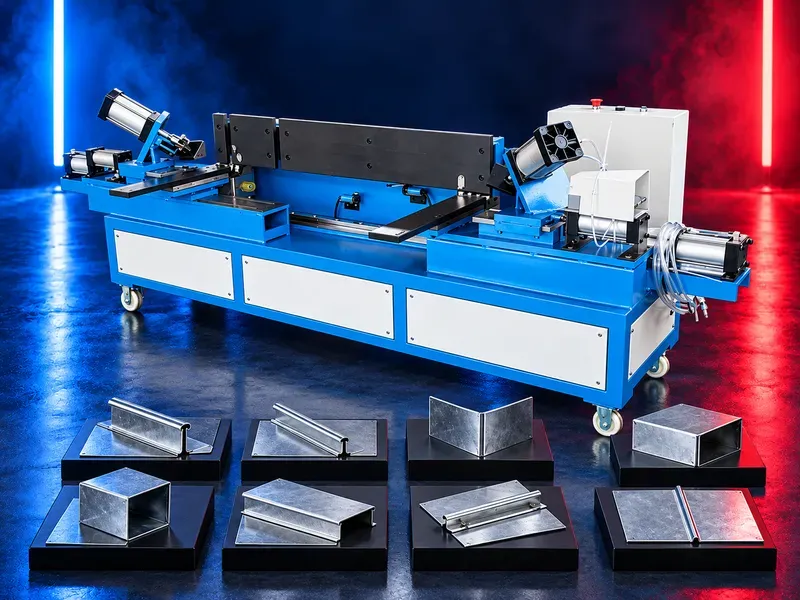 Pneumatic Duct Lock Seam Closing MachineA pneumatic lock seam closing machine uses compressed air and matched tooling to close a prepared longitudinal seam on rectangular HVAC duct sections. Its suitability depends on seam profile material thickness duct length section geometry available air supply and required production cycle.
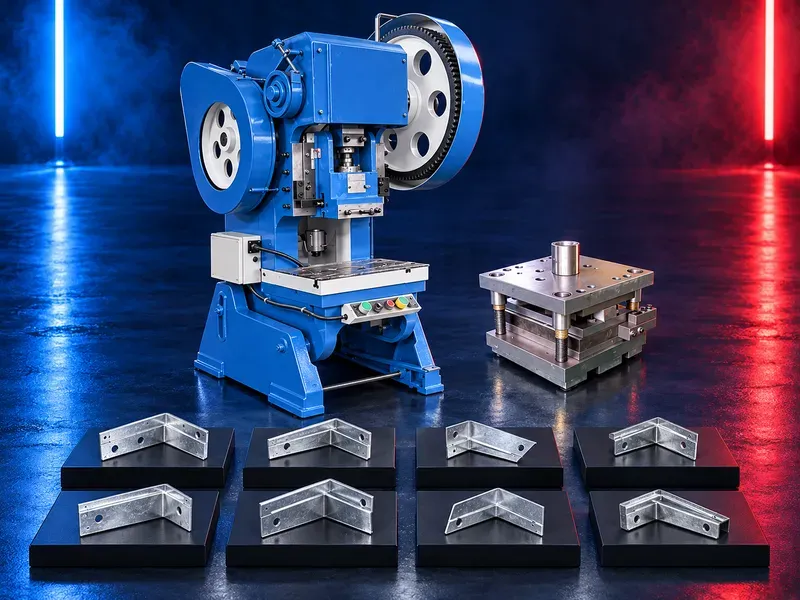 Duct Corner Punching MachineA duct corner punching machine uses a matched press and die to produce corner pieces or corner features for rectangular HVAC ducts. Correct selection depends on the required corner drawing material thickness die design press capacity production volume and downstream assembly method.
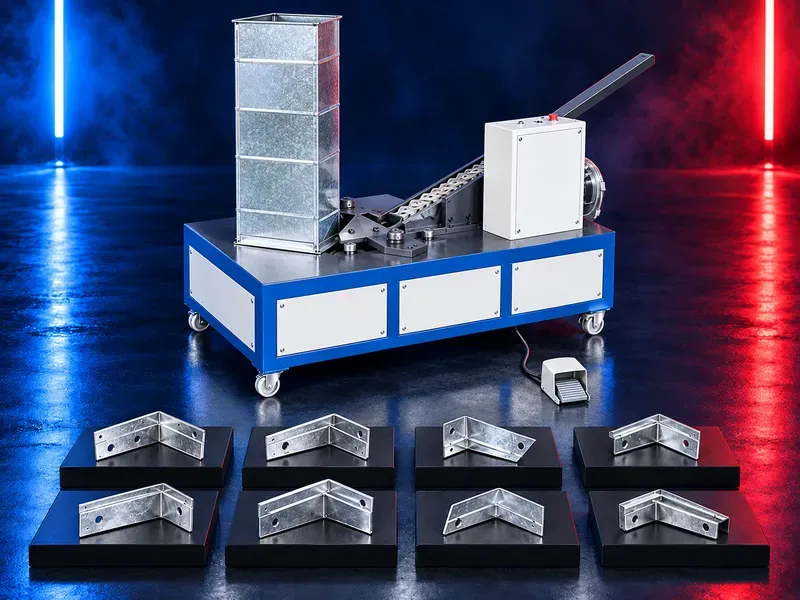 Duct Corner Code Assembly MachineAn automatic duct corner assembly machine positions and installs compatible corner pieces into the flange corners of rectangular HVAC duct sections. Correct selection depends on the corner drawing flange system duct dimensions material condition feeding method joining process and required production cycle
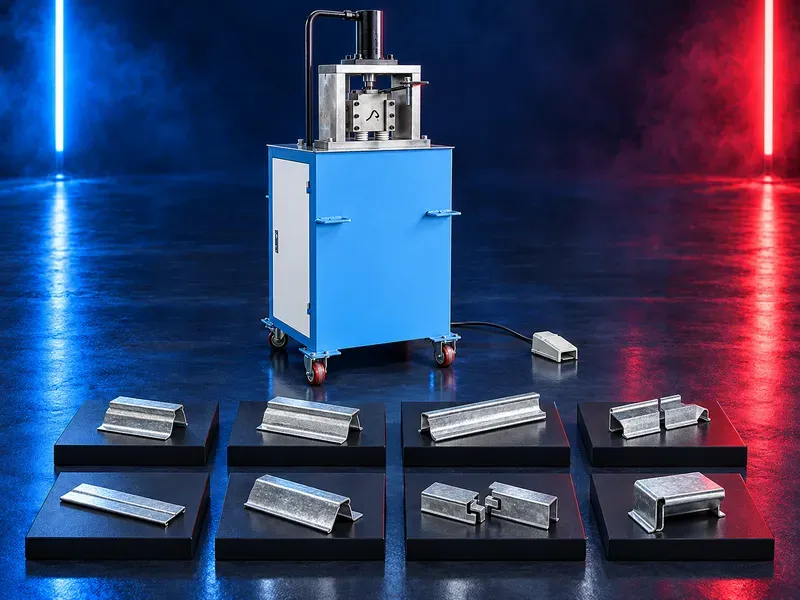 TDF Clip Cutting MachineA TDF clip cutting machine cuts prepared clip profile or sheet into connection clips used to secure mating TDF flanges on rectangular HVAC ducts. Correct selection depends on the required clip drawing input material thickness profile geometry cut length production volume power supply and site conditions.
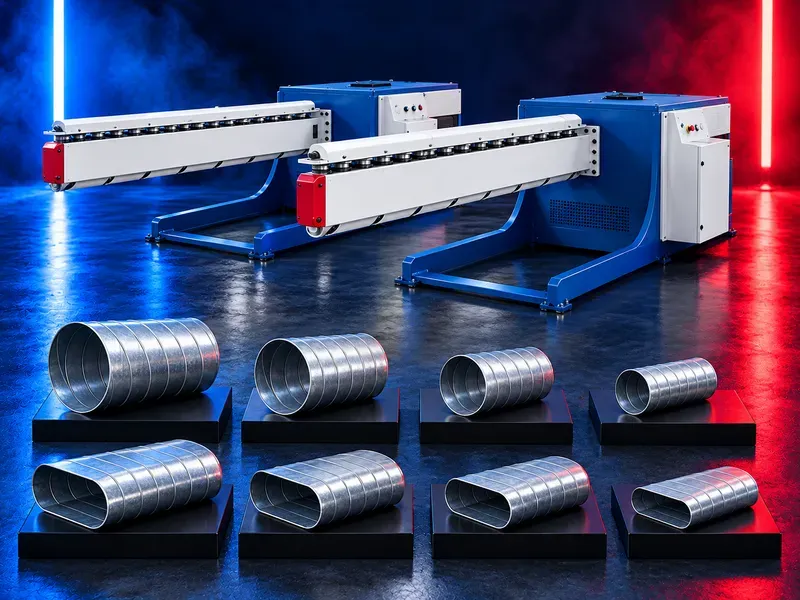 Round to Flat Oval Duct Forming MachineA round to flat oval duct forming machine reshapes compatible spiral round duct into flat oval ductwork for HVAC systems. Correct selection depends on the round duct diameter finished oval width and height duct length material thickness seam construction forming method and required dimensional quality.
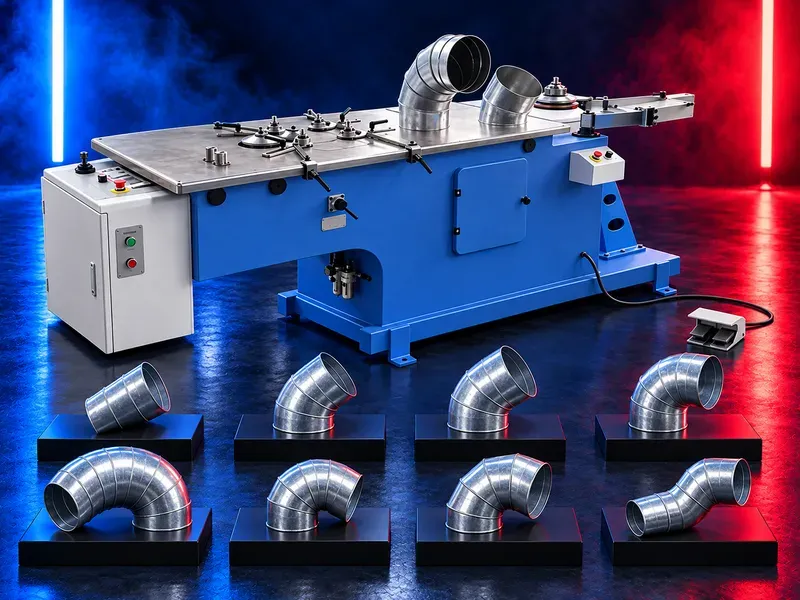 Hydraulic Round Duct Elbow MachineA hydraulic round duct elbow machine forms compatible edges on prepared elbow segments so they can be joined into round HVAC duct elbows. A dual workstation arrangement can support two tooling setups when the segment geometry material thickness seam system production mix and operating sequence are verified.
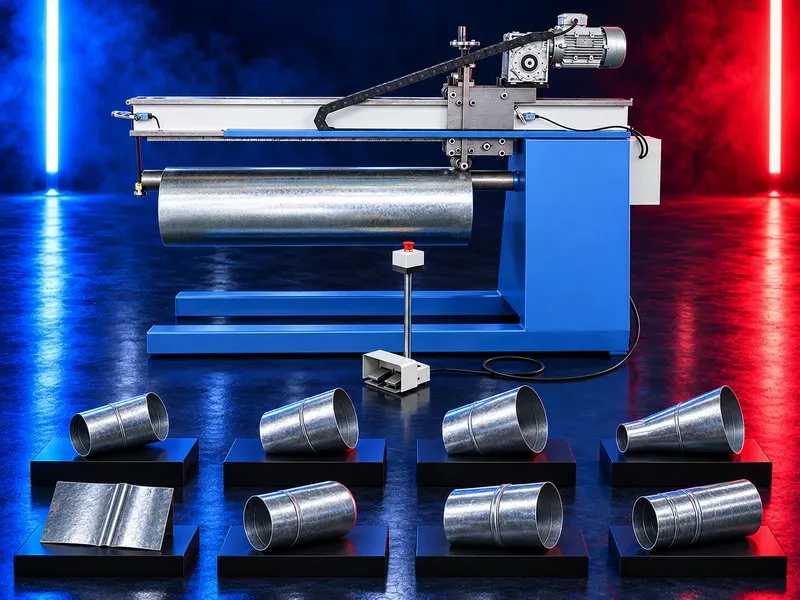 Automatic Round Duct Lock Seam MachineAn automatic round duct lock seam machine closes and strengthens a compatible preformed longitudinal lock on round sheet metal duct sections. Correct selection depends on seam profile duct diameter and length material thickness support method production volume required tightness and integration with upstream forming equipment.
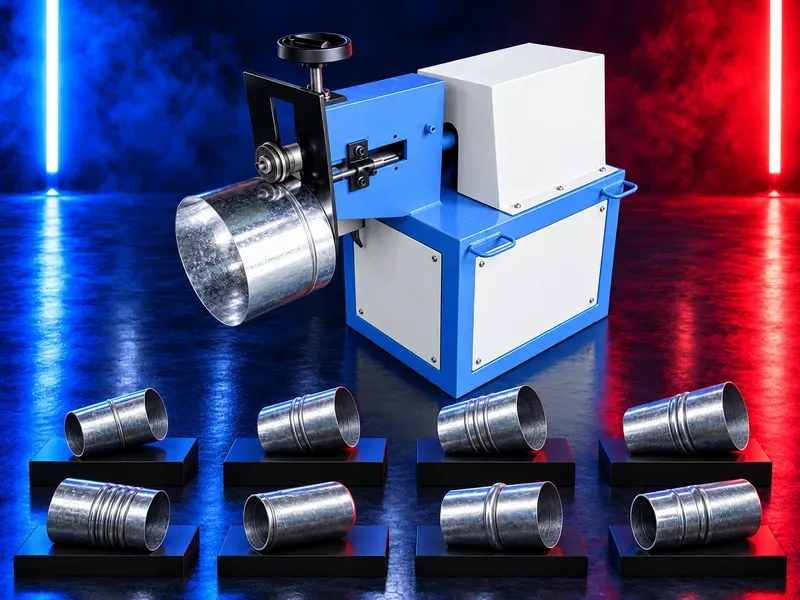 Round Duct Grooving MachineA round duct grooving machine uses matched forming rollers to create beads grooves or approved edge profiles on round ducts and fittings. Manual and electric variants serve different workloads while suitability depends on duct diameter material thickness required profile roller design support method and production volume.
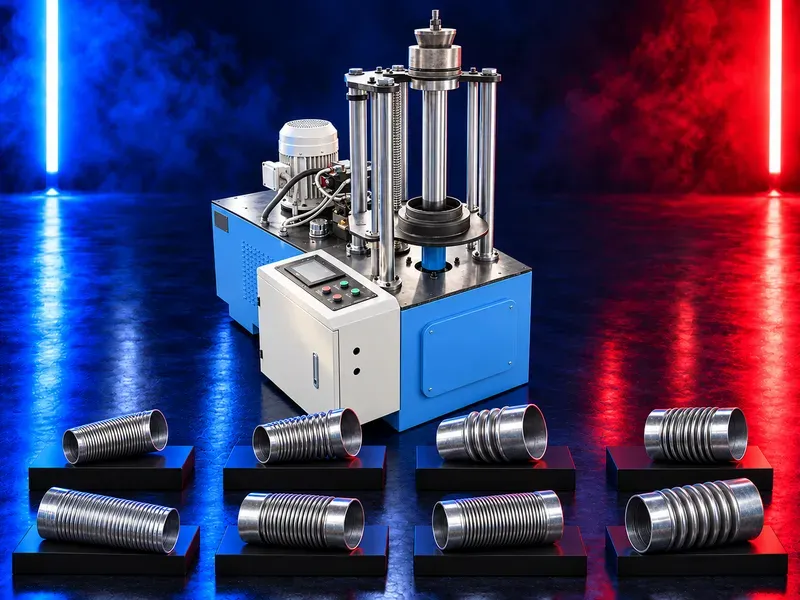 Bellows Tube Forming MachineA bellows tube forming machine reshapes a compatible straight round tube into a defined corrugated tube profile. Correct selection depends on the finished corrugation drawing tube diameter and length material thickness seam or weld construction forming method required mechanical performance and downstream connection process.
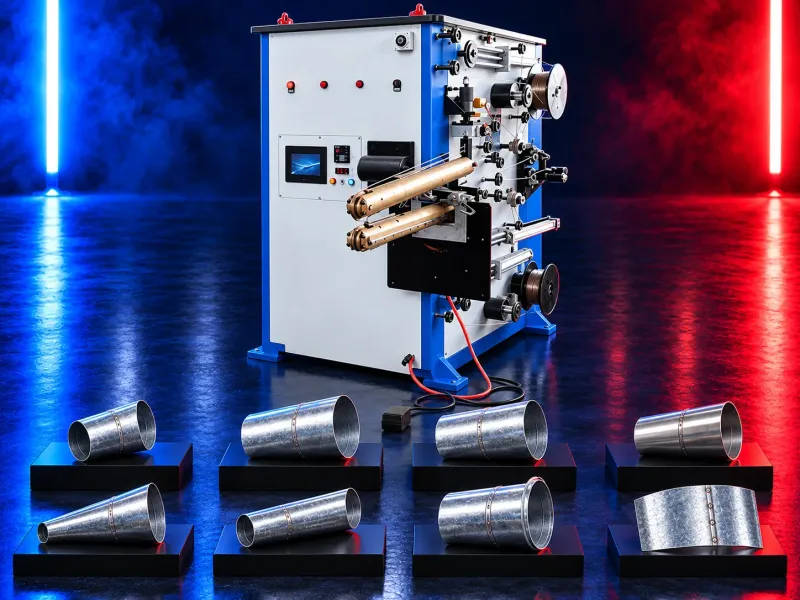 Round Duct Stitch Welding MachineA round duct stitch welding machine joins the prepared longitudinal seam of a round sheet metal duct using a controlled series of welds or a verified seam welding process. Correct selection depends on the joint drawing welding method duct diameter and length material thickness coating condition required strength leakage criteria and production volume.
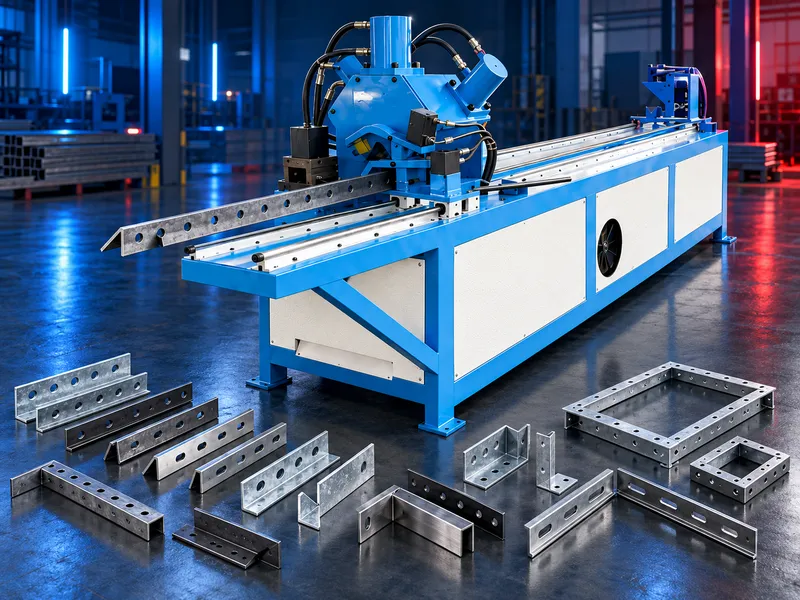 CNC Angle Steel Flange Production LineFully automatic CNC production line for feeding, positioning, punching and cutting angle steel used in HVAC duct flange fabrication. Designed to reduce manual handling and support repeatable, efficient flange production.
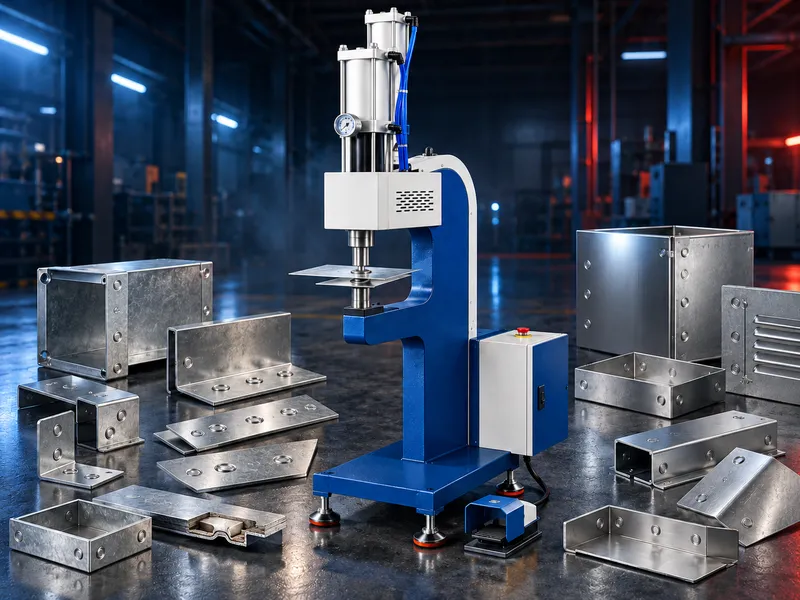 Rivetless Sheet Metal Clinching Machine: Cold-forming sheet metal joining machine for creating permanent mechanical joints without separate rivets or screws, suitable for automotive, appliance, light-industry, precision machinery, electronics and hardware applications
HVAC duct fabrication may involve coil or sheet preparation, leveling, beading, notching, shearing, flange and lock forming, folding, seam closing and fitting production. The required machines depend on whether the workshop produces rectangular, round, spiral or mixed ductwork.
Selecting the correct equipment starts with the approved duct drawings, material grades, thickness range, duct dimensions, flange and seam systems, fitting types, production volume and workshop layout. Each function and capacity must be confirmed from the official documents for the selected machine.
What it is for
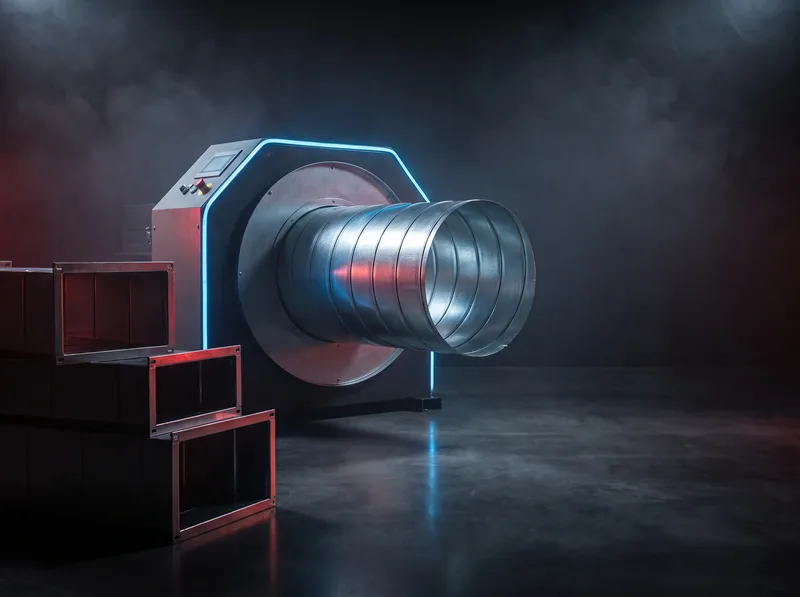
- Rectangular duct sections with integral flange
- Elbows, transitions, reducers and take-offs
- Spiral and round duct on the right configuration
- Site-ready sections cut from a drawing
- Repeat production for tower and mall contracts
How to choose
Match the line to your contract size
A line sized for tower work is idle capital on villa contracts. Tell us the monthly square metres you are actually fabricating and we size from that.
Gauge range decides which jobs you can bid
The thinnest and thickest gauge the line handles sets the specifications you are allowed to quote against. Check it against the consultant specs you normally see.
Floor space and material flow
These lines are long. Coil in, duct out, and somewhere to stack finished sections — the layout matters as much as the machine.
Insulation and sealing come next
Fabrication is one station in a sequence. Decide early whether insulation happens in your workshop or on site, because it changes what you need to handle and store.
Questions we are asked
What information is required to select HVAC duct machinery?
Provide the duct drawings, shapes, dimensions, material grades, thickness range, flange and seam systems, fitting types, monthly production target and workshop layout.
What is an automatic duct production line?
It is a coordinated production system that may combine verified operations such as decoiling, leveling, beading, notching, shearing, flange forming and folding. Actual functions depend on the selected configuration.
Should I choose individual machines or an integrated duct line?
Individual machines may suit varied or lower-volume production. An integrated line may suit a stable product mix and higher repeat output. The decision requires production and workflow data.
Can one line produce rectangular, round and spiral ducts?
Not necessarily. These duct types use different forming, joining and handling processes. The required machines and tooling must be selected for the actual product mix.
What site utilities may be required?
Requirements may include electrical power, compressed air, hydraulic systems, lifting equipment, coil handling, working space and storage areas. Exact requirements depend on the selected machines.
Are installation, training and warranty included?
Installation, commissioning, training, warranty, spare parts and technical-support scope must be defined in the approved quotation for the selected equipment.
Tell us the part you need to make
An engineer reads every request. Usually the same working day.
Related
- Sheet Metal Fabrication Machines Sheet metal machinery for cutting, punching, bending, rolling and forming, selected according to the material, thickness, part geometry, required quality and production target.
- Welding and Thermal Cutting Equipment Welding, robotic automation and thermal cutting solutions selected according to the material, thickness, joint or cut geometry, required quality, production volume and site conditions.
- Maintenance & technical support Production continuity depends on more than the machine itself. Correct installation, operator training, preventive maintenance, fault diagnosis and suitable spare-parts support all contribute to reliable operation.