

LINEAR HVAC DUCT PRODUCTION
Automatic Duct Production Line for Rectangular HVAC Ducts
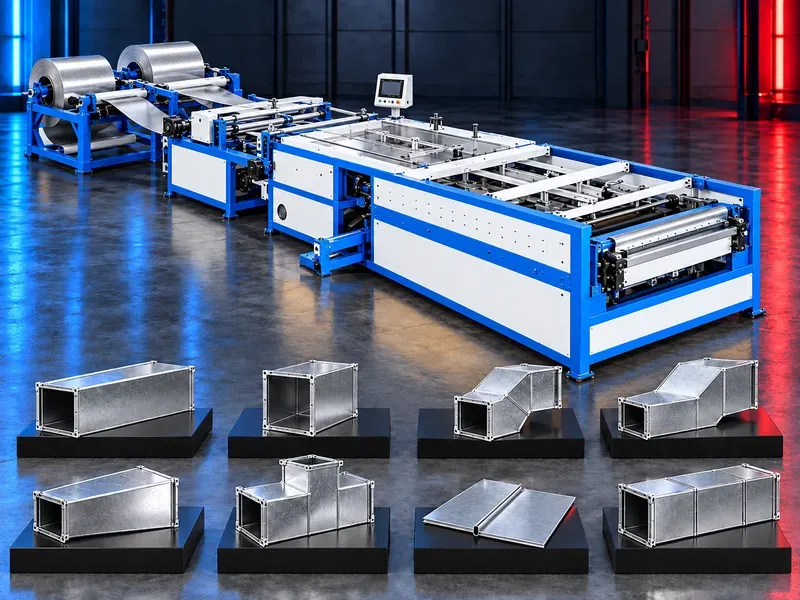
An automatic duct production line converts approved sheet metal coils into prepared rectangular HVAC duct blanks and folded sections through a coordinated linear workflow. Depending on the verified configuration it may integrate uncoiling leveling beading punching shearing transfer locking flange forming and folding
The operator enters approved duct dimensions and order data into the control system. The line coordinates feeding and the available forming stations to reduce repeated manual setup and movement between separate machines. The linear arrangement can support an organized material path and controlled transfer between preparation locking flange and folding stations. Actual footprint handling direction and station sequence must be confirmed from the approved layout. Possible flange routes include TDF angle steel and C shaped systems when the required modules are supplied. Daily output waste coil capacity screen size staffing and component origin remain subject to technical verification and acceptance testing.
What the line does
The line combines several sheet preparation and forming stages for rectangular HVAC duct production. It processes approved coil material according to programmed dimensions and the installed station package.
Finished quality depends on material data coil condition recipe accuracy tool condition transfer stability and correct downstream closing and assembly.
Linear production workflow
A linear layout moves material through a defined route from coil handling to blank preparation forming and folding. This can simplify workflow when station positions and transfer directions suit the available factory space.
Confirm overall line length working aisles loading side discharge side maintenance access and the path for finished sections and scrap.
Coil loading and uncoiling
Electric or powered coil cradles may feed selected sheet material into the line. Coil mass width inner diameter outer diameter and restraint arrangement must match the approved equipment.
Safe loading requires a defined lifting method exclusion zone guarding and controls that prevent uncontrolled coil rotation or sheet release.
Feeding leveling and positioning
The feeding system advances sheet to programmed positions while leveling controls coil set before processing. Servo positioning and assisted transfer may be included according to the verified design.
Verify feed accuracy support correction logic encoder feedback and response to slip deformation or interrupted cycles.
Beading and stiffening
Beading forms ribs in the sheet when required by the duct design to improve stiffness and reduce vibration. Roller pattern depth spacing and direction must suit thickness dimensions and connection details.
Confirm whether the station is standard optional or bypassable and how beading affects folding sealing and assembly.
Punching notching and shearing
Punching and notching prepare holes corner reliefs and connection features while shearing separates the programmed blank. Tool clearance blade condition and positioning affect dimensional consistency and edge quality.
Approve all patterns cut lengths trim allowances and scrap handling against the duct drawing and construction standard.
Mechanical transfer and positioning
An automated arm or transfer platform may grip locate and move prepared blanks between stations. Stable transfer can reduce manual handling and preserve the programmed reference.
Verify gripping range payload positioning method collision protection sheet support and recovery after a stopped cycle.
Locking and seam preparation
A displacement type or integrated locking station may move to the blank or receive it through the transfer system. The station forms the approved longitudinal seam profile for later closing.
Confirm seam type usable thickness roll setup lubrication adjustment and compatibility with the planned closing method and leakage class.
Flange forming systems
The line may prepare TDF angle steel or C shaped flange duct work when the correct modules tooling and routes are included. Each system has different forming reinforcement sealing corner and assembly requirements.
Select the connection system from project specifications duct size pressure class installation method and approved accessories.
Hydraulic folding
The folding station bends the prepared blank into the required section geometry according to the verified cycle. Controlled stops supports and bend settings help maintain dimensions and consistent angles.
Confirm maximum folding length bend sequence minimum flange angle control and transfer of the folded section to closing and assembly.
Control system and production records
The control system may store duct dimensions quantities recipes and order records and coordinate the available stations. Clear job naming and controlled permissions reduce setup errors.
Verify display and input method memory capacity order tracking reports backup language support access levels diagnostics and integration options.
Materials and duct standards
Provide sheet grade coating thickness width surface condition and coil data. Galvanized sheet stainless steel or other materials require separate confirmation for tooling lubrication speed and surface protection.
The required duct standard flange type pressure class reinforcement and sealing method should be defined before configuration approval.
Productivity staffing and material use
Useful output should be measured as accepted duct area or sections per shift under defined sizes thicknesses flange routes staffing changeovers and downstream capacity.
Claims for daily output single operator running and low trim waste require witnessed trials with representative orders and a documented measurement method.
Quality control
Acceptance should cover blank length width diagonals notch position flange geometry bead pattern fold dimensions seam fit edge condition surface damage and readiness for sealing and assembly.
Inspect the first piece after coil change tool adjustment recipe revision or maintenance and retain traceable production records.
Safety and operator protection
The line contains rotating coils powered rolls punches shear blades transfer mechanisms folders and sharp sheet edges. Guards interlocks emergency stops safe control functions and controlled access should follow the approved risk assessment.
Safe procedures must cover coil loading setup trial cycles production unloading scrap removal jam recovery cleaning and maintenance.
Installation and factory layout
Site planning should confirm floor loading line length working clearances electrical supply compressed air hydraulic requirements lighting ventilation and service access.
Provide safe routes for coils blanks transferred sheets folded sections tooling scrap and finished ducts without crossing protected operating areas.
Training maintenance and lifecycle support
Training should cover job entry coil loading recipes station setup transfer recovery quality checks safe operation and daily care.
Preventive maintenance should address rolls bearings guides blades punches transfer grippers drives sensors cylinders lubrication electrical controls guards and safety devices. Prepare approved spare parts and consumables.
How to select the correct line
Start with duct standards connection systems materials thickness range coil data duct dimensions product mix shift target quality criteria staffing and downstream assembly method.
Then confirm station sequence automation level transfer arrangement utilities factory layout service scope spare parts and representative acceptance jobs.
Technical information requiring verification
Verify material types thickness range coil width weight and diameters duct size range flange systems forming stations feed and cut accuracy folding capacity output changeover trim waste staffing utilities installed power air and hydraulic data dimensions floor load and total weight.
Confirm control hardware display size motion components electrical equipment coil cradles tray quantity transfer arm locking station flange modules folding station installation commissioning training warranty service scope spare parts and acceptance tests from approved documentation.
Publishing status
This page describes the line category workflow and selection logic. Exact output waste capacity materials functions component sources standards and commercial commitments require an approved data sheet and technical review before publication.
Questions we are asked
What is an automatic duct production line?
It is an integrated sheet metal line that prepares rectangular HVAC duct blanks and folded sections from approved coils through coordinated automated stations.
What is the benefit of a linear layout?
A linear arrangement can organize material movement and station sequence in one direction when the factory length access and handling plan support it.
Which operations can be integrated?
The verified package may include uncoiling feeding leveling beading punching notching shearing transfer locking flange forming and folding.
Which flange systems can be produced?
Possible systems include TDF angle steel and C shaped flange preparation when the required modules tooling and approved process route are included.
How is production capacity verified?
Capacity should be tested with representative duct sizes thicknesses connection systems staffing changeovers and downstream assembly conditions.
What information is needed for selection?
Provide duct standards flange systems materials thickness range coil data dimensions product mix shift target quality requirements utilities staffing and factory layout.
Tell us the part you need to make
An engineer reads every request. Usually the same working day.
Related
- Spiral Duct Forming Machine A forming machine for producing round spiral air ducts from compatible metal strip. Machine selection depends on duct diameter, material, strip thickness and width, seam type, cut length, and production target.
- U Shape Automatic Duct Production Line A U shape automatic duct production line converts approved sheet metal coils into prepared duct sections through a coordinated sequence that may include uncoiling leveling beading punching shearing locking flange forming and folding. The correct configuration depends on duct type material thickness dimensions flange system output target and factory layout.
- Automatic Duct Blanking and Folding Production Line An automatic duct blanking and folding line converts approved sheet metal coils into prepared rectangular HVAC duct blanks and folded sections. The verified configuration may combine decoiling leveling beading corner notching shearing and hydraulic folding under CNC control.