

MANUAL SHEET METAL FOLDING
Manual Sheet Metal Folding Machine for HVAC Ducts
A manual sheet metal folding machine bends prepared duct blanks and flat sheet along a straight line using operator applied handle movement. Depending on the verified clamping beam and tooling it may fold TDF flanged blanks or plain sheet for rectangular HVAC duct production.
The operator positions the marked blank against the bending reference clamps it and moves the handle to rotate the folding beam to the required angle. A counterbalance or pendulum mechanism may reduce operating effort and support controlled movement. The machine can complete selected folds for rectangular duct sections when blank dimensions flange details bend sequence and sheet properties are compatible with the working length and clamping arrangement. Claims for maximum sheet thickness three fold completion portability labor requirement and site suitability require confirmation from the exact machine data sheet and practical bending trials.
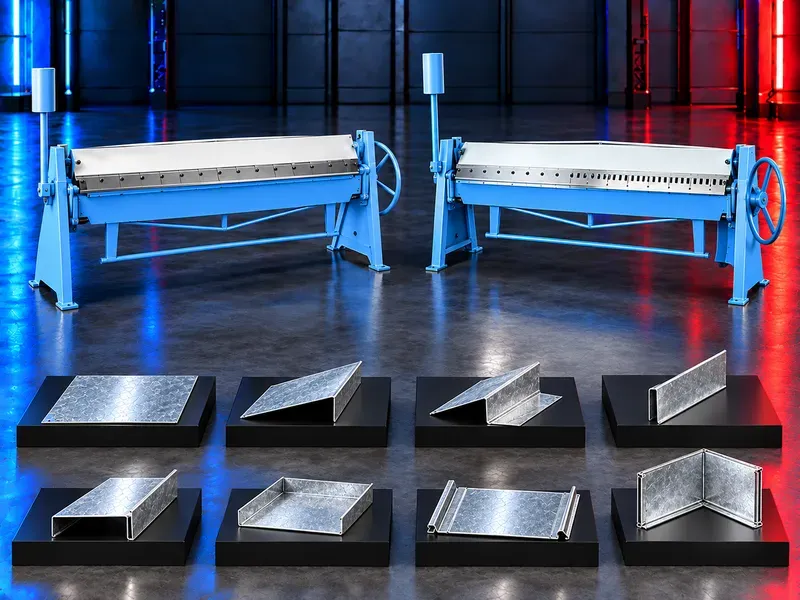
What the machine does
The machine creates straight bends in prepared sheet metal blanks without powered bending motion. The operator controls positioning clamping and handle movement for each bend.
The result depends on blank preparation reference accuracy clamping force bend allowance sheet properties and consistent operator technique.
Manual bending cycle
A typical cycle includes checking the blank placing the bend line at the reference clamping the sheet moving the folding beam to the required angle returning the beam and releasing the part.
Multiple folds require a planned sequence that preserves access and prevents completed flanges from colliding with the machine.
Handle and balance mechanism
The handle provides leverage for rotating the folding beam. A counterbalance or pendulum may help control beam weight during movement and return.
Verify handle length operating arc balance adjustment travel stops and the effort required across the approved material range.
Clamping and bend reference
The clamping beam holds the sheet along the bend line while stops or marks establish the required position. Uniform clamping helps prevent movement and uneven bends.
Confirm clamping method usable opening nose geometry reference stops and compatibility with narrow flanges or previously formed edges.
TDF flanged duct blanks
A suitable configuration may fold blanks that already include TDF flange profiles. Clearance around the flange and corner details must prevent crushing or distortion during bending.
Verify bend sequence minimum return flange and fit with the intended corners clips seals and final duct assembly.
Flat sheet folding
A flat sheet version focuses on straight bends in plain blanks for general duct and sheet metal work. The correct bend allowance and reference position are required to achieve the finished dimensions.
Confirm whether the supplied machine supports both TDF blanks and flat sheet or is dedicated to one application.
Materials and thickness
Provide sheet grade coating thickness width hardness surface finish and grain direction where relevant. Galvanized sheet stainless steel aluminium or other materials require separate confirmation for effort capacity bend radius and springback.
The maximum thickness depends on working length material strength bend angle and machine construction and must be verified rather than assumed.
Bending length and part geometry
The working length must accommodate the full bend while leaving safe side clearance. Deep boxes short returns existing flanges and wide duct panels can affect access and collision risk.
Review the complete bend sequence with the largest and smallest representative parts before selection.
Operator effort and staffing
Manual effort rises with material strength thickness working length and bend angle. Large or flexible blanks may also require additional people or support stands for safe handling.
Staffing should be determined through an ergonomic review and trial rather than a general statement about the number of operators.
Integration in a duct workshop
The machine may work with shearing beading notching TDF flange forming lock forming seam closing and clip cutting equipment. A clear process route helps maintain bend references and protects formed edges.
Define where the blank dimensions and bend lines are established and how parts move between stations.
Mobility and site work
Some manual folders may use a compact frame or wheels for relocation within a workshop or site. Safe operation still requires a stable level position and adequate sheet handling space.
Confirm machine weight lifting points wheel rating brakes anchoring route clearance and protection from weather and construction activity.
Accuracy and quality control
Acceptance should cover bend position angle straightness panel dimensions flange condition surface marking springback and fit during duct assembly.
Inspect the first piece after setup material change relocation or maintenance using approved templates and calibrated measuring tools.
Common process risks
Poor alignment uneven clamping incorrect bend allowance excessive force or inadequate support can cause tapered bends dimension errors surface damage flange distortion or unsafe movement.
Correct the setup and sequence when the bend falls outside the approved drawing instead of forcing the part during assembly.
Safety and operator protection
The machine contains pinch points a moving folding beam stored balance energy handles and sharp sheet edges. Guards safe hand positions secure clamping and controlled access should follow the approved risk assessment.
Safe procedures must cover loading clamping bending release unloading relocation cleaning adjustment and maintenance.
Installation and site readiness
Site preparation should confirm level floor adequate load capacity operating arc infeed and outfeed clearance lighting sheet storage and safe access.
Anchor or secure the machine as required and keep the handle path and balance mechanism free from obstruction.
Training maintenance and lifecycle support
Training should cover material limits bend allowance references clamping safe handle use sequence planning quality checks and ergonomic handling.
Preventive maintenance should address hinges pivots shafts bearings clamps fasteners stops counterbalance components lubrication guards and frame condition. Prepare approved spare parts and consumables.
How to select the correct machine
Start with sheet materials strength thickness range maximum bend length duct dimensions TDF or flat sheet use bend angles return flanges quantities staffing site conditions and required finish.
Selection should confirm clamping geometry folding clearance operator effort mobility supports maintenance access and representative bending trials.
Technical information requiring verification
Verify material types thickness capacity by material and length working length bending angle minimum flange beam opening clamping method handle force counterbalance adjustment accuracy dimensions mobility foundation needs and total weight.
Confirm TDF compatibility flat sheet capability support accessories guards installation training warranty service scope spare parts and acceptance tests from approved documentation.
Publishing status
This page describes the machine category operation and selection logic. Exact thickness length angle capacity fold count staffing material compatibility mobility options standards and commercial commitments require an approved data sheet and technical review before publication.
Questions we are asked
What is a manual sheet metal folding machine?
It is a manually operated machine that clamps a prepared sheet and uses a handle driven folding beam to create straight bends.
Can it fold TDF duct blanks?
TDF blanks may be supported when the clamping nose clearance bend sequence and working length match the flange geometry and part drawing.
Can it also fold flat sheet?
This depends on the supplied clamping and folding configuration. Some machines support both applications while others are dedicated to flat sheet.
How many operators are required?
Staffing depends on sheet size thickness strength handling distance and available supports and should be confirmed by an ergonomic trial.
How is bend quality checked?
Check bend position angle straightness dimensions flange condition surface marking springback and assembly fit against the approved drawing.
What information is needed for selection?
Provide material grade thickness blank size bend length angles sequence TDF details quantities staffing site conditions finish requirements and largest representative part.
Tell us the part you need to make
An engineer reads every request. Usually the same working day.
Related
- Spiral Duct Forming Machine A forming machine for producing round spiral air ducts from compatible metal strip. Machine selection depends on duct diameter, material, strip thickness and width, seam type, cut length, and production target.
- U Shape Automatic Duct Production Line A U shape automatic duct production line converts approved sheet metal coils into prepared duct sections through a coordinated sequence that may include uncoiling leveling beading punching shearing locking flange forming and folding. The correct configuration depends on duct type material thickness dimensions flange system output target and factory layout.
- Automatic Duct Production Line for Rectangular HVAC Ducts An automatic duct production line converts approved sheet metal coils into prepared rectangular HVAC duct blanks and folded sections through a coordinated linear workflow. Depending on the verified configuration it may integrate uncoiling leveling beading punching shearing transfer locking flange forming and folding