

ROUND DUCT LONGITUDINAL SEAM WELDING
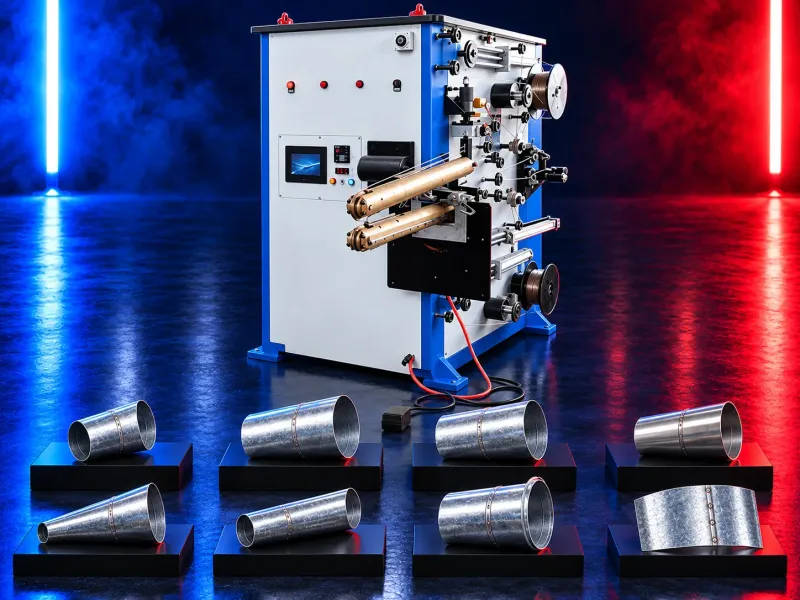
Round Duct Stitch Seam Welding Machine
A round duct stitch welding machine joins the prepared longitudinal seam of a round sheet metal duct using a controlled series of welds or a verified seam welding process. Correct selection depends on the joint drawing welding method duct diameter and length material thickness coating condition required strength leakage criteria and production volume.
The formed duct body is aligned and supported so its longitudinal edges remain in the approved joint position. The welding system then travels along the seam or feeds the duct through the welding station under controlled parameters. Stitch welding continuous seam welding and other joining processes have different heat input spacing consumables and sealing behavior. The exact process must be confirmed before defining page claims or applications. Claims for high speed material saving tighter seams or stronger joints require an approved procedure representative weld trials destructive or nondestructive checks where applicable and leakage testing when specified
What the machine does
The machine joins a prepared longitudinal seam on a round duct body through an approved welding cycle. It supports repeatable joining when edge preparation alignment and welding parameters remain controlled.
The machine should not be described as airtight material saving or stronger without defined acceptance evidence.
Welding process definition
Confirm whether the process uses resistance stitch welding resistance seam welding arc welding or another method. Each process requires different power controls electrodes filler shielding cooling and safety measures.
Use the verified process name consistently in the product page operating instructions and acceptance plan.
Joint design and edge preparation
Provide the joint drawing including overlap or butt geometry edge allowance weld spacing seam length and permitted gaps. Edges should be clean straight and free from damage that prevents stable contact.
Coatings oils oxides sealants and burrs can affect weld formation and may require an approved preparation method.
Round duct input requirements
Specify outside diameter duct length material grade thickness coating weldability roundness straightness and end preparation. The duct should be supported without flattening or twisting during welding.
Confirm access restrictions caused by beads flanges fittings reinforcement or branches.
Welding cycle and controls
The cycle should coordinate clamping alignment welding energy travel or feed speed weld spacing pressure and release according to the verified process. Parameter limits should prevent weak welds burn through excessive heat and distortion.
Confirm recipe control monitoring alarms and response to interrupted power cooling gas or feed as applicable.
Tooling electrodes and consumables
Contact tools electrodes wheels torches guides filler material shielding gas and cooling components depend on the welding process. Their condition directly affects heat transfer weld shape and repeatability.
Verify consumable specification service limits replacement alignment cleaning and approved storage.
Materials coatings and thickness
Material grade thickness coating type surface condition and electrical or thermal properties influence welding parameters and joint quality. Galvanized steel stainless steel aluminium and other materials require separate qualified procedures.
Do not generalize one thickness range or parameter set across materials coatings and joint designs.
Duct support and seam tracking
The seam must remain aligned with the welding path while the round body is supported at a stable height. Long large or flexible ducts may require adjustable stands guides or powered feed.
Confirm loading direction seam orientation tracking method support spacing and discharge clearance.
Weld quality control
Inspect weld location spacing continuity size appearance fusion indentation burn through spatter coating damage distortion and seam straightness according to the approved procedure.
Use peel tensile macro leakage or other tests only when specified by the applicable standard and qualified acceptance plan.
Strength and leakage
A visually acceptable weld does not automatically prove joint strength or leakage performance. Results also depend on joint design weld spacing heat input material coating sealant end treatment and installation.
Define measurable strength and leakage criteria before production release and retain traceable test results.
End flanging and downstream work
After welding the duct ends may require trimming beading flanging connector installation sealing or fitting assembly. A separate flange rolling machine may be used when its tooling matches the duct and connection design.
Allow sufficient straight end length and protect the welded seam during subsequent forming.
Integration in round duct production
The welding station may follow sheet cutting rolling and edge preparation. Inspection end forming fitting production surface repair and final testing may follow.
Coordinate blank allowance diameter seam location material identification and handling through the full route.
Productivity and material use
Accepted output depends on duct size seam length weld pattern process speed loading clamping cooling inspection consumable service and surrounding operations.
Measure accepted ducts per shift and actual material yield during representative trials rather than relying on general speed or saving claims.
Common process risks
Poor fit up contamination unstable parameters worn electrodes incorrect spacing insufficient support or interrupted cooling can cause weak welds burn through expulsion porosity gaps distortion coating damage or leakage.
Stop production and correct joint preparation tooling utilities or parameters when the weld falls outside acceptance criteria.
Safety and operator protection
Welding can involve electrical energy heat sparks fumes radiation moving clamps pinch points sharp edges gases and cooling systems. Guards extraction interlocks emergency stops personal protection and energy isolation must follow the approved risk assessment.
Procedures must cover loading clamping trial welding unloading jam recovery electrode or torch work fume control cleaning and maintenance.
Installation and site readiness
Confirm floor condition electrical capacity earthing welding power cooling shielding gas or compressed air extraction working clearance duct supports fire controls lighting material routes and maintenance access as applicable.
Verify supply quality environmental limits and segregation of hot work from combustible materials.
Training maintenance and lifecycle support
Training should cover joint drawings material identification setup recipes clamping seam tracking weld inspection defect response safe recovery isolation fumes and daily checks.
Preventive maintenance should address power connections electrodes torches wheels guides clamps feed drives cooling extraction gas lines sensors guards controls lubrication and emergency devices. Prepare approved consumables and spares.
How to select the correct machine
Start with joint drawings welding process duct diameter and length range materials coatings thickness quantities strength and leakage criteria utilities floor plan handling method and applicable standards.
Selection should confirm procedure qualification power range tooling feed support monitoring extraction cooling guarding maintenance service support and representative weld trials.
Technical information requiring verification
Verify welding process joint types duct diameter and length ranges materials coatings thickness weld pattern speed power and duty cycle electrodes consumables cooling gas extraction feed controls monitoring accuracy dimensions and total weight.
Confirm qualified procedures supports guards standards installation commissioning training warranty service scope spares and visual mechanical destructive nondestructive and leakage acceptance tests as applicable.
Publishing status
This page describes the machine category welding process and selection logic. Exact process materials sizes thickness speed capacity strength leakage utilities standards and commercial commitments require an approved data sheet welding documentation and technical review before publication.
Questions we are asked
What is a round duct stitch welding machine?
It joins the prepared longitudinal seam of a round sheet metal duct using a controlled weld pattern or verified seam welding process.
Is the weld continuous or intermittent?
That depends on the approved welding process and joint drawing and must be confirmed for the exact machine configuration.
Can it weld every duct material?
No. Material grade coating thickness joint design and weldability must match a qualified procedure and verified machine range.
Does welding guarantee an airtight duct?
No. Leakage performance requires defined joint preparation welding parameters sealing details and testing against the applicable criteria.
How is weld quality checked?
Inspect weld position pattern size appearance fusion distortion and coating condition and perform specified mechanical or leakage tests.
What information is needed for selection?
Provide joint drawings weld process duct sizes materials coatings thickness quantities acceptance criteria utilities and representative samples.
Tell us the part you need to make
An engineer reads every request. Usually the same working day.
Related
- Spiral Duct Forming Machine A forming machine for producing round spiral air ducts from compatible metal strip. Machine selection depends on duct diameter, material, strip thickness and width, seam type, cut length, and production target.
- U Shape Automatic Duct Production Line A U shape automatic duct production line converts approved sheet metal coils into prepared duct sections through a coordinated sequence that may include uncoiling leveling beading punching shearing locking flange forming and folding. The correct configuration depends on duct type material thickness dimensions flange system output target and factory layout.
- Automatic Duct Production Line for Rectangular HVAC Ducts An automatic duct production line converts approved sheet metal coils into prepared rectangular HVAC duct blanks and folded sections through a coordinated linear workflow. Depending on the verified configuration it may integrate uncoiling leveling beading punching shearing transfer locking flange forming and folding