

HVAC DUCT SEAM FORMING
Lock Forming Machine for HVAC Duct Seams
A duct lock forming machine uses progressive roll forming to create mating seam profiles along approved sheet metal edges. The available roll stations may support several rectangular or round duct joint shapes according to the verified machine and tooling configuration.
The operator feeds a prepared sheet edge into the selected forming route. Each roll stage gradually bends the edge until the required lock or seam profile is produced for later closing or assembly. Possible profiles may include Pittsburgh female right angle male standing seam C shaped lock pin curved angle Z shaped seam S shaped seam or snap lock. The exact number geometry and purpose of the available functions must be confirmed from the official roll layout. Claims for sheet thickness range roll material extended service life productivity and custom shapes require confirmation from an approved data sheet sample trials and acceptance criteria.
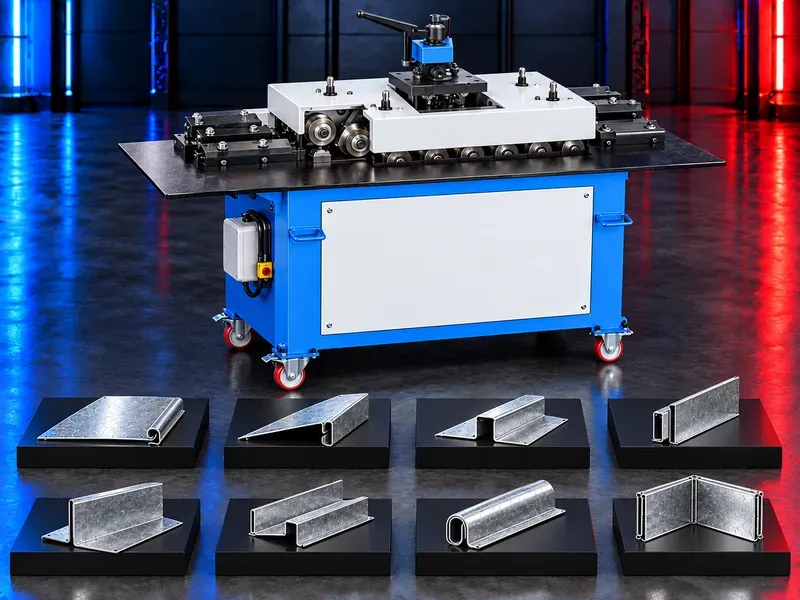
What the machine does
The machine forms repeatable seam and lock profiles on prepared sheet edges for HVAC duct assembly. Different roll routes may create the mating halves or special edge details needed by the selected joint.
The result depends on sheet condition correct route selection entry alignment roll setup drive stability and inspection.
Progressive roll forming
The sheet edge passes through successive roll stands that make small controlled bends until the final profile is reached. Progressive forming limits sudden deformation and supports a consistent longitudinal seam.
Roll alignment spacing and condition should be checked whenever the material thickness profile or forming quality changes.
Pittsburgh seam profiles
A Pittsburgh route may form the female pocket while a separate route forms the mating right angle male edge. The profiles are later joined and closed using the approved seam closing method.
Confirm pocket dimensions male edge geometry allowance direction and compatibility with the closing machine and duct corner arrangement.
Standing C shaped and Z shaped seams
Additional roll routes may create standing seams C shaped locking details or Z shaped profiles for selected duct and sheet joining applications.
Each profile requires its own drawing material range forming direction and closing procedure and should not be selected by name alone.
Curved S shaped and snap lock options
Optional tooling may support curved angle S shaped seam or snap lock profiles where required by the product design. Custom roll sets require engineering confirmation and sample approval.
Verify whether the option replaces a standard route or adds another station and confirm tool change adjustment and spare roll requirements.
Rectangular duct applications
For rectangular duct production the machine can prepare longitudinal seam edges before folding closing sealing and final assembly. It normally works with cutting beading notching flange forming folding and seam closing equipment.
Define the complete duct route so that allowances and edge orientations match every following operation.
Round duct applications
A suitable lock forming configuration may also prepare longitudinal seams for round duct blanks before rolling and seam closing. Round duct capability depends on the installed profiles and downstream equipment.
Confirm blank length circumference allowance rolling direction seam position and compatibility with the round duct closing process.
Sheet feeding and support
Entry guides and supports should keep the sheet edge level and aligned as the driven rolls pull it through. Long wide or flexible blanks may require additional infeed and outfeed support.
Verify minimum edge allowance blank dimensions support height feeding direction and rules for coated or finished sheets.
Forming rolls drive and bearings
Roll geometry hardness finish alignment shafts bearings and drive transmission affect profile consistency and surface quality. Stable torque should form the edge without uncontrolled slip or marking.
Verify roll material heat treatment drive power gears chains lubrication wear limits setup gauges replacement method and spare roll availability.
Materials and thickness
Provide sheet grade coating thickness hardness surface finish and required protection. Galvanized sheet stainless steel aluminium or other materials require separate confirmation for roll geometry power speed lubrication and springback.
The usable thickness range must be verified for each profile because a machine may not support the same range across every forming route.
Productivity and changeover
Output depends on blank length selected route material thickness loading support forming speed and downstream closing capacity. Multi function machines may reduce the need for separate forming units but still require correct route setup.
Measure accepted profiles per shift and record changeover time during representative trials.
Quality control
Acceptance should cover profile dimensions straightness edge condition surface marking seam engagement closing quality and leakage related fit where applicable.
Inspect the first piece after route adjustment roll change material change or maintenance using approved gauges and calibrated equipment.
Common process risks
Incorrect route selection poor alignment worn rolls unsuitable thickness or unstable support can cause incomplete profiles waviness twist scratches or poor seam engagement.
Correct the forming setup when the profile falls outside the approved drawing rather than forcing the seam during closing.
Safety and operator protection
The machine contains powered rolls pinch points rotating transmission components and sharp sheet edges. Guards emergency stops safe feeding tools and controlled access should follow the approved risk assessment.
Safe procedures must cover loading route selection trial forming unloading jam recovery cleaning lubrication and maintenance.
Installation and site readiness
Site preparation should confirm level floor electrical supply required compressed air infeed and outfeed clearance lighting material storage and service access.
Provide stable supports for long sheets and sufficient space to prevent formed edges from striking nearby equipment.
Training maintenance and lifecycle support
Training should cover profile identification safe feeding route selection gauges material changes jam recovery lubrication and daily inspection.
Preventive maintenance should address rolls bearings shafts gears chains guides drives guards fasteners lubrication electrical controls and emergency devices. Prepare approved spare parts and consumables.
How to select the correct machine
Start with required seam drawings duct type sheet materials thickness range blank dimensions production mix shift target surface requirements and downstream rolling folding closing and sealing methods.
Selection should confirm available profiles tool change needs drive capacity utilities working envelope integration service support and representative sample trials.
Technical information requiring verification
Verify standard and optional profiles function count material types thickness range working width forming speed drive power roll material roll life shafts bearings accuracy utilities electrical load compressed air dimensions and total weight.
Confirm custom roll availability rectangular and round duct capability guards installation commissioning training warranty service scope spare parts and acceptance tests from approved documentation.
Publishing status
This page describes the machine category seam options and selection logic. Exact function count profiles thickness speed output materials roll life custom options standards and commercial commitments require an approved data sheet and technical review before publication.
Questions we are asked
What is a duct lock forming machine?
It is a roll forming machine that creates mating seam and lock profiles along prepared sheet metal edges for HVAC duct assembly.
Which lock profiles can it produce?
Possible profiles may include Pittsburgh right angle standing seam C shaped Z shaped S shaped curved angle or snap lock depending on the verified roll layout.
Can one machine form every profile?
No. The available shapes depend on the installed roll stations tooling and material range. Custom profiles require engineering confirmation.
Can it be used for rectangular and round ducts?
This depends on the exact profiles and downstream forming and closing equipment included in the production route.
How is seam quality checked?
Check profile dimensions straightness surface condition engagement closing result and fit with the approved duct assembly method.
What information is needed for selection?
Provide seam drawings duct type materials thickness range blank dimensions quantities surface requirements downstream machines utilities and layout.
Tell us the part you need to make
An engineer reads every request. Usually the same working day.
Related
- Spiral Duct Forming Machine A forming machine for producing round spiral air ducts from compatible metal strip. Machine selection depends on duct diameter, material, strip thickness and width, seam type, cut length, and production target.
- U Shape Automatic Duct Production Line A U shape automatic duct production line converts approved sheet metal coils into prepared duct sections through a coordinated sequence that may include uncoiling leveling beading punching shearing locking flange forming and folding. The correct configuration depends on duct type material thickness dimensions flange system output target and factory layout.
- Automatic Duct Production Line for Rectangular HVAC Ducts An automatic duct production line converts approved sheet metal coils into prepared rectangular HVAC duct blanks and folded sections through a coordinated linear workflow. Depending on the verified configuration it may integrate uncoiling leveling beading punching shearing transfer locking flange forming and folding