

SPIRAL DUCT SHAPE CONVERSION
Spiral Round to Flat Oval Duct Forming Machine
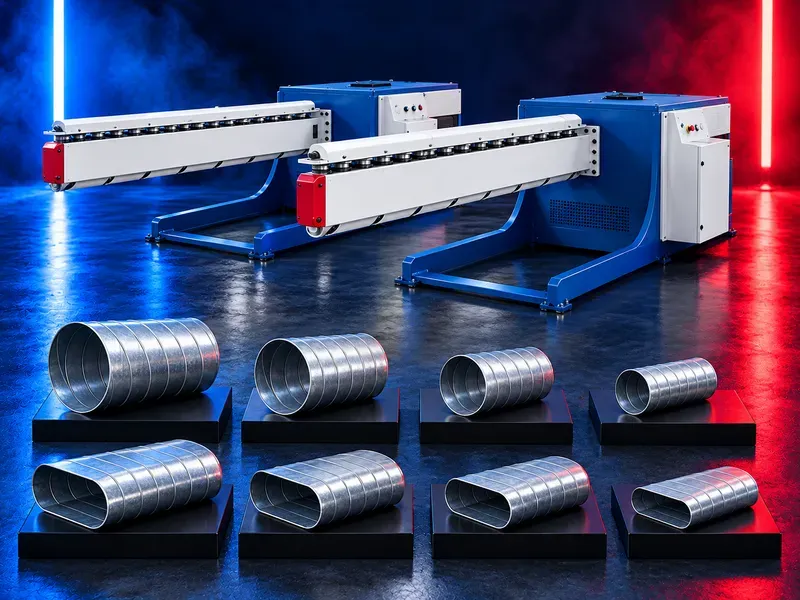
A round to flat oval duct forming machine reshapes compatible spiral round duct into flat oval ductwork for HVAC systems. Correct selection depends on the round duct diameter finished oval width and height duct length material thickness seam construction forming method and required dimensional quality.
The machine supports a prepared round spiral duct section and applies controlled forming force until the specified flat oval geometry is reached. The process must preserve the spiral seam and surface while controlling springback and distortion. Flat oval duct can provide a lower profile where installation height is limited while retaining a useful airflow area. The final duct design still requires approved airflow structural support leakage and installation calculations. Claims for a broad round duct range including the stated minimum and maximum diameters or seamless compatibility with any spiral duct system require confirmation from the exact data sheet tooling drawings and representative forming trials.
What the machine does
The machine converts a compatible round spiral duct section into a controlled flat oval cross section. It reshapes an existing duct and does not replace the upstream spiral duct forming machine.The output should match the approved width height end geometry length and connection requirement.Required input duct
Provide the round duct outside diameter length material grade thickness spiral seam type pitch corrugation or reinforcement and end preparation. The input must be round straight and within the tolerance required by the forming tooling.Damaged seams dents poor roundness loose edges or variable material can cause uneven forming or failure.Finished flat oval geometry
Specify finished outside width height straight side length corner radius end squareness and allowable tolerances. One round diameter can produce different oval proportions only within the verified material and tooling limits.Confirm how fittings connectors gaskets and supports will match the final section.Forming process
The duct is positioned between or around forming elements that move through a controlled cycle. Force travel sequence and support should change the section progressively without collapsing the walls or opening the spiral seam.Verify loading centering forming holding return unloading and fault recovery stages for every approved size group.Tooling and size adjustment
Rolls dies shoes supports or adjustable forming elements must suit the round input and finished oval shape. Tooling range changeover and setup method depend on the exact machine design.Confirm tool identification adjustment references wear limits storage handling and sample approval after every changeover.Materials and thickness
Material grade coating thickness hardness temper and seam construction affect forming force springback cracking wrinkling and surface marking. Galvanized steel stainless steel aluminium and other materials require separate confirmation.Do not generalize the same diameter or thickness capability across different materials.Duct support and handling
Long or large diameter ducts need support along the loading forming and discharge path to prevent sagging twist or seam damage. Adjustable stands or powered handling may be required depending on size and weight.Confirm working height support spacing loading direction lifting method and safe routes for round and finished ducts.Dimensional and surface quality
Inspect finished width height radii straightness end squareness length seam condition dents wrinkles cracks coating damage and repeatability. Use approved gauges and drawings rather than visual judgment alone.Approve the first part after setup size change material batch change tooling service adjustment or extended stoppage.Airflow structure and leakage
Forming changes the cross section and may influence airflow pressure loss stiffness support spacing and connection details. Seam integrity and leakage performance must be checked against the project duct standard.Machine forming approval does not replace system design calculations or installed duct testing.Integration with spiral duct production
The upstream spiral duct machine should produce compatible round sections with controlled diameter seam pitch straightness and length. Cutting end preparation oval forming inspection fitting production and connection preparation should be coordinated.Use traceable size and material identification to prevent the wrong round section from entering the oval forming setup.HVAC applications
Flat oval ducts are commonly considered where ceiling voids shafts architectural zones or equipment clearances limit duct height. Suitability depends on airflow noise pressure insulation fire requirements and installation constraints.Project approval should be based on the complete duct system and applicable standards rather than shape alone.Productivity and changeover
Accepted output depends on duct size length material handling setup forming cycle unloading inspection and the capacity of spiral duct and fitting operations.Measure accepted ducts per shift and changeover time during representative trials instead of relying on general efficiency claims.Common process risks
Wrong input diameter poor roundness weak seam incorrect setup insufficient support excessive force worn tooling or uncontrolled springback can cause shape variation collapse wrinkles cracks scratches open seams or twisted ends.Stop production and correct the input duct tooling supports or forming settings when any result falls outside acceptance criteria.Safety and operator protection
The machine may contain moving forming tools cylinders clamps pinch and crush points stored energy and large sharp edged duct sections. Guards interlocks emergency stops controlled access and energy isolation must follow the approved risk assessment.Procedures must cover loading support centering trial cycles unloading jam recovery tool adjustment cleaning lifting and maintenance.Installation and site readiness
Confirm floor capacity leveling anchoring electrical or hydraulic services working clearance full duct travel support stands lifting access lighting noise control and maintenance space.The layout should provide separate safe routes for round input finished oval duct operators tools and rejected parts.Training maintenance and lifecycle support
Training should cover duct identification size setup tooling references controls support positioning quality checks defect response safe recovery isolation lifting and daily inspection.Preventive maintenance should address hydraulic or mechanical drives cylinders hoses guides bearings forming tools supports sensors guards controls lubrication fasteners and emergency devices. Prepare approved wear parts and spares.How to select the correct machine
Start with round input drawings finished oval drawings materials thickness range duct lengths size mix quantities per shift utilities floor plan handling method and applicable duct standard.Selection should confirm forming range tooling force travel supports changeover control quality capability guarding maintenance service support and representative sample trials.Technical information requiring verification
Verify round input diameter range finished oval width and height range duct length material types thickness range seam compatibility forming force cycle time output basis tooling utilities motor power hydraulic data controls accuracy noise dimensions and total weight.Confirm supports guards standards installation commissioning training warranty service scope spare tooling parts and dimensional structural and leakage acceptance tests from approved documentation.Publishing status
This page describes the machine category forming process and selection logic. Exact size ranges thickness materials capacities speed accuracy utilities standards and commercial commitments require an approved data sheet drawings and technical review before publication.Questions we are asked
What is a round to flat oval duct machine?
It reshapes a compatible round spiral duct section into a specified flat oval cross section for HVAC installation.
Does it manufacture the round spiral duct?
No. The round spiral section is normally produced upstream and then supplied to this machine for shape conversion.
Can every round diameter become any oval size?
No. Finished width height and radii are limited by input diameter material thickness seam construction tooling and verified forming range.
Does oval forming guarantee acceptable airflow and leakage?
No. System design support connections seam integrity sealing and installed testing must also meet the project requirements.
How is finished duct quality checked?
Check width height radii straightness ends seam condition surface damage and dimensional repeatability against approved drawings.
What information is needed for selection?
Provide round and finished oval drawings materials thickness duct lengths quantities utilities layout handling method and applicable duct standard.
Tell us the part you need to make
An engineer reads every request. Usually the same working day.
Related
- Spiral Duct Forming Machine A forming machine for producing round spiral air ducts from compatible metal strip. Machine selection depends on duct diameter, material, strip thickness and width, seam type, cut length, and production target.
- U Shape Automatic Duct Production Line A U shape automatic duct production line converts approved sheet metal coils into prepared duct sections through a coordinated sequence that may include uncoiling leveling beading punching shearing locking flange forming and folding. The correct configuration depends on duct type material thickness dimensions flange system output target and factory layout.
- Automatic Duct Production Line for Rectangular HVAC Ducts An automatic duct production line converts approved sheet metal coils into prepared rectangular HVAC duct blanks and folded sections through a coordinated linear workflow. Depending on the verified configuration it may integrate uncoiling leveling beading punching shearing transfer locking flange forming and folding