

Window, Door & Profile Fabrication
Aluminium & uPVC Window and Door Machines
Machines for cutting, routing, drilling, milling, bending and joining aluminium and uPVC profiles, selected according to the profile system, finished product and production requirements.
Types in this category
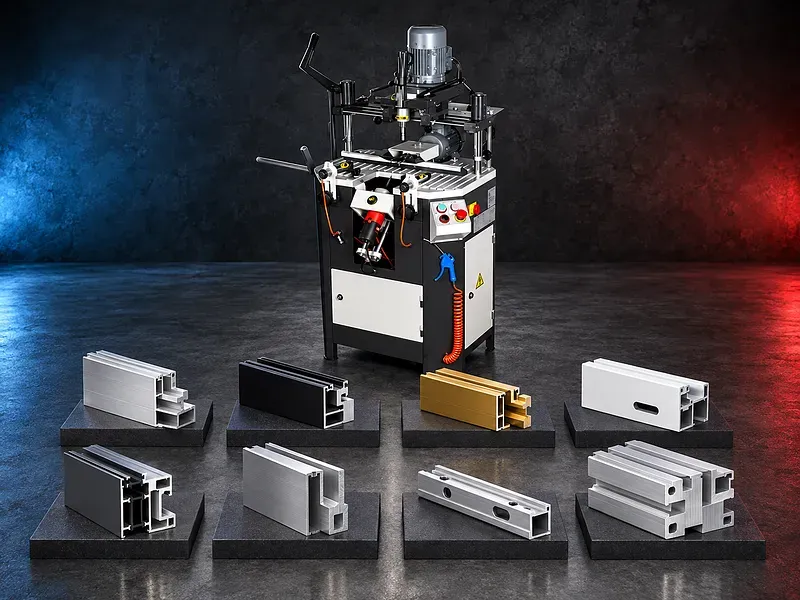 Aluminum Profile End Milling MachineEnd milling solutions for preparing aluminum profile ends for accurate fitting and assembly in suitable window, door and facade systems.
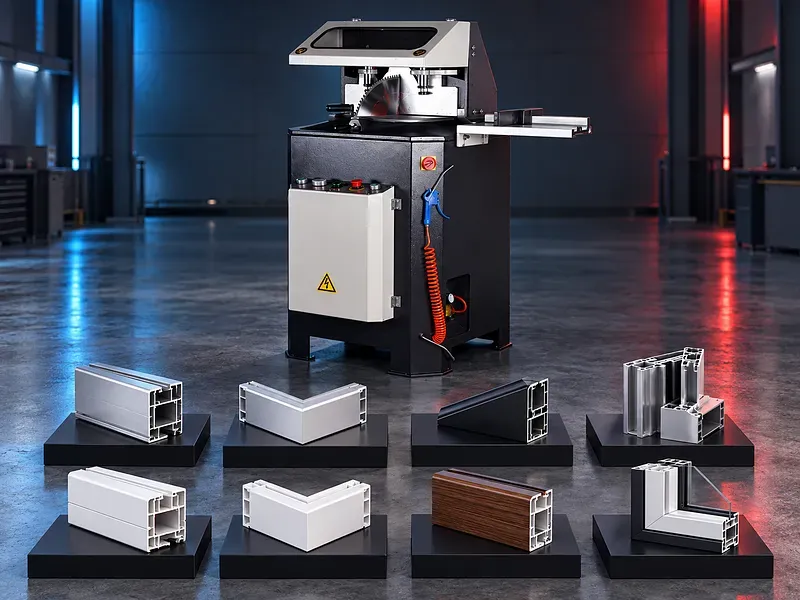 Automatic Up Cut Mitre SawAn automatic up cut mitre saw uses a guarded blade that rises through the work area to cut approved aluminium and PVC profiles at straight or angled settings supported by the machine. Correct selection depends on profile material cross section length cut angles finished quality blade clamping feeding cooling extraction output target utilities and safety requirements.
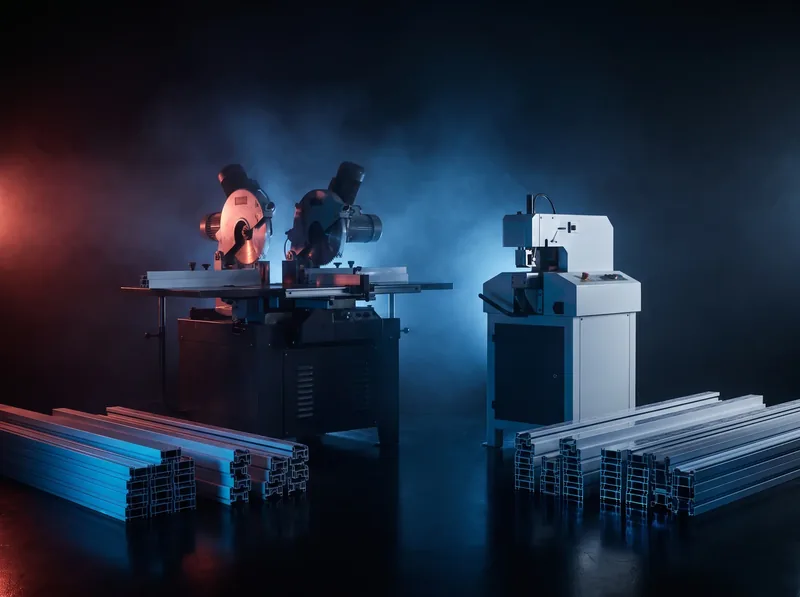
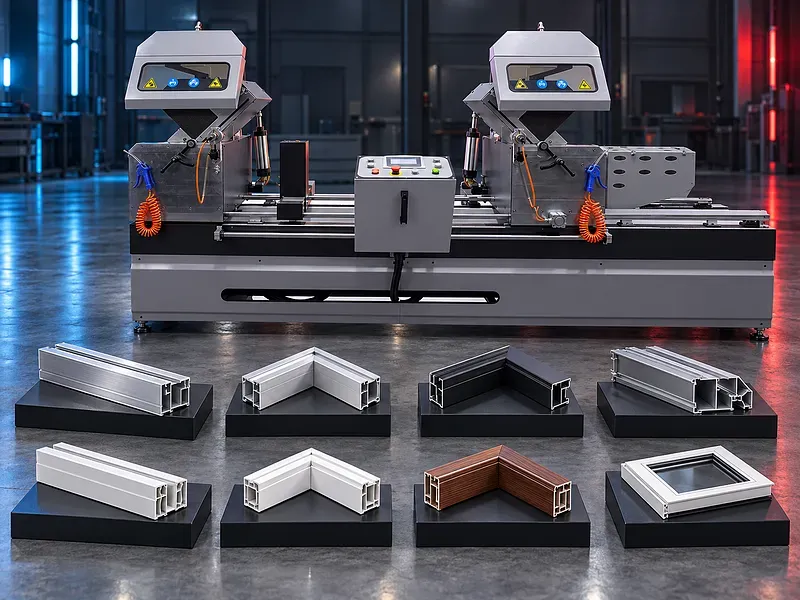 Double Head Mitre SawA double head mitre saw cuts both ends of an approved aluminium or PVC profile to the required length and supported angles within one coordinated cycle. Correct selection depends on profile material cross section finished length angle combination cut quality blade configuration head positioning clamping support output utilities and safety requirements.
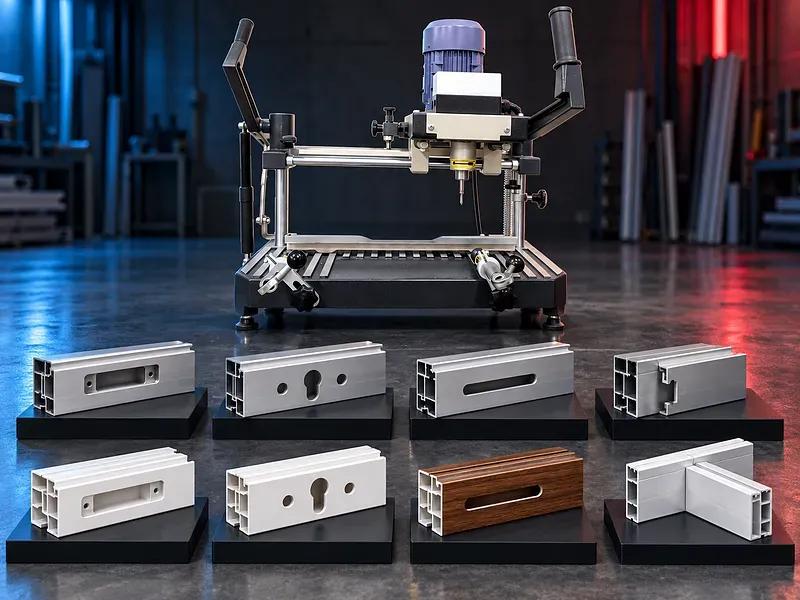 Portable Copy Router and End MillerPortable copy routing and end milling equipment is used to machine approved openings slots recesses and profile ends for aluminium and PVC fabrication. Correct selection depends on whether the required functions are combined or supplied separately as well as profile material geometry machining detail template or stop system tooling clamping quality output utilities and safety requirements.
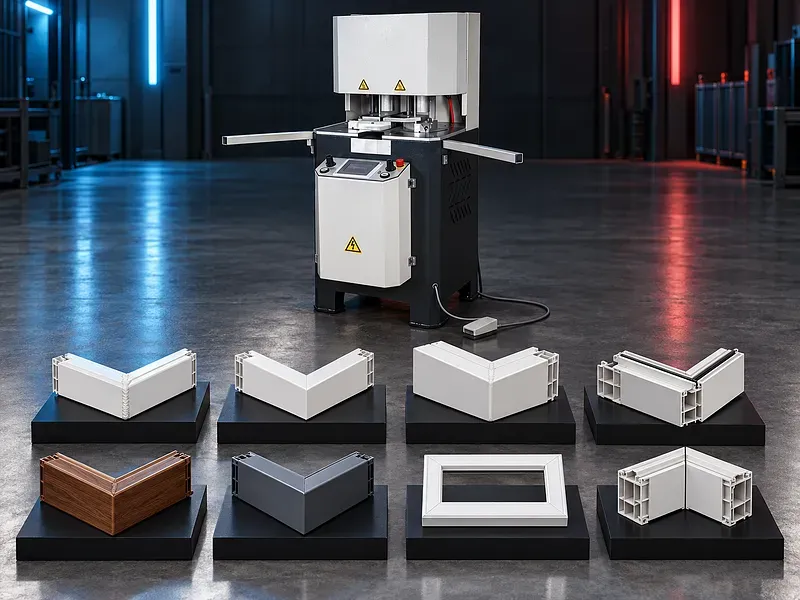 Single Corner Welding MachineA single corner welding machine joins two prepared PVC window or door profiles into one controlled corner through clamping heating pressing cooling and release. Correct selection depends on profile system section size joint preparation welding allowance temperature pressure cycle times finished corner quality cleaning method output utilities and safety requirements.
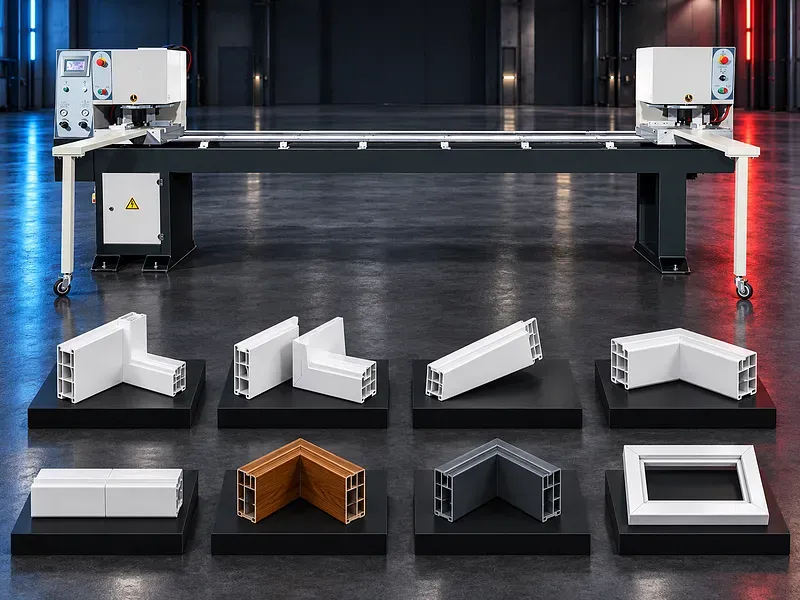 Double Corner Welding MachineA double corner welding machine joins prepared PVC window or door profiles at two corners within a coordinated automatic cycle using fixed and movable welding heads. Correct selection depends on profile system frame dimensions head movement angle requirements joint preparation temperature pressure cycle settings support handling output utilities and safety conditions.
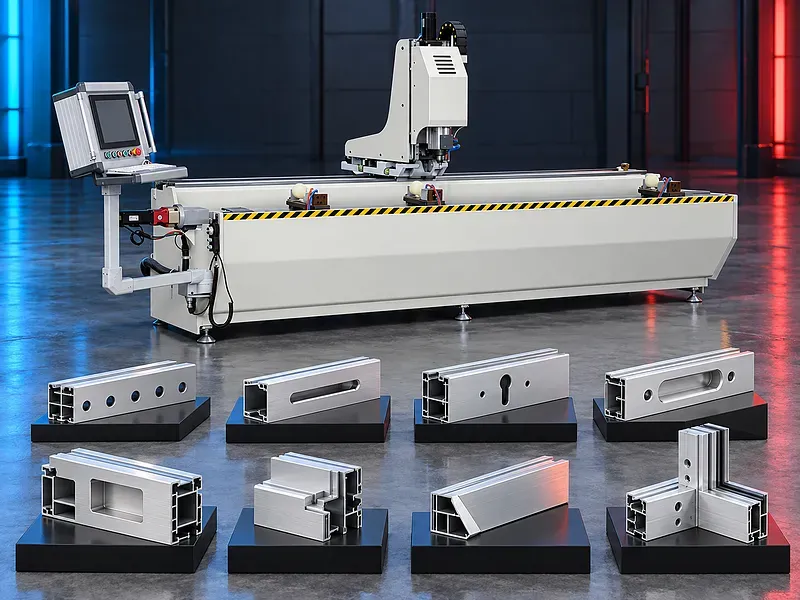 Aluminium CNC Drilling and Milling MachineA three axis CNC drilling and milling machine processes approved holes slots keyholes grooves threads chamfers and related features on aluminium profiles through one programmed setup. Correct selection depends on profile material cross section length feature geometry access directions spindle and tool requirements clamping software accuracy output extraction lubrication utilities and safety conditions.
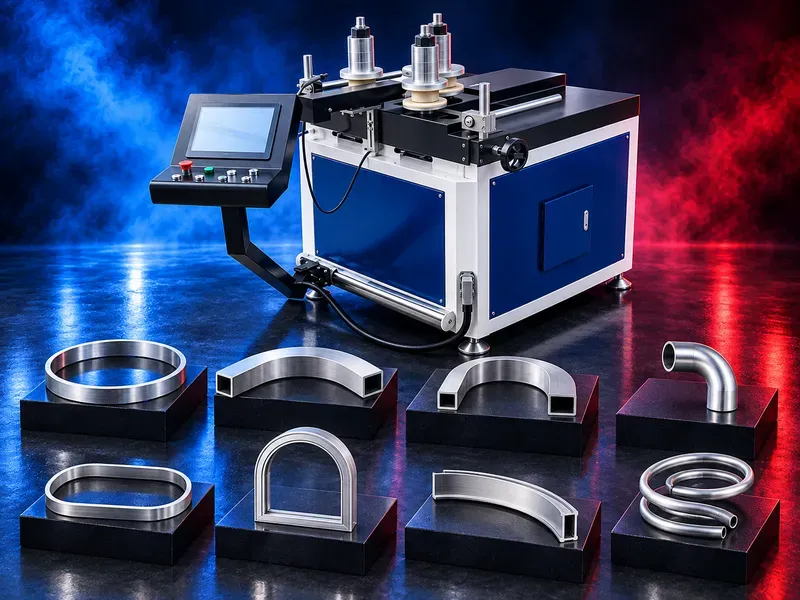 CNC Profile Bending MachineAutomatic 3-roller CNC bending solution for producing controlled arcs and curved profiles in suitable metal sections and pipes, including iron, copper and aluminium applications.
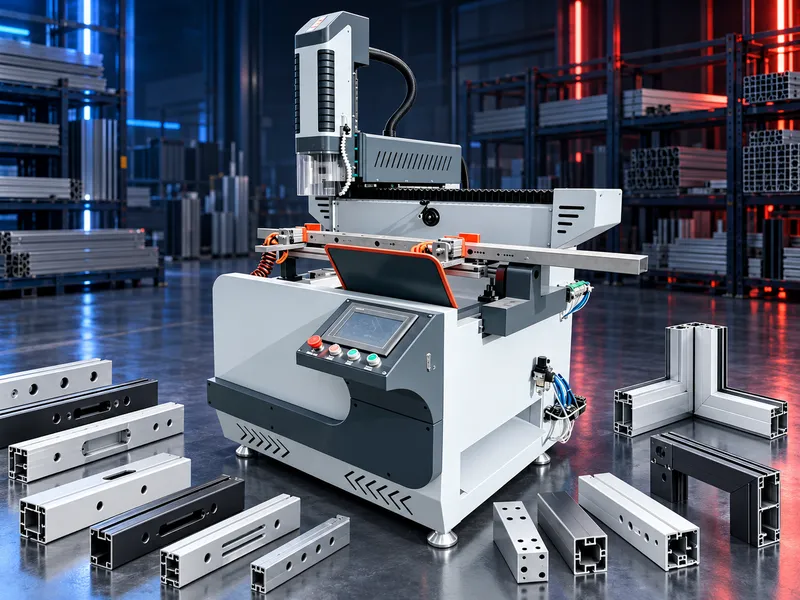 CNC Aluminum Profile Machining CenterCompact CNC machining center for drilling, slot milling, reaming and machining irregular holes in aluminum alloy profiles and industrial aluminum extrusions, with an 800 mm travel as stated in the supplied product information.
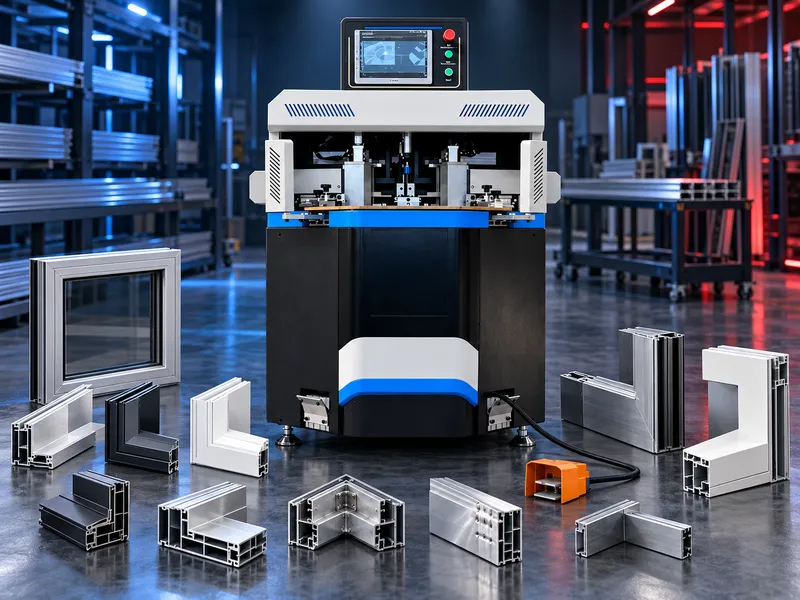 CNC Aluminium Profile Corner Crimping MachineCNC-controlled hydraulic corner crimping machine for joining aluminium profiles used in doors, windows and industrial profile fabrication, with synchronized crimping knives, adjustable tooling and foot-pedal operation.
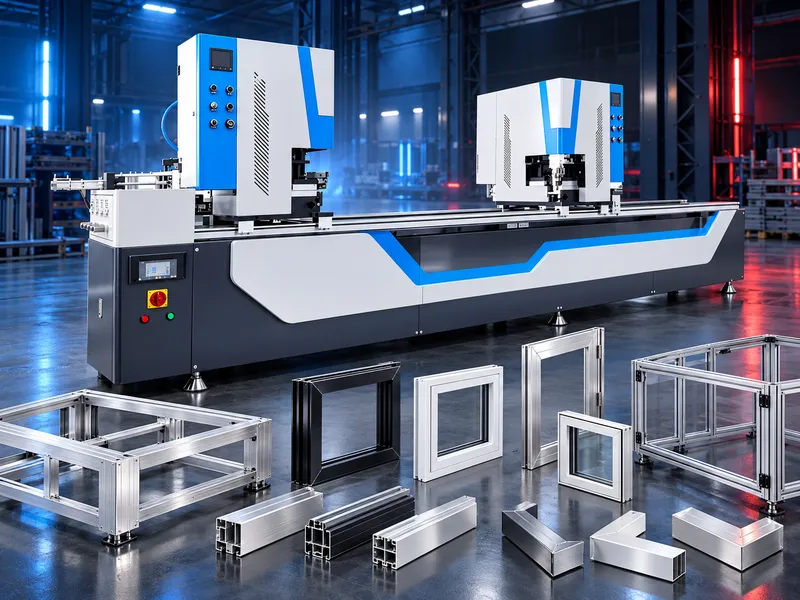 CNC Aluminium Profile Welding MachineCNC-controlled welding equipment for joining aluminium profiles in industrial frame and profile fabrication, combining precision linear motion, a reinforced machine structure and controlled welding-head positioning for repeatable production.
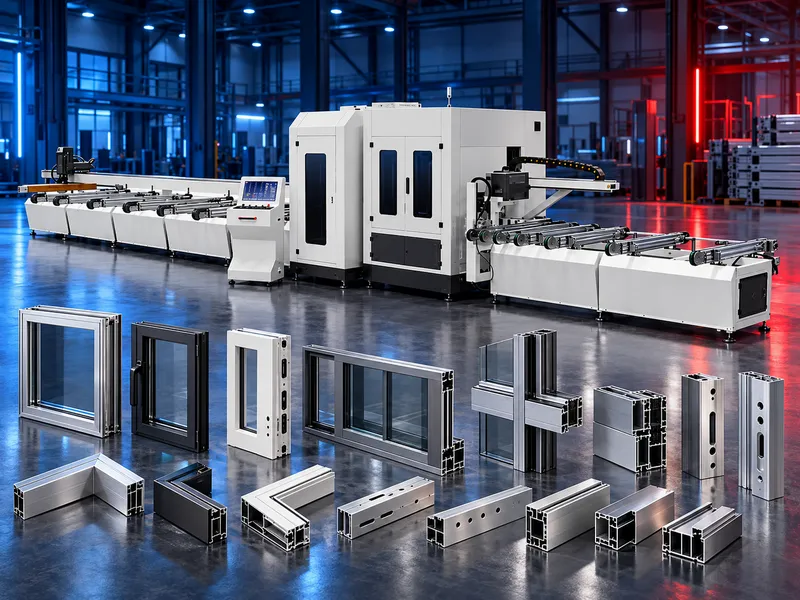 CNC Aluminium Profile Cutting CenterIntegrated CNC machining center for aluminium door, window and industrial profiles, combining four-side drilling and milling, ±45° cutting, laser marking and automatic label application in a connected production workflow.
Aluminium and uPVC window and door fabrication requires coordinated profile cutting, end milling, routing, drilling, corner preparation, joining and finishing operations. The required machines depend on the profile material, system design, frame type, hardware and production volume.
Machine selection starts with the approved profile drawings, cross-sections, finished frame dimensions, cutting angles, machining details, corner-joining method and required quality. Tooling, clamping, software, extraction, compressed air, handling and safety requirements must also be verified for the selected equipment.
What it is for
- Aluminium window and door frames
- PVC frames with welded corners
- Curtain wall and shopfront sections
- Sliding and folding systems
- Hardware routing and drainage slots
How to choose
Aluminium and PVC are different processes
Aluminium corners are mechanically joined; PVC corners are welded and cleaned. A workshop doing both needs to be equipped for both, not for the average of the two.
Double-head or single-head saw
A double-head saw sets an angle once and cuts both ends to length, which is where the repeatability comes from. A single head costs less and is slower and more dependent on the operator.
Copy routing decides your hardware options
The routing station determines which locks, handles and hinges you can fit without hand work. Check it against the systems you actually sell.
Extraction and offcut handling
Aluminium swarf and PVC dust both need collecting, and profile offcuts eat floor space quickly. Plan the layout with the machines.
Questions we are asked
What information is required to select aluminium or uPVC machines?
Provide the profile drawings, material, cross-sections, finished-frame dimensions, cutting angles, machining features, hardware, corner-joining method, quantities and available utilities.
Can one workshop produce both aluminium and uPVC frames?
Yes, but the two materials require different corner-joining, tooling and finishing processes. Shared and dedicated stations should be identified from the actual profile systems.
Should I choose a single-head or double-head saw?
The decision depends on profile dimensions, cutting angles, finished lengths, batch size, required repeatability, available space and automation needs. Suitability must be verified for the selected profiles.
When is a CNC profile machining centre appropriate?
It may suit profiles requiring multiple programmed holes, slots, end features or repeated machining. The axes, working length, tooling, clamping, software and accuracy must match the parts.
What is required for uPVC corner welding?
The profile system, section size, reinforcement arrangement, joint preparation, welding allowance, temperature, pressure, cycle settings and corner-cleaning method must be confirmed.
Are installation, training, tooling and warranty included?
The approved quotation must define installation, commissioning, training, tooling, consumables, warranty, maintenance and technical-support responsibilities.
Tell us the part you need to make
An engineer reads every request. Usually the same working day.
Related
- Welding and Thermal Cutting Equipment Welding, robotic automation and thermal cutting solutions selected according to the material, thickness, joint or cut geometry, required quality, production volume and site conditions.
- Sheet Metal Fabrication Machines Sheet metal machinery for cutting, punching, bending, rolling and forming, selected according to the material, thickness, part geometry, required quality and production target.
- Maintenance & technical support Production continuity depends on more than the machine itself. Correct installation, operator training, preventive maintenance, fault diagnosis and suitable spare-parts support all contribute to reliable operation.