

CONTROLLED PVC PROFILE CORNER WELDING
Single Corner Welding Machine for PVC Profiles
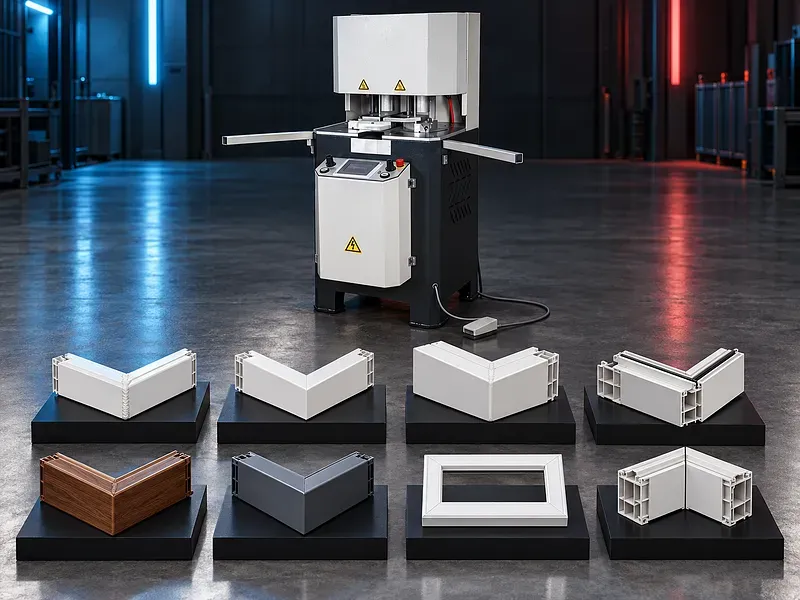
A single corner welding machine joins two prepared PVC window or door profiles into one controlled corner through clamping heating pressing cooling and release. Correct selection depends on profile system section size joint preparation welding allowance temperature pressure cycle times finished corner quality cleaning method output utilities and safety requirements.
The operator loads the two mitre cut profiles against the machine references and activates clamping. The automatic cycle then heats the prepared ends brings them together under controlled pressure holds the joint for the required period and releases the welded corner when the sequence is complete. Adjustable clamp pressure welding pressure heating time joining time and temperature can support different approved PVC profile systems. Exact ranges control method and included cleaning functions must be confirmed from the technical documentation.
What the machine does
The machine produces one welded corner per cycle from two compatible prepared PVC profiles. It controls the relative position of the parts and the heating pressing and cooling sequence required for the approved joint.
The finished result depends on profile material cut quality reinforcement removal cleanliness temperature pressure time alignment and cleaning.
Single corner production
A single head arrangement is suited to welding one frame corner at a time. It can support flexible or lower volume production where profiles sizes colors or frame dimensions change frequently.
Complete frame output also depends on cutting reinforcement preparation sequence handling and the number of welding cycles required.
Profile preparation
The profile ends should be cut to the approved angle and length with clean matching surfaces. Reinforcement seals films chips moisture contamination and damaged surfaces must be handled according to the profile system procedure.
Poor preparation can cause open joints misalignment excessive bead weak fusion or inaccurate frame dimensions.
Clamping and references
The operator positions both profiles against the corner references before activating the clamps. Clamp pressure must hold the sections securely without crushing chambers marking surfaces or changing the angle.
Confirm clamp pads reference geometry foot pedal sequence sensing and compatibility with the full range of approved profiles.
Heating stage
The heating plate softens the prepared PVC surfaces under controlled temperature contact and time. The plate condition cleanliness surface coating and temperature stability influence heat transfer.
Heating parameters must follow the approved profile system and machine procedure rather than one setting for every profile.
Joining and welding pressure
After heating the plate withdraws and the two profile ends move together under controlled pressure. The joint is held to form the corner and develop the required fusion.
Pressure travel and allowance should create a complete joint without excessive material displacement or dimensional change.
Cycle time adjustment
Heating joining holding and cooling times may be adjustable according to the supplied control. The correct values depend on profile material cross section wall thickness temperature and joint requirement.
Any change should be validated with sample corners dimensional inspection and the approved joint test.
Temperature control
A thermostat or digital controller may set and monitor heating temperature when included in the machine configuration. Displayed temperature does not replace verification of plate condition and actual process stability.
Confirm sensor type control range warm up behavior alarm function calibration method and recovery after interruption.
Weld allowance and bead
The process creates displaced PVC material around the joint. The allowed welding restriction or bead size should suit the profile geometry finish and following cleaning process.
Confirm how the allowance is adjusted and how it affects finished frame dimensions and joint strength.
Corner cleaning
Top and bottom cleaning knives may remove or control the weld bead when included. Knife geometry position temperature and condition must match the profile system and visible surface requirement.
Some surfaces grooves corners or decorative profiles may require separate manual or CNC corner cleaning after welding.
Corner quality and inspection
Acceptance should define corner angle diagonal dimensions surface alignment gap bead condition visible marks and joint strength according to the approved window or door system.
Inspect the first corner after setup or parameter change and use a documented sampling and destructive test plan when required.
Production workflow
Prepared profiles should be identified and loaded in the correct orientation. After welding and sufficient cooling the corner or partial frame moves to the next approved welding cleaning or assembly stage.
Define work in process support to prevent twisting impact or loading of a joint before it is ready.
Safety and operator protection
The machine contains hot surfaces automatic clamps and moving welding tables. Guards emergency stops safe control functions heat warnings and suitable protective equipment should follow the approved risk assessment.
Safe procedures must cover loading pedal operation parameter setup cleaning knife adjustment hot plate cleaning jam recovery and maintenance with verified isolation.
Installation and site readiness
Site preparation should confirm a level floor electrical supply compressed air ventilation lighting frame handling space and safe maintenance access. Air quality pressure and dryness can affect clamping consistency.
Keep profile storage cutting welding cooling and cleaning areas arranged to prevent contamination and mixed components.
Training maintenance and lifecycle support
Training should cover profile preparation references clamping parameters temperature cycle times first piece inspection safe recovery and daily care. Operators should recognize contamination temperature drift and joint defects.
Preventive maintenance should address heating plates coatings clamps cylinders guides sensors controllers seals cleaning knives guards and safety devices. Prepare an approved spare parts and consumables list.
How to select the correct machine
Start with profile system drawings section range colors wall construction cut angle frame sizes daily mix joint quality tests and required cleaning. Then define controls pressure adjustment cycle settings utilities handling and acceptance samples.
Selection should be based on welded sample corners and approved tests rather than temperature range or cycle speed alone.
Technical information requiring verification
Verify profile height width and section range clamp and welding pressure adjustment heating temperature range heating joining holding and cooling times welding allowance cleaning knife functions cycle time compressed air electrical load dimensions and weight.
Supplier information states a temperature adjustment range and an adjustable welding limitation but the exact values require confirmation from an approved data sheet. Confirm installation commissioning training warranty service scope spare parts and acceptance tests.
Publishing status
This page describes the machine category and selection logic. Exact ranges temperatures pressures times accuracy productivity functions options standards and commercial commitments require an approved data sheet and technical review before publication.
Questions we are asked
What is a single corner welding machine?
It is a PVC profile welding machine that joins two prepared mitre cut sections to produce one frame corner per cycle.
How does the welding cycle work?
The profiles are referenced and clamped then heated pressed together held and cooled according to approved process settings before release.
Can pressure and cycle time be adjusted?
Adjustment may be available for clamping welding and cycle stages. The correct settings must be validated for the profile system.
Does it clean the weld bead?
Top and bottom cleaning knives may be included but complete corner cleaning depends on profile geometry and the supplied configuration.
How is corner quality verified?
Check angle diagonals surface alignment gap bead condition appearance and joint strength against the approved window or door system.
What information is needed for selection?
Provide profile system drawings section range colors frame sizes production mix weld allowance quality tests cleaning requirements utilities and site arrangement.
Tell us the part you need to make
An engineer reads every request. Usually the same working day.
Related
- Aluminum Profile End Milling Machine End milling solutions for preparing aluminum profile ends for accurate fitting and assembly in suitable window, door and facade systems.
- Automatic Up Cut Mitre Saw for Aluminium and PVC An automatic up cut mitre saw uses a guarded blade that rises through the work area to cut approved aluminium and PVC profiles at straight or angled settings supported by the machine. Correct selection depends on profile material cross section length cut angles finished quality blade clamping feeding cooling extraction output target utilities and safety requirements.
- Double Head Mitre Saw for Aluminium and PVC A double head mitre saw cuts both ends of an approved aluminium or PVC profile to the required length and supported angles within one coordinated cycle. Correct selection depends on profile material cross section finished length angle combination cut quality blade configuration head positioning clamping support output utilities and safety requirements.