

PROFILE OPENING AND END PREPARATION
Portable Copy Router and End Milling Machine for Aluminium and PVC
Portable copy routing and end milling equipment is used to machine approved openings slots recesses and profile ends for aluminium and PVC fabrication. Correct selection depends on whether the required functions are combined or supplied separately as well as profile material geometry machining detail template or stop system tooling clamping quality output utilities and safety requirements.
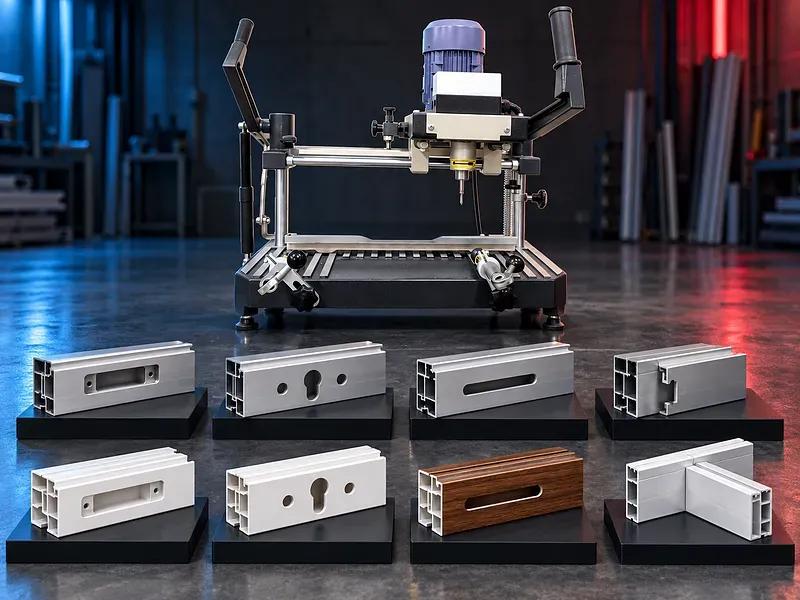
Copy routing follows an approved template stop arrangement or guided path to reproduce hardware openings and related features in a profile. End milling removes material from the profile end to prepare an approved joint or connection geometry. These functions may be offered in one configuration or as separate machines. The supplied scope machining directions profile range and included tools must be confirmed from the approved technical documentation before the page is published.
What the equipment does
The copy routing function machines repeated openings grooves and recesses according to a controlled guide. The end milling function machines the cut end of a profile so it can fit an approved frame joint transom mullion or related assembly.
A technical review must confirm whether both functions are available in the same offered unit or require separate equipment.
Portable copy routing
A portable or compact copy router supports localized profile machining where controlled movement follows a template or stop pattern. Typical approved features may include lock handle drainage and hardware openings.
Feature size depth position corner radius and direction depend on the guide cutter profile support and working travel.
End milling
End milling prepares the profile end by removing a shaped area that matches an approved mating section. The cutter profile and feed path should reproduce the joint geometry without excessive burrs tearing or deformation.
Confirm whether the required end shape needs one cutter several cutters a cutter stack or a different machining process.
Templates guides and stops
Templates guides and adjustable stops define the copy path and feature position. They should be identified controlled and protected from wear or accidental adjustment.
Every product family requires a verified reference arrangement and a first piece check before batch production.
Aluminium profile applications
Approved aluminium window door facade partition and furniture profiles may be machined when their alloy temper wall thickness chamber structure and finish suit the cutter and machine range.
Thin walls thermal breaks coatings and protective films require controlled support clamp pressure cutting direction and lubrication.
PVC profile applications
Approved rigid PVC profiles may be routed or end machined when tool geometry speed feed and support avoid melting cracking chipping and deformation.
Internal reinforcement seals films or inserted parts must be identified because they can require another tool setup or separate process.
Profile support and clamping
The workpiece should be located against stable references and clamped near the machining area without obstructing the tool path. Support must prevent twisting vibration or movement.
Verify clamp pressure contact pads clearance and compatibility with hollow narrow asymmetrical and finished profiles.
Cutters and tool setup
Router cutters end mills cutter stacks collets arbors and holders must match the approved material feature geometry spindle interface and speed. Tool projection condition balance and rotation influence finish and safety.
Document each tool assembly reference offsets permitted resharpening limits and replacement criteria.
Feed and machining technique
Feed direction and rate should maintain stable cutting load and avoid tool grabbing excessive heat or poor edge finish. The operator must keep the profile supported and follow the approved cycle.
Trial machining is required when changing material profile wall thickness cutter or feature depth.
Lubrication cooling and chip extraction
Aluminium may require an approved lubricant to reduce heat and chip adhesion. PVC needs controlled conditions that avoid softening and smearing.
Provide collection or extraction for chips and fine particles and keep guides templates clamps motors and guards clean.
Machining quality and inspection
Acceptance should define feature position dimensions depth corner condition end profile fit burrs edge finish and deformation from the approved drawing. Inspect the first piece after setup or tool change.
Use calibrated gauges templates or mating samples suitable for the tolerance and final assembly requirement.
Production use and flexibility
Copy routing supports repeat features with a simple controlled reference while end milling prepares consistent joints. Practical output includes loading referencing clamping machining inspection cleaning and tool changes.
Evaluate representative profiles feature families batch sizes changeovers and operator tasks before approving productivity.
Safety and operator protection
The equipment contains high speed rotating cutters automatic or manual clamps sharp profiles and ejected chips. Guards emergency stops secure tool holding extraction and protective equipment should follow the approved risk assessment.
Safe procedures must cover setup template changes cutter changes trial machining chip removal jam recovery cleaning and maintenance with verified isolation.
Installation and site readiness
Site preparation should confirm a stable bench or floor location electrical supply compressed air when required lubrication extraction lighting profile storage and safe working clearance.
Portable equipment still requires controlled support secure positioning cable or hose management and a defined operating area.
Training maintenance and lifecycle support
Training should cover references templates stops clamping cutters lubrication quality checks safe recovery and daily care. Operators should recognize tool wear vibration heat and finish changes.
Preventive maintenance should address cutters collets arbors spindle bearings guides clamps cylinders belts sensors lubrication extraction guards and electrical cables. Prepare an approved spare parts and consumables list.
How to select the correct configuration
Start with profile drawings materials cross sections required openings grooves recesses end shapes quantities tolerances surface protection and assembly method. Then define whether one combined machine or separate copy routing and end milling equipment is required.
Selection should be based on representative profiles and verified samples rather than a general statement that both functions are available.
Technical information requiring verification
Verify profile size and wall thickness ranges machining travel opening dimensions end milling envelope spindle power and speed cutter interface cutter capacity feed method clamping accuracy extraction compressed air electrical load dimensions and weight.
Confirm whether both functions are combined included cutters templates stops guards installation commissioning training warranty service scope spare parts and agreed acceptance tests.
Publishing status
This page describes the machine category and selection logic. Exact functions capacities travels speeds accuracy productivity options standards and commercial commitments require an approved data sheet and technical review before publication.
Questions we are asked
What is a portable copy router?
It is compact profile machining equipment that follows a template guide or stop arrangement to reproduce approved openings slots and recesses.
What is end milling used for?
End milling removes a controlled shape from the profile end so it can fit an approved mating profile or frame joint.
Are both functions included in one machine?
They may be combined or supplied as separate machines. The exact offered configuration and included tools must be confirmed.
Can it process aluminium and PVC?
It may process both when cutters speeds feed lubrication support and clamping are approved for each profile and material.
How is feature position controlled?
Position is established by approved templates guides stops and profile references followed by first piece inspection.
What information is needed for selection?
Provide profile drawings materials cross sections openings grooves recesses end shapes quantities tolerances surface requirements utilities and site arrangement.
Tell us the part you need to make
An engineer reads every request. Usually the same working day.
Related
- Aluminum Profile End Milling Machine End milling solutions for preparing aluminum profile ends for accurate fitting and assembly in suitable window, door and facade systems.
- Automatic Up Cut Mitre Saw for Aluminium and PVC An automatic up cut mitre saw uses a guarded blade that rises through the work area to cut approved aluminium and PVC profiles at straight or angled settings supported by the machine. Correct selection depends on profile material cross section length cut angles finished quality blade clamping feeding cooling extraction output target utilities and safety requirements.
- Double Head Mitre Saw for Aluminium and PVC A double head mitre saw cuts both ends of an approved aluminium or PVC profile to the required length and supported angles within one coordinated cycle. Correct selection depends on profile material cross section finished length angle combination cut quality blade configuration head positioning clamping support output utilities and safety requirements.