

WOOD PANEL PRESSING SOLUTIONS
Woodworking Hot Press Machines
Woodworking hot presses apply controlled pressure and heat to compatible panel assemblies so an approved adhesive can form a bond under defined process conditions. Correct selection depends on the product construction panel dimensions adhesive pressure temperature time platen arrangement loading method quality standard utilities and safety requirements.
The supplied arrangement describes electronic control with manual loading and unloading. The control may manage temperature pressure timing opening and alarms according to the selected design while operators prepare load align and remove the panel stack using an approved handling method. Potential applications include selected veneered panels hollow core door assemblies and multi layer panels when the materials adhesive construction press schedule and platen capability are technically approved. Surface quality and bond performance must be confirmed by process trials and inspection.
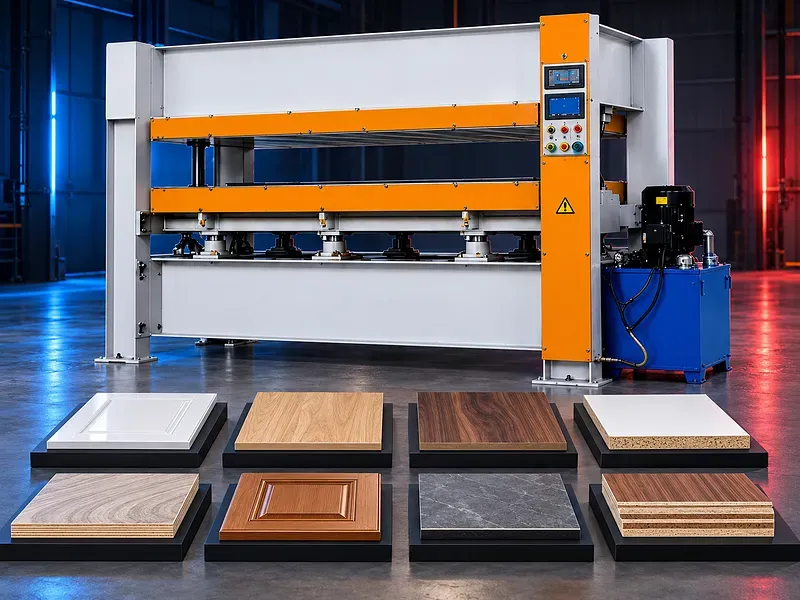
What a woodworking hot press does
The press closes one or more heated platens onto an assembled panel load and maintains defined pressure temperature and time. Heat supports the curing or activation behavior of a compatible adhesive while pressure holds the layers in contact.
The selected machine and process must suit the product materials adhesive and geometry. A hot press does not by itself guarantee a finished panel or approved bond.
Potential press configurations
Configurations may include a single opening press or a multi opening press with different platen sizes daylight arrangements heating systems controls and loading accessories. The frame may use hydraulic cylinders or another verified closing system.
The exact number of openings loading direction control functions and accessories must be confirmed from the approved datasheet and machine drawing.
Panel and product preparation
Panels faces cores veneers and intermediate layers should be prepared to the approved dimensions moisture content surface condition and cleanliness before adhesive application and assembly.
Thickness variation dust oil contamination damaged surfaces warped components open joints and incorrect layer orientation can affect pressure distribution surface finish and bond quality.
Potential applications
Potential applications include compatible veneered panels laminated boards hollow core door assemblies decorative panels furniture components composite wood products and selected multi layer constructions.
Suitability depends on layer materials core design adhesive flow temperature sensitivity pressure resistance thickness tolerance surface requirement and downstream machining or finishing.
Adhesive selection and preparation
The adhesive should be approved for the substrate veneer product duty temperature and press method. Mixing ratio spread rate open time assembly time curing behavior pot life storage and handling influence the result.
The adhesive supplier process instructions and safety data should define preparation application allowable moisture temperature pressure time ventilation cleaning and acceptance tests.
Heated platens
Heated platens transfer heat into the panel assembly and provide the pressing surface. Platen flatness parallelism surface condition internal flow path and temperature distribution affect pressure contact and curing uniformity.
Confirm platen dimensions thickness material surface finish temperature range warm up behavior uniformity tolerance zoning connection method and permissible local load.
Heating system and temperature control
Possible heating methods may use thermal oil hot water steam electric heaters or another approved system depending on the press design. Each method has different utility control maintenance and safety requirements.
The control should use verified sensors and an approved measurement method. Set temperature alone does not prove platen temperature uniformity or heat penetration through the product.
Press force and specific pressure
Total press force is distributed across the effective loaded area. The required specific pressure depends on adhesive layer materials product construction surface contact and the approved pressing schedule.
Selection should calculate load area required pressure total force cylinder arrangement frame capacity and a validated margin. Nominal force alone is not enough if the product size and pressure distribution are unknown.
Hydraulic and closing system
A hydraulic system may raise or close the moving platen and maintain pressure during the cycle when used in the selected design. Cylinders pump valves seals reservoir filtration and controls should support smooth synchronized movement and stable pressure within approved limits.
Confirm working pressure cylinder quantity and arrangement closing speed holding behavior pressure compensation leakage limits oil grade cooling filtration monitoring and safe pressure release.
Electronic control and press cycle
The electronic control may coordinate temperature press closing pressure build hold time opening alarms and stored settings according to the installed functions. Some adjustments and material handling may remain manual.
Confirm interface language recipes sensor inputs pressure and temperature display data recording permissions diagnostics backups and the sequence after power hydraulic or heating faults.
Manual loading and unloading
Manual handling requires a defined method for preparing carrying aligning loading and removing the panel or stack without trapping hands damaging surfaces or disturbing layer position.
Panel size mass temperature opening height shelf spacing operator count support tables racks trolleys lifting aids and cooling area should be reviewed. Manual loading does not remove the need for guards and safe access controls.
Press schedule
A press schedule defines platen temperature specific pressure closing profile hold time opening method and conditioning required for an approved product. It should account for total thickness heat transfer adhesive behavior moisture and layer construction.
The schedule must be established through adhesive guidance trials and quality tests. The shortest possible cycle is not necessarily the correct curing cycle.
Pressure and temperature uniformity
Uniform processing requires suitable frame stiffness platen geometry cylinder arrangement load distribution and correctly prepared panels. Uneven thickness or off center loading may create local pressure differences and surface defects.
Temperature surveys pressure checks platen parallelism and sample mapping should use approved instruments and acceptance criteria.
Production workflow
Begin with approved product drawings material specifications adhesive instructions press schedule stack plan and inspection method. Check platen cleanliness temperature system pressure system guards sensors and handling equipment before production.
Prepare and identify components apply adhesive assemble align load close and hold according to the approved cycle then unload condition and inspect the product. Record corrections rejects and process changes.
Quality and acceptance
Inspection may cover panel thickness dimensions flatness squareness surface marks blisters telegraphing veneer displacement glue bleed edge closure delamination moisture bond strength and appearance according to the product standard.
The control plan should define conditioning test pieces destructive bond tests sampling calibration first panel approval acceptance limits traceability and handling of nonconforming products.
How to choose the correct hot press
Provide finished product and assembly drawings panel length width thickness layer materials core construction veneer data adhesive press schedule load quantity batch mix finish tolerance quality tests and target output.
Also define platen size number of openings daylight loading direction manual handling aids heating medium utilities temperature and pressure ranges extraction floor space staffing maintenance capability and acceptance trial.
Technical information to verify
Approved documents must confirm platen length and width number of openings daylight stroke total force specific pressure range cylinder arrangement closing and opening speed platen flatness parallelism temperature range temperature uniformity heating method and warm up conditions.
Hydraulic data heater capacity electrical load thermal utility demand controls sensors recipes logging loading accessories dimensions weight floor loading foundation guarding safety functions ventilation noise basis standard equipment options tools documents training warranty service and acceptance method also require confirmation.
Safety and operating risks
Risks include crushing between platens unexpected movement hot surfaces hot panels hydraulic pressure fluid leaks heating medium electrical energy adhesive chemicals fumes manual handling unstable stacks and maintenance inside the press area.
The installation needs approved guards interlocks emergency stops safe opening supports mechanical blocks pressure release temperature protection isolation ventilation adhesive handling procedures lifting controls personal protection training supervision and a documented risk assessment.
Installation and commissioning
Site preparation should cover delivery access floor and foundation loading anchoring working clearance electrical and heating utilities ventilation hydraulic service panel flow adhesive storage loading tables cooling area waste handling fire controls and maintenance access.
Commissioning should verify level frame and platen alignment parallelism hydraulic integrity heating control temperature survey pressure distribution controls sensors safety functions sample panels quality tests operator training maintenance training documents and an agreed acceptance trial.
Maintenance and lifecycle support
Preventive maintenance should follow approved schedules for platens heating circuits hoses connections cylinders seals pumps valves filters oil heaters sensors controls guides fasteners guards interlocks and emergency devices.
Agree recommended seals hoses valves filters oil sensors heaters contactors calibration instruments cleaning materials software backups technical documents training inspection records and service responsibility for the selected press.
Limitations and publishing status
The supplied description does not verify press configuration force platen size openings temperature uniformity pressure uniformity machining precision surface quality bond quality versatility accessories production capacity or suitability for every pressing requirement.
Publication requires the exact approved datasheet machine drawing heating and hydraulic data adhesive and product process sheets sample test results safety instructions approved image technical review staging review and final content approval.
Technical review and next step
Send product drawings panel and layer specifications adhesive data press schedule load dimensions batch quantities quality tests utilities and factory layout for technical review.
The review should define the suitable press configuration platen arrangement heating system force control loading aids ventilation inspection acceptance trial installation training maintenance consumables and spare parts scope.
Questions we are asked
What is a woodworking hot press?
It is a press that applies controlled heat and pressure to compatible panel assemblies for an approved adhesive bonding process.
Which products can be pressed?
Potential products include selected veneered panels hollow core door assemblies decorative boards and multi layer panels when the product adhesive press schedule and machine capability are approved.
Does electronic control make the process fully automatic?
Not necessarily. Electronic control may manage temperature pressure time and alarms while loading alignment unloading and some adjustments may remain manual.
What determines bond quality?
Material preparation moisture adhesive spread open time assembly accuracy pressure temperature time conditioning and inspection all affect the result.
What information is needed for selection?
Provide product drawings panel and layer materials adhesive press schedule load dimensions quantities quality tests handling method utilities and factory layout.
Tell us the part you need to make
An engineer reads every request. Usually the same working day.
Related
- CNC WOOD ROUTER CNC routing solutions for cutting, drilling, engraving and machining suitable wood panels and furniture components.
- CNC ROUTER WITH ROTARY A CNC router equipped with a rotary attachment or axis for machining suitable cylindrical and shaped workpieces. Selection depends on the part geometry, material, dimensions, required operations, accuracy, and production volume.
- Automatic Edge Banding Machines Automatic edge banding machines apply and finish compatible edge material on straight panel edges through a controlled production sequence. Correct selection depends on the panel material dimensions edge tape adhesive production volume finish requirement installed processing units utilities and extraction system.