

MULTIPLE STRIP WOOD CUTTING
Multi Blade Rip Saws for Solid Wood and Panel Strips
Multi blade rip saws use several circular blades on one or more arbors to divide compatible boards or square timber into multiple longitudinal strips in one controlled pass. Correct selection depends on the material dimensions grain direction strip widths blade arrangement kerf feed method straightness tolerance surface quality output extraction utilities and safety requirements.
The workpiece is guided and driven through a guarded blade section where the installed blade spacing determines the strip widths. Feed chains rollers or another approved system restrain and advance the timber while anti kickback and pressure devices support controlled longitudinal cutting. This machine category is primarily intended for ripping along the workpiece length and grain direction. Cross cutting should not be published as a supported function unless the exact configuration and approved operating manual explicitly confirm it.
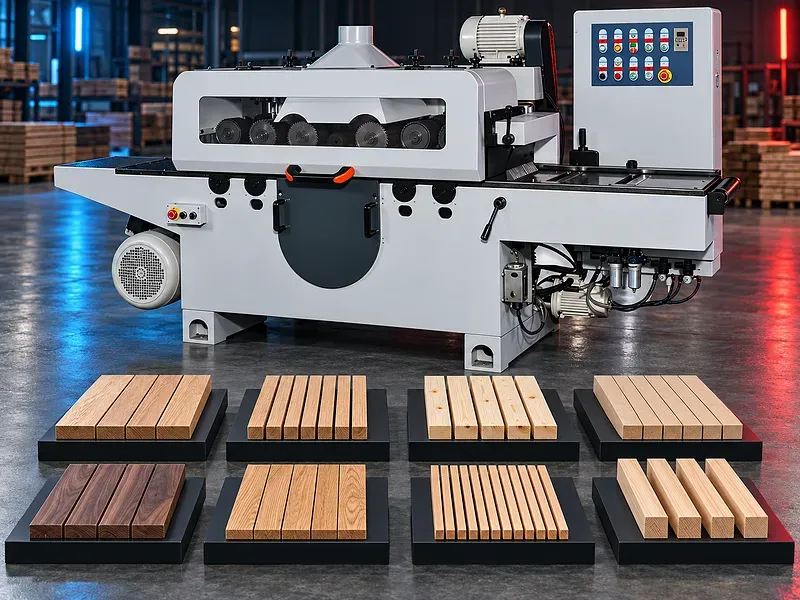
What a multi blade rip saw does
The machine feeds compatible timber through multiple circular saw blades to produce several longitudinal strips in one pass. Blade positions and spacers establish the nominal strip widths within the installed machine limits.
The machine should be selected from the incoming board geometry finished strip plan material condition and required production route.
Ripping and cross cutting distinction
Ripping cuts generally follow the length and grain direction of a board. Cross cutting separates material across its width or grain and normally uses a different feed and work holding arrangement.
The supplied title combines both terms but does not prove cross cutting capability. Only longitudinal ripping is treated as the base function until approved evidence confirms otherwise.
Potential products and applications
Potential products include floor strips door and window frame stock furniture rails battens slats box boards pallet components edge strips and selected solid wood or compatible panel parts.
Suitability depends on material construction straightness finished strip width surface requirement and downstream planing moulding gluing drying or assembly.
Material and incoming stock condition
Confirm timber species density moisture grain direction knots checks resin warp twist cup edge condition embedded metal adhesive layers panel construction and incoming length width thickness and weight.
Internal stress can move strips after cutting while warped or cracked stock can feed unpredictably. Material grading and rejection criteria should be defined before production.
Cut plan and strip dimensions
Provide the incoming board dimensions and required number width thickness and length of strips together with edge trim allowance and downstream machining allowance.
The cut plan should account for every blade kerf side trim defects and permitted width variation. Theoretical yield should be confirmed with real material grading and sample cutting.
Blade arbor and spacing arrangement
Circular blades may be mounted on an arbor with approved spacers sleeves or positioning elements to establish multiple cuts. Some designs may use more than one arbor or a movable blade system.
Verify arbor quantity diameter usable length blade count spacing range mounting sequence rotation clamping torque balance service access and the approved method for changing strip widths.
Saw blade selection
Blade diameter thickness kerf bore tooth count tooth geometry plate stiffness material and rotation should suit the arbor timber thickness feed direction speed and finish requirement.
Confirm the approved blade range maximum blade count compatible combinations sharpening policy replacement criteria flange dimensions and prohibition of unapproved blade or spacer combinations.
Feed chain rollers and pressure
A powered chain conveyor rollers or another system may pull or push the workpiece through the blades. Pressure elements should keep the timber controlled without excessive marks or deformation.
Verify feed system type speed range pressure adjustment chain or roller condition minimum part length support slip control and behavior with narrow short warped or resinous timber.
Guides references and straight line cutting
A straight reference edge guide fence or controlled feed path is required to establish the longitudinal cut. The first reference should be suitable for the desired straightness and downstream allowance.
Confirm fence or guide arrangement adjustment wear limits alignment calibration entry support and whether rough edged boards require a separate straight line edging process.
Anti kickback and workpiece control
Anti kickback fingers pressure devices and guarded feed zones help control timber if cutting forces or internal stress attempt to move it backward or upward.
Verify anti kickback coverage movement wear inspection adjustment access reset procedure and suitability for the minimum stock dimensions. These devices do not replace correct material preparation and operation.
Kerf yield and material utilization
Each blade removes a kerf from the incoming width. Blade quantity kerf side trim defects and target strip widths determine the possible material yield.
A thinner kerf may reduce waste only when blade stability arbor support timber condition feed rate and cut quality remain acceptable. Yield claims require a documented cutting plan and real production data.
Cut quality and inspection
Inspection may cover strip width variation straightness parallelism squareness edge roughness saw marks burning tear out chipping wandering resin buildup and remaining allowance for later machining.
The quality plan should define references tolerances gauges sampling first cut approval blade change criteria correction limits traceability and handling of nonconforming strips.
Production workflow
Begin with an approved cutting plan material grading blade and spacer list arbor setup feed and pressure settings references extraction settings and inspection method. Verify guards anti kickback devices interlocks and emergency functions.
Run a representative board inspect every strip and confirm downstream allowance. Record approved setup and blade condition before controlled production.
Cycle time and production capacity
Total cycle time includes material sorting loading referencing feeding cutting stopping unloading strip separation inspection stacking blade setup and changeover.
Automatic feeding and multiple strips may support throughput but no efficiency quality cycle time or output claim should be published without a timed trial using real timber cut plans staffing and acceptance criteria.
Dust chip and waste extraction
Multiple blades can generate a high volume of sawdust chips and narrow offcuts. Poor extraction can affect blade cooling cut quality feed mechanisms visibility air quality housekeeping and fire risk.
Confirm hood coverage extraction ports airflow pressure ducting filtration waste handling dust classification cleaning access grounding and fire controls for the approved material and blade setup.
Safety and operating risks
Risks include rotating blades powered chains and rollers anti kickback action entanglement crushing pinch points kickback ejected strips blade failure dust noise electrical energy pneumatic energy jams and manual handling.
The machine requires approved enclosures interlocks emergency stops braking safe setup mode energy isolation anti kickback controls secure support extraction blade management training supervision and a documented risk assessment.
Installation and commissioning
Site planning should cover delivery access foundation and floor loading leveling anchoring service clearance timber storage infeed and outfeed support electrical and air supplies extraction ducting waste handling fire controls lighting and maintenance access.
Commissioning should verify arbor and blade setup guides feed and pressure systems anti kickback extraction controls guards interlocks emergency functions sample cuts operator training maintenance training documents and an agreed acceptance trial.
Maintenance and lifecycle support
Preventive maintenance should follow approved schedules for arbors bearings blades flanges spacers feed chains rollers drives pressure devices guides anti kickback fingers lubrication extraction sensors electrical controls guards interlocks and emergency devices.
Agree blade supply sharpening and replacement criteria spacers flanges chains rollers bearings belts wear plates filters lubricants setup tools calibration checks manuals training inspection records service responsibility and recommended spare parts.
How to select the correct machine
Provide incoming timber data dimensions weight moisture defects edge condition cut plans strip widths quantities batch mix tolerances finish downstream allowance shift pattern and target output.
Also define blade count and kerf preferences spacing changes feed system reference method supports handling extraction utilities floor layout staffing maintenance capability and acceptance tests.
Technical information to verify
Approved documents must confirm working width thickness and length ranges blade and arbor quantity blade diameter bore kerf and spacing limits arbor speed and power feed system speed and pressure minimum part size and reference arrangement.
Accuracy test basis extraction demand electrical and air requirements dimensions weight foundation floor loading noise basis guards anti kickback and safety functions standard equipment options blades spacers manuals training warranty service and acceptance method also require confirmation.
Limitations and publishing status
The supplied description does not verify cross cutting automatic feed performance high efficiency cut quality material range working capacity blade count spacing speed accuracy output extraction or safety configuration.
Publication requires the approved exact datasheet machine layout arbor blade and feed data electrical and pneumatic drawings extraction and safety documents representative cut results approved image technical review staging review and final content approval.
Technical review and next step
Send cut plans timber data incoming dimensions required strips kerf allowance quantities tolerances finish output utilities and factory layout for technical review.
The review should define the suitable machine blades spacers guides feed pressure anti kickback extraction inspection acceptance trial installation training maintenance consumables and spare parts
Questions we are asked
What is a multi blade rip saw?
It is a woodworking machine that uses several circular blades to divide compatible boards or square timber into multiple longitudinal strips in one pass.
Can it make several strip widths at once?
Yes when the verified arbor blade and spacer arrangement supports the required widths kerfs material dimensions and cutting load.
Can it perform cross cuts?
Cross cutting is not assumed. It should only be published when the exact machine design and approved operating documents explicitly support it.
Does automatic feeding guarantee high output?
No. Output depends on material preparation feed speed blade setup handling inspection downtime and acceptance criteria and requires a measured trial.
What information is needed for selection?
Provide timber data incoming dimensions cut plans strip widths kerf allowance quantities tolerances finish output utilities and factory layout.
Tell us the part you need to make
An engineer reads every request. Usually the same working day.
Related
- CNC WOOD ROUTER CNC routing solutions for cutting, drilling, engraving and machining suitable wood panels and furniture components.
- CNC ROUTER WITH ROTARY A CNC router equipped with a rotary attachment or axis for machining suitable cylindrical and shaped workpieces. Selection depends on the part geometry, material, dimensions, required operations, accuracy, and production volume.
- Automatic Edge Banding Machines Automatic edge banding machines apply and finish compatible edge material on straight panel edges through a controlled production sequence. Correct selection depends on the panel material dimensions edge tape adhesive production volume finish requirement installed processing units utilities and extraction system.