

MANUAL SHEET METAL FORMING
Manual Sheet Metal Folding Machines
Manual sheet metal folding machines clamp a compatible sheet and fold it along a straight line using an operator driven bending leaf. They are suited to selected workshop and light fabrication tasks when the material thickness working length bend geometry tooling and required accuracy remain within the approved machine limits.
The operator positions the sheet against the required reference clamps it beneath the clamping beam and raises the bending leaf until the intended fold is reached. The final result depends on setup material behavior bend allowance springback operator technique and the actual condition of the machine. Potential products include compatible rectangular ventilation duct parts flashings covers trays boxes and straight flange components. The exact machine must be selected from the part drawing material grade thickness bend length flange size quantity and required repeatability
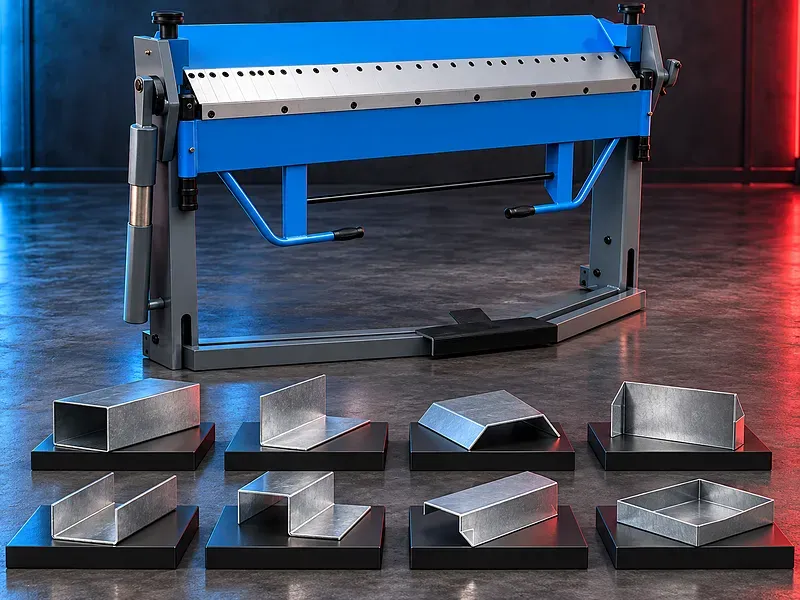
How manual sheet metal folding works
The sheet is placed on the bed with the bend line aligned to the clamping edge. The clamping beam secures the material and the operator moves the bending leaf through the required angle.
The process forms a straight fold without a powered ram. The operator supplies the movement directly or through a verified lever counterweight or mechanical assistance arrangement depending on the machine design.
Main machine elements
A typical manual folder includes a frame bed clamping beam bending leaf hinges handles or levers adjustment points stops and sheet supports. Some configurations may include segmented clamping tools counterweights angle indicators or back gauges.
The exact construction tooling and accessories must be confirmed from the approved datasheet and image for the selected machine.
Working length and sheet capacity
Working length defines the maximum supported bend length under stated conditions. Capacity depends on material grade tensile strength thickness bend length grain direction bend angle flange geometry and tooling condition.
A thickness rating for mild steel must not be applied automatically to stainless steel aluminum coated sheet or another material. Approved capacity tables are required for each relevant material and bend length.
Clamping beam and opening
The clamping beam holds the sheet against the bed during folding. Its edge geometry clearance and rigidity influence bend position surface marking minimum flange size and part access.
Confirm clamping method beam lift opening height clamping pressure adjustment nose radius removable or segmented tools and the permissible geometry for boxes returns channels and folded edges.
Bending leaf and angle control
The bending leaf rotates around its hinge line and raises the free section of the sheet. Hinge alignment leaf rigidity handle length balance and adjustment affect effort and the consistency of the fold.
A scale or stop may help the operator approach the target angle when supplied. The finished angle still requires measurement and compensation for material springback.
Bend allowance and springback
Folding changes the developed length of the sheet. Flat patterns should account for bend radius material thickness bend angle and the selected bend allowance method.
Most sheet materials recover slightly after the load is removed. Trial pieces and measured overbend may be needed to achieve the required final angle without exceeding machine or material limits.
Minimum flange and part clearance
The smallest practical flange depends on the clamping edge bend radius material thickness alignment and the ability to hold the sheet securely. Deep returns closed profiles and existing bends can interfere with the beam or frame.
Review every bend in sequence before production. The part may need a segmented tool a different machine arrangement or a revised bend order to avoid collisions and trapped geometry.
Production workflow
Begin with the approved drawing material identification flat pattern bend sequence and inspection plan. Check the machine condition clean the contact surfaces set the references and verify the sheet dimensions before folding.
Form a trial piece measure bend position angle and dimensions apply approved corrections then process the batch with regular checks. Separate nonconforming parts and record changes that affect repeatability.
Quality and inspection
Inspection may cover bend position angle inside radius flange length overall dimensions squareness straightness twist surface marks coating damage cracks and fit with mating parts according to the drawing.
The control plan should define references tolerances gauges sampling frequency first part approval correction limits and handling of rejected parts.
Potential applications
Potential work includes compatible ventilation duct panels rectangular duct parts chimney and roof flashings firewall edge details cabinets trays covers boxes signs brackets and general straight flange components.
Suitability depends on sheet material thickness width length bend layout minimum flange surface requirement quantity and accuracy. Curved folds complex deep boxes and heavy production may require another forming process.
Manual operation and productivity
Manual drive can suit repair work prototypes custom parts and selected small or varied batches where simple setup and direct operator control are useful.
Output is affected by sheet size mass number of bends handling distance measuring skill fatigue and inspection. No production rate should be published without a timed trial using the real part and staffing plan.
How to choose the correct machine
Provide part drawings material grade tensile strength thickness maximum bend length smallest flange bend angles inside radius flat blank dimensions bend sequence quantities tolerances finish and target output.
Also define box and return bends segmented tooling needs back gauge requirements available floor space sheet support lifting method operator count and future product range.
Technical information to verify
Approved documents must confirm working length material capacity by grade and bend length maximum angle clamping opening minimum flange bend radius beam geometry leaf adjustment angle indication stops back gauge and segmented tooling availability.
Overall dimensions weight floor loading anchoring lifting points standard equipment options operating instructions maintenance parts coating protection safety provisions documentation training warranty service and acceptance method also require confirmation.
Safety and ergonomic risks
Risks include pinching and crushing between the beam and bed movement of the bending leaf sharp sheet edges large flexible panels falling material unstable handling damaged levers and unexpected movement during adjustment or maintenance.
The work method should define guards safe hand positions controlled clamping suitable gloves and protection sheet supports team lifting or lifting aids stable footing inspection isolation maintenance and operator training.
Installation and commissioning
The site should provide a level floor sufficient clearance lighting safe sheet storage material flow and space for the full movement of the leaf handles and workpiece. Foundation or anchoring requirements must follow approved instructions.
Commissioning should check level alignment beam contact hinge movement clamping adjustment stops supports fasteners lubrication safe operation and trial folds across relevant positions before acceptance.
Maintenance and lifecycle support
Routine care may include cleaning contact surfaces inspecting hinges pins fasteners handles clamps counterweights stops and supports checking alignment and applying the approved lubricant where required.
Agree the inspection schedule wear limits adjustment method recommended spare parts technical manual operator training service responsibility and acceptance records for the selected machine.
Limitations and publishing status
The supplied description does not verify working length material capacity angle range accuracy minimum flange construction mass stability service life failure free operation productivity or suitability for every listed product.
Publication requires the exact approved datasheet capacity table machine drawing accessories list safety instructions approved image technical review staging review and final content approval.
Technical review and next step
Send the part drawings material specifications thicknesses bend lengths smallest flanges angles quantities tolerances finish and available workspace for technical review.
The review should confirm the suitable capacity tooling bend sequence support method inspection plan safety controls installation maintenance and acceptance trial.
Questions we are asked
What is a manual sheet metal folding machine?
It is a workshop machine that clamps a compatible sheet and uses an operator moved bending leaf to create a straight fold.
Which products can be made on the machine?
Potential work includes compatible duct panels flashings trays boxes covers brackets and straight flanges when the part geometry material thickness length and accuracy fit the approved capacity.
Can the machine fold stainless steel and aluminum?
Only when the approved capacity table supports the exact grade thickness and bend length. A mild steel rating must not be reused for another material.
How is the bend angle controlled?
The operator moves the bending leaf and may use an angle scale or stop when supplied. Trial folding measurement and springback compensation may still be required.
What information is needed for selection?
Provide the part drawing material grade thickness maximum bend length smallest flange angles radius quantities tolerances finish support needs and available floor space.
Tell us the part you need to make
An engineer reads every request. Usually the same working day.
Related
- CNC Hydraulic Press Brake CNC-controlled hydraulic press brakes for bending sheet metal components according to defined angles, dimensions and production requirements.
- CNC TUBE BENDING MACHINE CNC tube bending machines control the bending sequence to produce defined tube and pipe geometries. Selection depends on the material, section, diameter, wall thickness, bend radius, part geometry, accuracy, and production volume.
- CNC Gantry Plasma Cutting Machines A CNC gantry plasma cutting machine moves one or more cutting stations across a guided bridge to process suitable electrically conductive plate and supported profiles. The correct configuration depends on the material, thickness, plate size, part geometry, edge quality, bevels, secondary operations, extraction, automation, and required output.