

METAL BANDSAW MACHINES
Horizontal Bandsaw for Metal Cutting
A horizontal bandsaw for controlled straight or supported angle cutting of suitable metal bars, tubes, profiles, and billets. The correct configuration depends on material, hardness, section shape, cutting capacity, angle requirement, batch size, loading, automation, and target output.
A horizontal bandsaw moves a continuous toothed blade through a clamped workpiece while the saw head advances under controlled feed. This machine category includes different head, pivot, column, vise, feeding, and automation arrangements selected according to the workpiece and production route. The machine should be chosen from the actual stock range and finished blank requirements. Material grade, hardness, solid or hollow section, maximum dimensions, weight, cut length, angle, tolerance, surface condition, quantity, remnant plan, and downstream operation must be reviewed before confirming suitability.
Horizontal band sawing process
A continuous band blade runs around the saw wheels and passes through the cutting zone. The vise secures the workpiece, the head or blade frame advances, and the material support system carries the stock before and after the cut.
The actual motion, feed control, blade orientation, head return, vise sequence, and length positioning depend on the verified machine configuration.
Machine configurations
Horizontal bandsaws may use pivoting heads, single column guidance, double column guidance, manual vises, powered vises, semiautomatic cycles, automatic bar feeding, or supported angle cutting arrangements.
These configurations serve different workpiece sizes, tolerances, batch patterns, angle requirements, loading methods, floor space, maintenance needs, and investment levels. The exact model must match the real production route.
Suitable workpieces
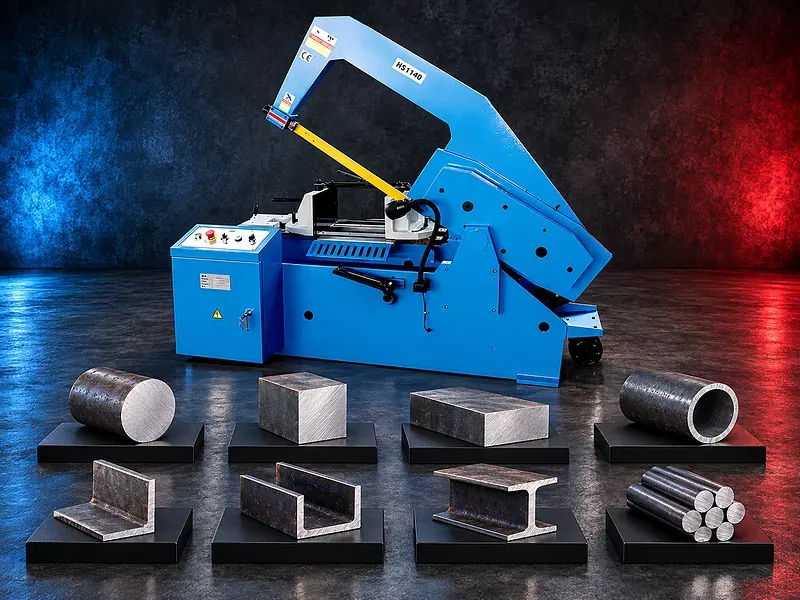
Potential workpieces include suitable solid round bars, square and rectangular bars, tubes, pipes, structural profiles, extrusions, forgings, cast billets, and stable bundles within the verified clamping and cutting capacity.
Each workpiece should be reviewed for grade, hardness, cross section, wall thickness, irregular shape, scale, straightness, weight, bundle stability, cut length, and safe handling.
Production applications
Potential applications include stock preparation for machining, fabrication, welding, forging, heat treatment, maintenance, toolmaking, metal distribution, structural work, and general engineering production.
Cut length, squareness or angle, burr, surface condition, stock allowance, part identification, and material traceability should support the requirements of the next production step.
Straight and angle cutting
Many horizontal bandsaws are designed for straight cutting. Selected verified models may also provide head rotation, vise rotation, table movement, or another arrangement for supported angle cuts.
The available angle range, capacity at each angle, clamping method, length reference, head clearance, accuracy, and production rate are model specific and must be verified.
Material clamping and support
The vise and support system must hold the stock without movement, rotation, excessive deformation, or bundle collapse. Hollow and thin wall sections may require controlled pressure or additional support.
Entry rollers, exit rollers, top clamps, bundle clamps, length stops, conveyors, loaders, cranes, and remnant supports should be selected for the stock length, weight, shape, batch size, and automation plan.
Blade selection
Blade material, width, thickness, tooth form, tooth pitch, rake angle, and set should suit the material, hardness, cross section, solid or hollow condition, bundle arrangement, and machine specification.
The number of teeth engaged during cutting affects stability and blade life. Blade manufacturer recommendations should be matched to the actual workpiece and verified machine limits.
Blade speed and feed
Blade speed and head feed should suit the material and cross section. Incorrect settings may cause tooth damage, excess heat, blade deviation, rough finish, premature breakage, low output, or inefficient tooth loading.
The speed range, feed method, hydraulic or servo control, pressure settings, sensors, and automatic adjustment features must be confirmed for the exact model.
Cut quality and inspection
The acceptance plan may include cut length, squareness, angle, surface condition, burr, tooth marks, blade deviation, stock allowance, and deformation of hollow sections.
Finished quality depends on blade condition and tension, guide alignment, wheel condition, clamping, support, feed, coolant, material variation, machine geometry, and measurement method.
Coolant chip removal and blade cleaning
Suitable coolant may control heat, lubricate the cutting zone, carry chips, and support blade life where required by the material and blade system.
Blade brushes, chip trays, conveyors, filtration, coolant concentration, tank cleaning, mist control, and housekeeping should be selected and maintained for the expected material and chip volume.
Manual semiautomatic and automatic operation
Depending on the verified model, operation may include manual stock positioning, semiautomatic cut cycles, powered vises, automatic feeding, repeated length control, bundle cutting, production counters, or conveyor integration.
Automation should be selected from the part mix, batch size, cut lengths, remnant strategy, stock weight, operator availability, shift pattern, inspection, and traceability requirements.
Potential production value
A suitable horizontal bandsaw may produce controlled blanks for machining, fabrication, and other downstream operations while reducing manual cutting variation.
Actual cutting time, blade life, labor requirement, kerf loss, remnant use, cost per cut, and output depend on the workpiece, blade, setup, loading, automation, maintenance, and acceptance criteria.
How to choose the correct machine
Provide material grades, hardness, section shapes, minimum and maximum dimensions, wall thicknesses, raw lengths, weights, bundle sizes, cut lengths, angles, tolerances, quantities, batch sizes, shift plan, and target output.
Selection should also consider round and rectangular capacity, capacity at angle, blade size, motor power, blade speed, feed system, vise arrangement, minimum remnant, loading, roller tables, conveyors, coolant, chip removal, guarding, and floor space.
Technical information to verify
The approved exact model source must confirm the manufacturer, brand, model, machine type, straight cutting capacity, angle cutting capacity where applicable, bundle capacity, minimum cut length, remnant length, blade dimensions, blade speed range, feed method, and main motor power.
It must also confirm vise type, clamping range, head or column arrangement, hydraulic system, blade tensioning, guides, wheel size, coolant, chip removal, material feed travel, repeat length accuracy, electrical supply, dimensions, weight, foundation, guards, safety devices, and stated test conditions.
Safety requirements
The risk assessment should address the moving blade, blade breakage, pinch and crush points, vises, falling stock, rolling material, lifting, sharp cut edges, hot chips, coolant, automatic feed movement, and electrical or hydraulic hazards.
The exact guards, blade covers, door monitoring, emergency stops, material supports, lifting procedures, operating instructions, training, personal protective equipment, and maintenance controls must follow approved documentation and site requirements.
Installation and lifecycle support
Site planning should cover machine footprint, foundation, leveling, stock storage, loading access, roller tables, exit space, lifting equipment, electrical supply, grounding, coolant, chip collection, ventilation, lighting, maintenance access, and operator training.
The exact supply scope, commissioning, training, preventive maintenance, blade guidance care, hydraulic service, consumables, spare parts, warranty, and service commitments require confirmation in the approved technical and commercial offer.
Limitations and alternative processes
A horizontal bandsaw is not automatically suitable for every material, hardness, cross section, tolerance, finish, angle, cut length, batch volume, or productivity target.
A circular cold saw, abrasive saw, vertical bandsaw, dedicated double column bandsaw, carbide saw, laser, plasma, oxyfuel, shear, or machining process may be more suitable for some applications.
Technical review and next step
Send the stock and finished blank information with material, hardness, section, dimensions, wall thickness, length, weight, bundle size, angle, cut tolerance, quantities, shift plan, downstream operation, and target output.
SAKKARY MACHINERY will review the machine configuration, cutting capacity, blade strategy, clamping, support, feeding, chip control, utilities, safety needs, and information that still requires manufacturer verification
Questions we are asked
What is a horizontal bandsaw?
It is a metal sawing machine that uses a continuous band blade to cut a clamped workpiece while the saw head advances in a horizontal cutting arrangement.
Which workpieces can it cut?
Potential workpieces include suitable solid bars tubes pipes profiles billets and stable bundles within the verified capacity of the exact model.
Can a horizontal bandsaw make angle cuts?
Selected models may support angle cutting through head vise or table movement. The angle range and capacity at each angle require model verification.
How is the correct blade selected?
Blade material width tooth form and tooth pitch are matched to the material hardness cross section solid or hollow condition and machine specification.
What is the difference from a double column bandsaw?
Horizontal bandsaw is a broad category. A double column machine is one configuration that guides the saw head along two columns and may suit particular capacity and rigidity requirements.
What information is required for selection?
Provide material hardness section dimensions wall thickness length weight bundle size angle cut tolerance quantities shift plan and target output.
Tell us the part you need to make
An engineer reads every request. Usually the same working day.
Related
- Heavy-Duty Gap-Bed Conventional Lathes Heavy-duty conventional lathes for turning large-diameter, long, and heavy rotational components. The gap-bed design provides additional swing near the headstock for suitable short workpieces.
- Gantry Type Milling Machine A gantry-type milling machine provides an open working area for machining suitable large or heavy components. Selection depends on workpiece dimensions, weight, material, required operations, tolerances, finish, and production requirements.
- Boring Machine for Workshop Machining A boring machine for drilling, enlarging, finishing, and aligning suitable holes in individual parts and small production batches. The correct model depends on workpiece size, material, hole diameter, depth, tolerance, surface finish, setup, tooling, and required output.