

CONVENTIONAL MILLING MACHINES
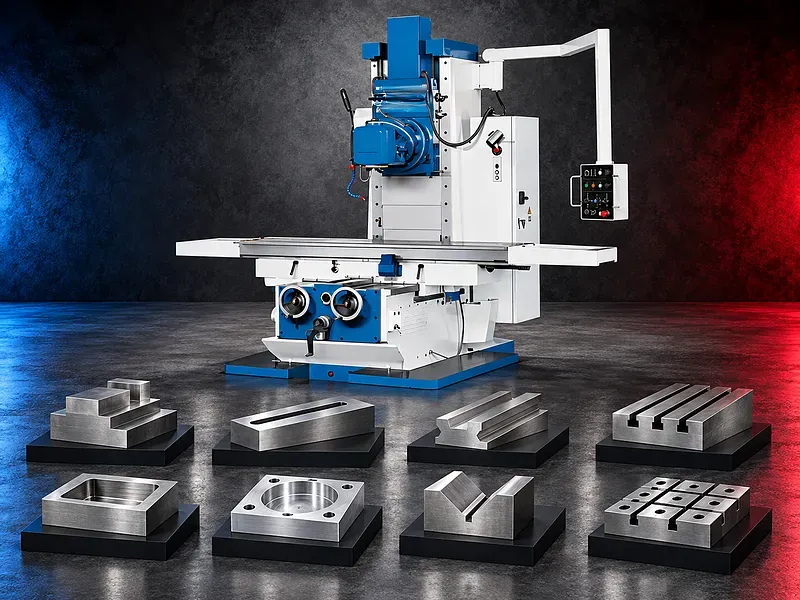
Heavy Vertical Knee Milling Machine
A vertical knee type milling machine for machining suitable faces, slots, pockets, shoulders, steps, and other accessible features on workshop components. The correct model depends on workpiece size, weight, material, travels, spindle, tooling, tolerance, finish, and production pattern.
A vertical knee milling machine supports the table on a vertically adjustable knee. The table and saddle provide horizontal positioning while the vertical spindle drives the cutting tool above the workpiece. Exact axis arrangement, head movement, and feed functions depend on the verified design. The heavy designation should be confirmed from documented table size, table load, machine mass, spindle capability, drive power, guideway design, feed range, and duty conditions. It does not by itself establish a cutting capacity, accuracy, or productivity result.
Vertical knee milling concept
The knee moves vertically on the column and carries the saddle and table. The saddle provides cross movement and the table provides longitudinal movement, allowing the workpiece to be positioned under the vertical spindle.
The exact travels, movement directions, manual or powered feeds, rapid movement, head adjustment, quill travel, and digital position display are model specific.
Potential milling operations
Potential operations include face milling, end milling, slotting, keyway cutting, pocketing, shoulder milling, step milling, angular work, drilling, reaming, counterboring, and selected boring when supported by the machine, tooling, and setup.
Every operation should be reviewed for tool access, axis travel, spindle reach, workpiece support, fixture clearance, cutting force, chip evacuation, coolant, tolerance, finish, and inspection.
Suitable workpieces and applications
Potential workpieces include machine brackets, bases, plates, blocks, fixtures, tooling components, housings, slide parts, maintenance components, and small or medium fabrications within the verified table and travel limits.
Potential applications include maintenance workshops, toolrooms, repair production, machine building, training workshops, prototypes, individual parts, and small or medium batches requiring flexible setup.
Workpiece materials
Potential materials may include suitable grades of steel, cast iron, aluminum, copper alloys, and other machinable materials compatible with the verified spindle, tooling, rigidity, power, speed, feed, and coolant system.
Material grade, hardness, casting skin, scale, welded areas, interrupted cuts, inclusions, heat treatment, stock allowance, and required finish must be reviewed before confirming the process.
Heavy machine structure
A verified heavy knee mill may use a larger table, higher supported load, substantial column and knee castings, broad guideways, and a spindle drive selected for demanding workshop use.
Machine mass and construction alone do not guarantee finished accuracy. Foundation, leveling, guide condition, lubrication, spindle condition, thermal stability, workholding, tooling, cutting data, and inspection affect the result.
Knee saddle and table movement
The knee, saddle, and table establish vertical, cross, and longitudinal workpiece movement. Backlash, guide adjustment, lubrication, gib condition, screw condition, feed engagement, and axis locks influence positioning and cutting stability.
The permitted travels, table position, load distribution, overhang, powered feed directions, rapid feed, stops, and locking sequence must be confirmed from the exact model documentation.
Spindle head and quill
The vertical spindle carries the selected tool through a compatible taper or interface. Depending on the verified model, the head may provide quill travel, head rotation, head tilt, ram movement, speed changes, or power feed functions.
The exact head arrangement, spindle taper, speed range, quill travel, quill feed, head angles, ram travel, power, torque, and allowable tooling require model verification.
Tooling and workholding
Potential tooling includes face mills, end mills, slot drills, side cutters, drills, reamers, boring heads, arbors, collets, chucks, holders, and adapters compatible with the spindle and operation.
Workholding may include vises, clamps, step blocks, angle plates, rotary tables, dividing heads, fixtures, parallels, and supports selected for the component geometry, datum plan, cutting force, and inspection method.
Speeds feeds and cutting strategy
Spindle speed, feed rate, depth of cut, width of cut, tool engagement, coolant, and tool path should suit the workpiece material, cutter, machine rigidity, power, finish, and tool supplier recommendations.
Roughing and finishing may need different tools and settings. Excessive cutting load, tool overhang, poor chip evacuation, or weak workholding can reduce tool life, finish, accuracy, and safety.
Accuracy and inspection
The acceptance plan may include dimensions, flatness, straightness, parallelism, perpendicularity, slot width and depth, hole position, angular features, surface finish, and fit with mating parts.
Finished quality depends on machine geometry, guide condition, backlash, spindle runout, thermal behavior, workholding, tool condition, tool deflection, cutting data, datum strategy, and calibrated inspection equipment.
How to choose the correct machine
Provide component drawings with material, hardness, overall dimensions, weight, features, maximum machining envelope, tolerances, finish, quantities, batch sizes, setup constraints, and current production route.
Selection should also consider table dimensions, table load, longitudinal cross and vertical travels, spindle taper, speed range, quill travel, head movement, feeds, rapid movement, motor power, digital readout, coolant, tooling, and floor space.
Technical information to verify
The approved exact model source must confirm the manufacturer, brand, model, machine type, table dimensions, table load, longitudinal travel, cross travel, vertical travel, spindle taper, spindle speed range, quill travel, spindle feeds, and motor power.
It must also confirm head rotation or tilt, ram travel where applicable, table feeds, rapid movement, positioning accuracy, repeatability, digital readout axes, guideway type, lubrication, coolant, electrical supply, dimensions, weight, foundation, included accessories, guards, and safety devices.
Coolant chips and maintenance
Suitable coolant may control heat, lubricate the cut, support tool life, and carry chips when required by the material and tooling. Chips should be controlled around the cutter, workpiece, vise, table, T slots, guards, and guide surfaces.
Preventive maintenance should cover lubrication, spindle and quill, belts or gears, feeds, screws, nuts, gibs, guideways, axis locks, coolant, electrical controls, guards, and periodic geometry checks.
Safety requirements
The risk assessment should address rotating cutters and spindles, entanglement, sharp and hot chips, tool breakage, ejected workpieces, heavy lifting, clamping, axis movement, pinch points, coolant, manual handling, and electrical hazards.
The exact guards, emergency stops, spindle and tool checks, workholding procedures, safe setup zones, lifting plan, operating instructions, training, personal protective equipment, and maintenance controls must follow approved documentation and site requirements.
Installation and lifecycle support
Site planning should cover machine footprint, foundation, leveling, lifting access, workpiece route, electrical supply, grounding, coolant, lubrication, chip collection, lighting, ventilation, tooling storage, inspection space, maintenance access, and operator training.
The exact supply scope, commissioning, training, preventive maintenance, spindle and guideway service, consumables, spare parts, warranty, and service commitments require confirmation in the approved technical and commercial offer.
Limitations and alternative processes
A heavy vertical knee milling machine is not automatically suitable for every workpiece, material, size, weight, geometry, tolerance, finish, batch volume, or productivity target.
A turret mill, bed type mill, universal mill, horizontal mill, CNC machining center, boring machine, planer, grinder, or another process may be more suitable for some applications.
Technical review and next step
Send the component drawings with material, hardness, dimensions, weight, machining features, tolerances, finish, quantities, setup constraints, available tooling, and target output.
SAKKARY MACHINERY will review the machining envelope, table and spindle requirements, tools, workholding, process sequence, inspection, utilities, safety needs, alternative processes, and information that still requires manufacturer verification.
Questions we are asked
What is a vertical knee milling machine?
It is a milling machine with a table supported on a vertically adjustable knee and a vertical spindle positioned above the workpiece.
What does heavy vertical knee mill mean?
The heavy designation should be supported by documented table load machine structure spindle capability drive power and duty conditions for the exact model.
Which operations can the machine perform?
Potential operations include face milling end milling slots pockets shoulders steps drilling reaming and selected boring when supported by the machine tooling and setup.
Which workpieces are suitable?
Potential workpieces include brackets bases plates blocks fixtures housings tooling parts and maintenance components within the verified table load travels and spindle reach.
Is it a replacement for a CNC machining center?
Not automatically. A knee mill may suit flexible manual or conventional work while CNC equipment may be better for complex geometry repeatability automation or higher volume.
What information is required for selection?
Provide drawings material hardness dimensions weight features machining envelope tolerances finish quantities setup constraints and target output
Tell us the part you need to make
An engineer reads every request. Usually the same working day.
Related
- Heavy-Duty Gap-Bed Conventional Lathes Heavy-duty conventional lathes for turning large-diameter, long, and heavy rotational components. The gap-bed design provides additional swing near the headstock for suitable short workpieces.
- Gantry Type Milling Machine A gantry-type milling machine provides an open working area for machining suitable large or heavy components. Selection depends on workpiece dimensions, weight, material, required operations, tolerances, finish, and production requirements.
- Boring Machine for Workshop Machining A boring machine for drilling, enlarging, finishing, and aligning suitable holes in individual parts and small production batches. The correct model depends on workpiece size, material, hole diameter, depth, tolerance, surface finish, setup, tooling, and required output.