

PRECISION CYLINDRICAL GRINDING
Cylindrical Grinding Machines
Cylindrical grinding machines finish external or supported internal round surfaces on shafts axles sleeves pins and other rotational components. Manual and CNC configurations can support repair toolroom and production work when the machine wheel workholding and grinding cycle are matched to the component drawing.
A cylindrical grinder rotates the workpiece while an abrasive wheel removes controlled material from a round surface. Depending on the verified configuration the machine may perform straight external grinding plunge grinding taper grinding shoulder grinding or supported internal grinding. The correct machine depends on the workpiece material hardness starting condition diameter length weight centers bearing surfaces geometry stock allowance tolerance roundness cylindricity runout finish batch size wheel specification coolant inspection method and required output.
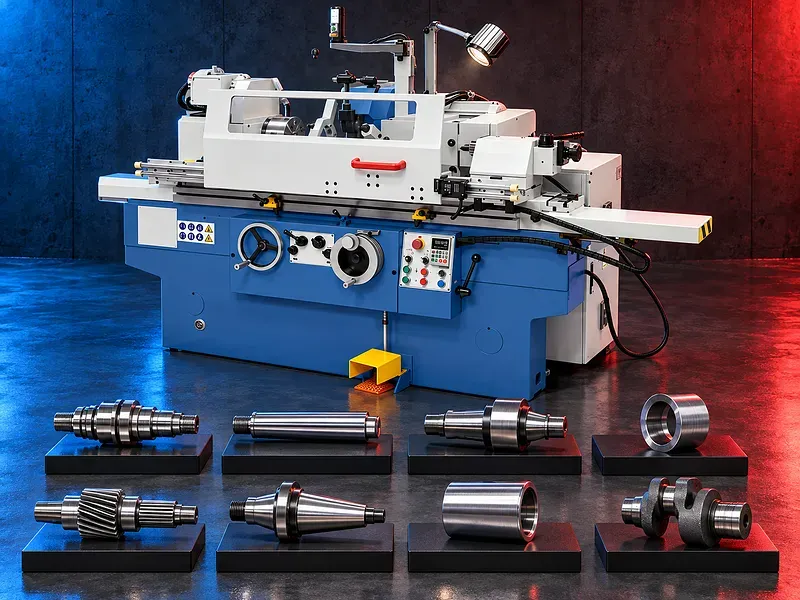
Cylindrical grinding process
The workpiece rotates around its axis while the grinding wheel removes small controlled amounts of material. Relative movement between the wheelhead workhead and table creates the required diameter length shoulder or profile.
Finished quality depends on machine geometry spindle condition centers or chuck alignment wheel balance dressing workholding coolant stock distribution cycle settings thermal stability and inspection.
Potential grinding operations
Potential operations include external traverse grinding plunge grinding shoulders steps tapers journals and selected profiles when supported by the verified machine wheel and dressing system.
Internal grinding may require a dedicated internal spindle suitable wheel speed and adequate access. Face grinding or other features also depend on the exact machine configuration.
Suitable components and industries
Potential components include shafts axles spindles pins rollers sleeves bushes arbors mandrels bearing seats hydraulic parts tooling components repair parts and other rotational workpieces within the verified envelope.
Applications may serve maintenance toolrooms automotive general engineering pumps motors gear manufacturing mold and die support and other industries after technical review of the component.
Manual and CNC configurations
Manual machines may suit repair toolroom training and varied low volume work where the operator controls setup feeds and measurement. Hydraulic or automatic movements may support repeat cycles depending on the model.
CNC machines may automate axes cycles dressing compensation gauging and repeated part programs. Exact axes software measuring functions and automation require confirmation from approved model documentation.
Machine structure and alignment
The bed table wheelhead workhead tailstock guideways and spindle systems form the structural and geometric chain of the process. Rigidity straightness alignment vibration control lubrication and thermal behavior influence the result.
Machine size or mass alone does not prove capacity or accuracy. Foundation leveling center alignment spindle condition guideway design wear and maintenance must be considered.
Workholding between centers
Grinding between centers can establish the component axis from prepared center holes and may support repeatable access to external diameters. Center condition lubrication driving method and axial location affect accuracy and safety.
Center holes must be suitable for the load geometry and required result. Damaged incorrect or contaminated centers can introduce runout taper vibration or surface defects.
Chuck collet and fixture holding
A chuck collet mandrel faceplate steady rest or special fixture may be used when appropriate for the component and operation. The setup should control location grip force distortion overhang and access to the ground features.
Thin wall long flexible eccentric or irregular parts require particular review of support deflection balance and collision risk. Workholding accuracy must be included in the inspection plan.
Grinding wheel dressing and balancing
Wheel abrasive grit grade structure bond size and permitted speed should match the workpiece material hardness stock removal finish contact area machine power coolant and dressing method.
Dressing restores cutting action and wheel geometry while balancing reduces vibration. Incorrect selection mounting dressing or balance can cause burn chatter poor finish rapid wear unsafe operation or dimensional error.
Coolant and thermal control
Suitable grinding fluid can control heat lubricate the contact zone flush swarf support wheel performance and protect surface integrity. Type concentration filtration flow direction temperature and maintenance should match the process.
Poor delivery or contaminated fluid can contribute to burn loading dimensional drift corrosion health risks and reduced wheel life. Mist control and safe fluid management should be included in site planning.
Accuracy surface finish and inspection
Acceptance may include diameter length roundness cylindricity straightness taper concentricity runout shoulder location and surface roughness according to the drawing.
Measurement method datum reference temperature cleanliness calibrated instruments and whether the part is measured on or off the machine should be defined before production.
How to choose the correct machine
Provide the component drawing material hardness initial condition maximum and minimum diameters length weight center data ground features stock allowance tolerances finish quantity batch size and target output.
Selection should consider swing distance between centers maximum grinding diameter and length workpiece weight wheel size wheel and workhead spindle data table travel feeds taper functions internal grinding option dressing gauging control coolant filtration utilities and floor space.
Technical information to verify
The approved exact model source must confirm manufacturer brand model machine type grinding diameter grinding length distance between centers workpiece weight table travel wheel dimensions spindle speed spindle power workhead speed feeds and control system.
It must also confirm workhead and wheelhead swivel tailstock centers internal grinding equipment dressing balancing gauging coolant filtration lubrication accuracy test standard electrical supply dimensions weight foundation guards safety devices and included options.
Safety requirements
The risk assessment should address wheel damage or burst rotating workpieces entanglement drive dogs chuck keys ejected parts sparks swarf pinch points table movement coolant mist noise lifting and electrical hazards.
Wheel inspection permitted speed correct flanges guards mounting balancing dressing safe checks secure workholding emergency stops operating instructions training personal protective equipment and maintenance controls must follow approved documentation and site requirements.
Installation maintenance and support
Site planning should cover foundation or floor capacity leveling lifting route electrical supply grounding coolant filtration mist extraction drainage lighting ventilation wheel storage inspection space and maintenance access.
Preventive maintenance should cover lubrication guideways spindles centers tailstock drives feeds hydraulic equipment coolant filtration electrical controls guards geometry and alignment. Supply scope training spare parts warranty and service commitments require approved confirmation.
Limitations and alternative processes
A cylindrical grinder is not automatically suitable for every material geometry diameter length weight tolerance finish stock allowance duty cycle or output target. Flexible parts interrupted surfaces residual stress heat and workholding can limit the process.
Centerless grinding internal grinding surface grinding hard turning superfinishing honing lapping or another process may be more suitable depending on the feature and production requirement.
Technical review and next step
Send the component drawing with material hardness dimensions weight center details ground features stock allowance tolerances finish quantities duty pattern current process inspection method and target output.
SAKKARY MACHINERY will review grinding method machine envelope centers workholding wheel and spindle requirements dressing coolant filtration inspection utilities safety alternative processes and information that still requires manufacturer verification
Questions we are asked
What is a cylindrical grinding machine?
It is a precision machine that rotates a workpiece while an abrasive wheel removes controlled material from supported external or internal round surfaces.
Which parts can be cylindrically ground?
Potential parts include shafts axles spindles pins rollers sleeves bushes bearing seats hydraulic parts tooling and repair components within the verified machine envelope.
Can it grind external and internal diameters?
Some configurations can but internal grinding requires the correct spindle wheel access speed and machine option. The exact model must be verified.
What is the difference between manual and CNC machines?
Manual machines rely more on operator control while CNC machines may automate axes cycles dressing compensation gauging and repeat programs according to the verified model.
Which dimensions should be inspected?
Inspection may include diameter length roundness cylindricity taper concentricity runout shoulder location and surface roughness as required by the drawing.
What information is required for selection?
Provide the drawing material hardness diameters length weight center details ground features stock allowance tolerances finish quantities and target output.
Tell us the part you need to make
An engineer reads every request. Usually the same working day.
Related
- Heavy-Duty Gap-Bed Conventional Lathes Heavy-duty conventional lathes for turning large-diameter, long, and heavy rotational components. The gap-bed design provides additional swing near the headstock for suitable short workpieces.
- Gantry Type Milling Machine A gantry-type milling machine provides an open working area for machining suitable large or heavy components. Selection depends on workpiece dimensions, weight, material, required operations, tolerances, finish, and production requirements.
- Boring Machine for Workshop Machining A boring machine for drilling, enlarging, finishing, and aligning suitable holes in individual parts and small production batches. The correct model depends on workpiece size, material, hole diameter, depth, tolerance, surface finish, setup, tooling, and required output.