

CNC MILLING MACHINES
CNC Bed Type Semi Guarding Milling Machine
A CNC bed type milling machine with partial guarding for supported milling, drilling, and related operations on jigs, fixtures, molds, development parts, and varied small batch work. The correct configuration depends on the component, material, working envelope, spindle, axes, tooling, accuracy, guarding, and required output.
A CNC bed type milling machine uses a rigid bed structure and programmed axis movement to machine supported faces, pockets, slots, holes, contours, and other features. It can suit high mix, low volume work when the machine envelope, spindle, control, tooling, and setup method match the parts. The supplied description refers to rotary table machining of multi sided workpieces and an MPG handwheel for traditional operator controlled movement. These functions, the exact partial guarding arrangement, and all performance claims must be confirmed from the approved documentation for the selected model.
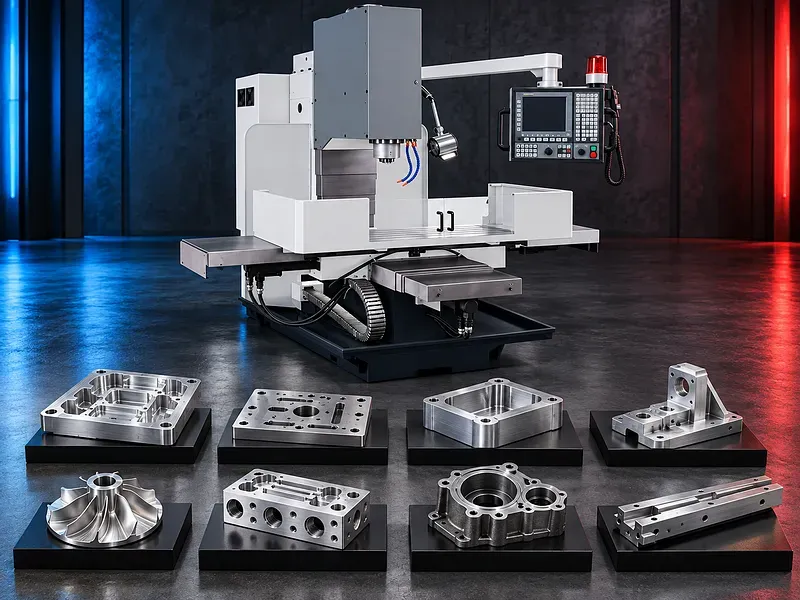
Bed type CNC milling concept
A bed type milling machine supports the table and machine structure on a substantial bed. Depending on the verified design, axis movement may come from the table, saddle, column, milling head, ram, or a combination of these elements.
The construction can support varied milling work, but rigidity, travel, load, geometry, and cutting performance must be evaluated for the exact machine and setup.
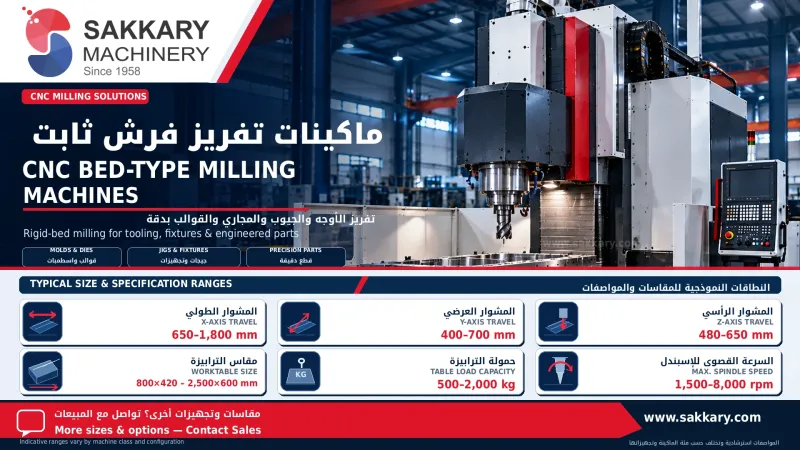
High mix and small batch production
The machine may suit jigs, fixtures, molds, repair components, development parts, and small batch production where part variety and setup flexibility matter more than dedicated mass production flow.
Actual setup time, cycle time, output, changeover effort, and cost per part depend on programming, workholding, tools, probing, operator skill, inspection, and the selected machine.
Jigs fixtures molds and development parts
Potential work includes fixture plates, mounting surfaces, location features, mold components, tooling details, machine parts, and prototypes that require controlled faces, pockets, slots, holes, and contours.
Each application should be reviewed from the drawing, material, heat treatment, part size and weight, feature access, tolerances, finish, batch quantity, and inspection method.
Milling drilling and related operations
Depending on the verified spindle, axes, control, tooling, and software, the machine may support face milling, end milling, slotting, pocketing, contouring, drilling, reaming, boring, tapping, and selected interpolation cycles.
An operation should not be promised until the required speed, torque, power, toolholding, axis motion, cooling, chip control, and software function are confirmed.
Rotary table and multi sided machining
A compatible rotary table may allow several sides or angular positions of a workpiece to be presented to the spindle with fewer manual reclamping steps. It may be manually positioned, indexed, or CNC controlled depending on the system.
Table diameter, center height, load, indexing or contouring function, accuracy, clamping, cable routing, axis integration, part clearance, and collision envelope require verification.
MPG handwheel and manual setup
An MPG handwheel can support controlled axis jogging, edge finding, setup, reference checks, and selected manual interventions when permitted by the CNC and operating mode.
Axis selection, increment values, enable devices, feed override, interlocks, handwheel location, and safe use procedure must be confirmed. An MPG does not convert the machine into a conventional mill or replace program verification.
CNC control and programming
The CNC should support the required axes, work offsets, tool compensation, cycles, program storage, data transfer, alarms, diagnostics, and rotary functions for the selected work.
Programs should use verified datums, tool data, safe approach planes, spindle and feed limits, simulation where available, dry run, single block, and controlled first part approval.
Partial guarding and containment
Partial guarding may separate the operator from selected moving components and contain some chips or coolant according to its verified design. Coverage, access openings, doors, windows, interlocks, and splash protection vary by model.
A partial guard does not provide the same containment as a verified full enclosure. Risk assessment must consider chip and coolant escape, tool breakage, access to moving axes, surrounding personnel, and the chosen process.
Spindle and cutting performance
Spindle selection should consider material, tool diameter, cutting speed, torque at working speed, power, duty, taper, holder retention, runout, cooling, and expected tool load.
Nominal speed or motor power alone does not prove cutting performance. Tool projection, machine rigidity, axis condition, fixture stiffness, cutting data, and thermal behavior also affect the result.
Table workholding and load
The fixture should locate the component from suitable datums and resist cutting forces, torque, lifting, vibration, and axis acceleration. Clamps must preserve tool access, chip flow, inspection access, and safe loading.
Table dimensions, slot pattern, travel, allowable load, load distribution, center of gravity, fixture height, rotary table weight, and combined collision envelope must be checked before selection.
Tooling probing and tool management
Potential equipment includes milling cutters, drills, reamers, boring tools, tapping holders, toolholders, adapters, edge finders, work probes, tool setters, and compatible rotary table accessories.
Tool capacity, magazine type, maximum diameter and length, tool weight, adjacent pocket restrictions, change time, measurement functions, offsets, wear control, and replacement strategy depend on the model.
Materials coolant and chip control
Potential materials may include suitable steels, cast irons, aluminum, copper alloys, plastics, and other machinable materials after reviewing grade, hardness, heat treatment, surface condition, and chip behavior.
Coolant delivery, mist or fume control, chip trays, conveyors, filtration, cleaning access, and partial guard containment should be selected for the actual material, tool, duty, and workplace requirements.
Accuracy thermal behavior and inspection
Acceptance may cover dimensions, position, flatness, perpendicularity, parallelism, bore size, hole spacing, contour, surface finish, and relationships between features or machined sides.
The result can be affected by geometric condition, axis feedback, backlash or compensation, spindle runout, tool deflection, fixture stiffness, material stress, thermal growth, environment, cutting data, and inspection uncertainty.
How to choose the correct machine
Provide part drawings and models, material and heat treatment, maximum dimensions and weight, features, sides to machine, tolerances, finish, quantities, batch sizes, setup frequency, fixture concept, and target output.
Selection should review axis travels, table size and load, spindle taper, speed, torque and power, head or ram configuration, CNC functions, MPG, tool changer, probing, rotary axis, cooling, chip control, guarding, accuracy tests, utilities, floor space, and future work.
Technical information to verify
The approved exact model source must confirm the manufacturer, model, bed and axis configuration, controlled axes, travels, feed and rapid rates, table dimensions and load, spindle taper, speed, torque, power, ram or head movement, and tool capacity.
It must also confirm CNC system, MPG functions, rotary table compatibility, fourth axis interface, positioning accuracy, repeatability, test standard and conditions, guard coverage, interlocks, coolant, chip system, electrical supply, air, dimensions, weight, foundation, included equipment, and options.
Safety and operating risks
The risk assessment should cover rotating tools, large axis movement, tool change, rotary table motion, crushing and collision zones, tool breakage, hot chips, coolant escape beyond partial guards, heavy fixtures, lifting, stored pressure, electrical hazards, and maintenance isolation.
Required controls may include guards, interlocks where provided, emergency stops, secure workholding, collision prevention procedures, safe chip removal, lifting plans, suitable personal protection, training, housekeeping, and documented lockout procedures.
Installation maintenance and lifecycle support
Site planning should cover foundation, floor loading, anchoring, leveling, electrical supply, grounding, compressed air, coolant, chip handling, ventilation, lighting, lifting access, network needs, maintenance clearance, and operator and programmer training.
Preventive maintenance should follow approved manufacturer documents for guideways, screws, scales, spindle, ram or head, lubrication, coolant, chip system, tool changer, rotary table, probes, partial guards, electrical cabinets, backups, alignment, and calibration.
Limitations and alternatives
A partially guarded bed type mill may need additional controls for chips, coolant, and personnel access. It may not suit unattended operation, very high speed processes, large tool breakage risk, or applications requiring full enclosure without further engineering.
Depending on the part and volume, alternatives may include a fully enclosed vertical machining center, horizontal machining center, bridge mill, CNC knee mill, toolroom mill, five axis machining center, or dedicated production machine.
Technical review and next step
Send part models and drawings, material and heat treatment data, component dimensions and weight, tolerances, surface requirements, sides to machine, annual and batch quantities, setup needs, target output, site utilities, floor plan, and handling method to SAKKARY MACHINERY.
The technical review will compare the application with approved model information and identify the suitable travels, spindle, control, MPG functions, tooling, workholding, rotary table, guarding, inspection plan, installation needs, and any sample machining requirement.
Questions we are asked
What is a CNC bed type milling machine?
It is a CNC milling machine built on a substantial bed structure with programmed axis movement for supported milling drilling and related operations.
What parts can it machine?
Potential work includes jigs fixtures mold components prototypes repair parts and varied small batches when the working envelope spindle tooling and accuracy meet the drawings.
Can it use a rotary table?
Potentially yes when the table load geometry interface CNC control and fourth axis integration support the selected rotary table and workpiece.
What is an MPG handwheel used for?
It can support controlled axis jogging setup and reference checks in permitted modes. Exact functions increments and interlocks depend on the CNC and model.
Does partial guarding provide full enclosure protection?
No. Coverage and containment vary by design and may not fully contain chips coolant or tool breakage. A process specific risk assessment is required.
What information is required for selection?
Provide models drawings material part size and weight features tolerances sides to machine quantities setup needs target output utilities floor plan and handling method.
Tell us the part you need to make
An engineer reads every request. Usually the same working day.
Related
- VICTOR Slant-Bed CNC Lathes Slant-bed CNC turning machines from VICTOR Taichung for machining shafts, bushings, flanges, threaded parts, and other rotational components. The appropriate model is selected according to the workpiece, operations, accuracy, and production requirements.
- CNC Vertical Machining Center (VMC) Vertical CNC machining solutions for milling, drilling, tapping and producing engineered metal components.
- CNC Wire EDM Machines Precision machining solutions for producing complex profiles in electrically conductive materials using a CNC-controlled wire electrode.