

VICTOR CNC Turning Technology
VICTOR Slant-Bed CNC Lathes
Slant-bed CNC turning machines from VICTOR Taichung for machining shafts, bushings, flanges, threaded parts, and other rotational components. The appropriate model is selected according to the workpiece, operations, accuracy, and production requirements.
VICTOR slant-bed CNC lathes are horizontal turning machines designed for programmed machining of cylindrical and rotational metal components.
The slant-bed arrangement positions the spindle, turret, and machining area around an inclined machine structure. The exact bed design, spindle, turret, travels, control, and automation capabilities vary between VICTOR Vturn models.
Available configurations may include two-axis turning, driven tools, C-axis, Y-axis, sub-spindle, tailstock, and automation interfaces, depending on the selected series and model. Every capability must be verified against the official model datasheet.
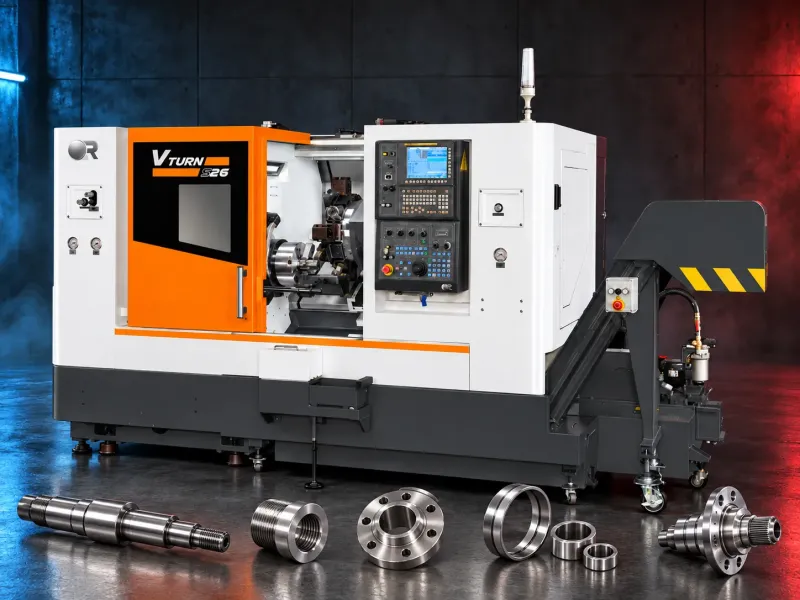
Typical Applications
- External and internal turning
- Facing and contour machining
- Grooving and parting operations
- Internal and external threading
- Drilling, boring, and reaming
- Production of shafts, bushings, pins, and sleeves
- Manufacturing flanges, rollers, and rotational components
- Batch production of repeatable machined parts
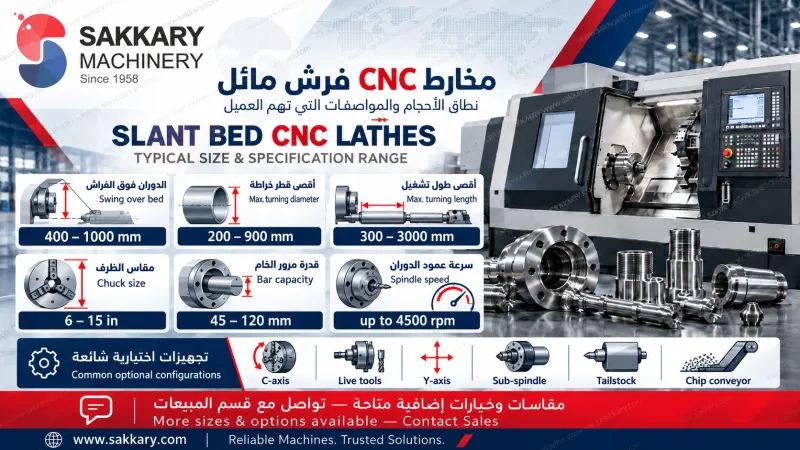
Available Machine Configurations
Depending on the selected VICTOR model, the configuration may include:
- Two-axis CNC turning
- Driven tooling for additional machining operations
- C-axis spindle control
- Y-axis machining capability
- Main spindle and sub-spindle configurations
- Programmable tailstock
- Hydraulic chuck or collet system
- Bar-feeder interface
- Parts catcher or robotic automation interface
- Chip conveyor and coolant system
How to Select the Appropriate Model
- Provide the part drawing and material.
- Define the maximum workpiece diameter and length.
- Specify the required tolerance and surface finish.
- Identify all turning, drilling, threading, and milling operations.
- Confirm the required chuck size and bar capacity.
- Define the required spindle speed and torque according to the application.
- Determine whether driven tools, C-axis, Y-axis, or a sub-spindle are required.
- Provide the batch size and production target.
- Confirm the preferred CNC control and programming requirements.
- Review power, compressed air, space, foundation, and chip-handling requirements.
Technical Data to Verify
The following information must be taken from the official datasheet of the selected model:
- Maximum turning diameter and length
- Swing diameter
- Spindle nose and chuck size
- Bar capacity
- Maximum spindle speed
- Spindle motor power and torque
- Axis travels and rapid-feed rates
- Turret type and number of tool stations
- Driven-tool and additional-axis capabilities
- Tailstock or sub-spindle configuration
- CNC control system
- Machine dimensions, weight, and utilities
Installation and Support
- Review of the application and machine selection
- Confirmation of site and utility requirements
- Installation and commissioning according to the approved scope
- Operator and programming training
- Tooling and workholding recommendations
- Preventive-maintenance requirements
- Consumables and spare-parts planning
- Warranty and technical support according to the approved quotation
Request a Technical Recommendation
Send your part drawing, material, maximum diameter and length, machining operations, tolerance, surface finish, batch size, and production target to identify the appropriate VICTOR model and configuration.
Questions we are asked
What is a slant-bed CNC lathe?
It is a CNC turning machine in which the machining components are arranged around an inclined bed structure. The exact design and angle vary according to the machine series and model.
Which VICTOR model is suitable for my application?
The selection depends on the part dimensions, material, operations, tolerance, surface finish, batch size, and required automation. A part drawing is recommended for technical evaluation.
Are driven tools and Y-axis available?
Some VICTOR configurations may offer driven tools, C-axis, Y-axis, or a sub-spindle. Availability must be verified for the selected model.
Can the machine process parts from bar stock?
This depends on the spindle bore, bar capacity, chuck or collet system, and bar-feeder compatibility of the selected model.
What information is required for a quotation?
Provide the part drawing, material, dimensions, machining operations, tolerance, production quantity, required options, and site utilities.
Are installation and training included?
Installation, commissioning, training, warranty, tooling, and service scope are defined in the approved technical and commercial quotation.
Tell us the part you need to make
An engineer reads every request. Usually the same working day.
Related
- CNC Vertical Machining Center (VMC) Vertical CNC machining solutions for milling, drilling, tapping and producing engineered metal components.
- CNC Wire EDM Machines Precision machining solutions for producing complex profiles in electrically conductive materials using a CNC-controlled wire electrode.
- 5-Axis CNC Milling Machines Advanced CNC milling solutions for machining complex, multi-sided parts with fewer setups. Available configurations may support 3+2 positioning or simultaneous 5-axis machining.