

Precision Diamond Cutting & Refurbishment for Alloy Wheels
CNC Alloy Wheel Diamond Cutting & Repair Lathe Machine
A vertical CNC alloy wheel repair lathe designed for precision surface re-cutting and refurbishment of alloy wheel faces. The machine combines rigid gantry construction, probe-based wheel detection, adjustable spindle and cutting parameters, automatic tool handling and repeatable CNC machining for professional wheel-repair workshops and refurbishment centers.
This CNC alloy wheel repair machine is designed for machining and restoring the visible face of suitable alloy wheels after cosmetic damage, corrosion, coating removal or refurbishment preparation. The source configuration uses a vertical machine layout with a cast-iron body, six linear guide rails and a gantry structure to improve rigidity and cutting stability. A contact-probe detection system is used to capture wheel-surface information before machining. After detection and program preparation, the CNC system controls the cutting process to reproduce the required face profile. Adjustable spindle speed, detection speed and cutting speed allow the process to be tuned to the wheel and finishing requirement. The machine is intended for professional alloy-wheel refurbishment workflows. Wheel condition must be inspected before machining. Structural cracks, severe deformation, unsafe wheel damage or wheels outside the approved machining condition should be evaluated separately before any cosmetic re-cutting operation.
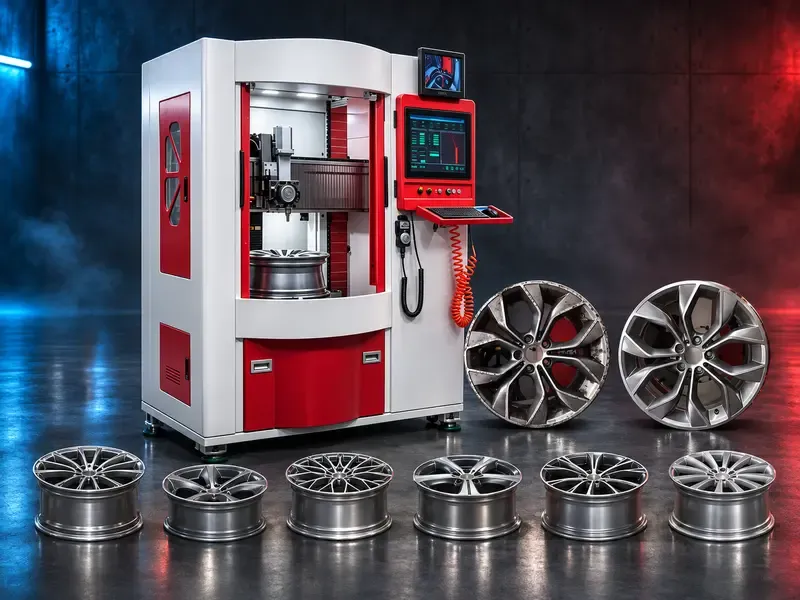
- Diamond cutting / face re-cutting of suitable alloy wheels
- Refurbishment of machined wheel faces
- Removal of a controlled surface layer during cosmetic restoration
- Probe-based wheel profile detection
- CNC-controlled reproduction of the detected wheel-face contour
- Repeat cutting of suitable recurring operations
- Adjustable spindle, detection and cutting speeds during operation
- Automatic tool-holder operation
- Pneumatic chip removal during machining
Machine Construction
- Vertical CNC machine layout
- Cast-iron machine body
- Gantry structure for increased rigidity
- Six linear guide rails in the referenced configuration
- Compact vertical workholding arrangement for wheel machining
- Enclosed/controlled machining area according to final configuration
The rigid structure is important because wheel-face finishing requires stable cutting and controlled tool movement. Final construction details should always be confirmed from the approved machine specification before publication or quotation.
Wheel Detection & Probe System
The referenced machine uses a ruby contact probe for wheel-surface detection. The probe physically contacts selected points on the wheel face to collect profile information used by the CNC machining process.
- Contact-based surface detection
- Ruby probe tip in the referenced configuration
- Detection speed can be adjusted during operation
- Wheel profile data supports subsequent CNC cutting
- Correct wheel mounting and clean detection surfaces are essential for reliable probing
CN Control & Operator Interface
- Multi-touch operator screen
- CNC-controlled cutting process
- Adjustable spindle speed during operation
- Adjustable detection speed
- Adjustable cutting speed
- Automatic repetitive cutting function in the referenced configuration
- Automatic electric tool-holder operation
Exact CNC software functions, program workflow, language options, file handling and data storage should be confirmed for the final machine supplied.
Tool Holder & Cutting System
The source specification identifies a 4-position electric tool holder. Multiple tool positions can support the machining workflow by reducing manual tool-change intervention where the programmed operation requires different tools or tool positions.
- 4-position electric tool holder
- CNC-controlled tool movement
- Cutting tools selected according to wheel material, surface condition and required finish
- Tool condition and correct insert selection directly affect surface quality
Wheel Clamping & Workholding
The source specification identifies a 13-inch chuck with three extended claws. Correct centering and secure wheel clamping are essential before probing or cutting.
- 13-inch chuck in the referenced configuration
- Three extended clamping claws
- Wheel must be centered and securely mounted
- Clamping surfaces should be clean and free from debris
- Wheel geometry and mounting method must be checked before machining
Maximum Wheel Size
The referenced configuration states a maximum wheel cutting size of up to 35 inches. This value should be treated as the maximum cutting size of the sourced configuration, not as a universal capacity for every alloy-wheel repair lathe.
For quotation, confirm the customer's minimum and maximum wheel diameters, wheel width, center-bore arrangement and typical wheel designs.
Electrical Supply
The referenced configuration specifies 380 V, 3-phase electrical supply. Site voltage, frequency, phase, protection and installation requirements should be confirmed before order and installation.
Chip Removal
A pneumatic chip-removal device is included in the referenced configuration to help clear machining chips from the cutting area. A clean machining area supports visibility, probing reliability and consistent workshop operation.
Typical Wheel Refurbishment Workflow
- Inspect the wheel condition and confirm that the wheel is suitable for cosmetic machining.
- Clean the wheel and remove contamination that can affect clamping or detection.
- Mount and center the wheel securely on the chuck.
- Set the probe and perform wheel-face detection according to the operating procedure.
- Review the detected profile and define the required cutting strategy.
- Select the appropriate cutting tool and machining parameters.
- Run a controlled cutting pass and inspect the result.
- Perform additional approved finishing passes only when required.
- Clean the wheel and inspect the machined surface before the next coating or finishing stage.
Typical Applications
- Alloy wheel refurbishment centers
- Automotive wheel repair workshops
- Diamond-cut wheel restoration
- Automotive body and refinishing centers with wheel-repair capability
- Specialist rim repair businesses
- Used-car preparation and reconditioning facilities
- Wheel customization and cosmetic restoration workshops
What the Machine Does Not Replace
A CNC wheel face-cutting lathe is primarily a machining/refurbishment solution. It does not automatically replace other processes that may be required in a complete wheel-repair line.
- Wheel straightening for bent rims
- Crack inspection and approved structural repair processes
- Welding where permitted and technically approved
- Paint stripping or chemical cleaning systems
- Powder coating / painting equipment
- Curing ovens
- Wheel balancing and tyre-service equipment
Factors That Affect Final Surface Quality
- Wheel material and casting condition
- Original wheel-face geometry
- Wheel condition before machining
- Correct centering and clamping
- Probe accuracy and clean detection surface
- Cutting-tool type and condition
- Spindle speed
- Feed / cutting speed
- Depth of cut and number of passes
- Machine rigidity and guide condition
- Operator setup and process control
Safety & Application Review
Cosmetic machining should only be performed on wheels that are suitable for the process. The wheel should be inspected for structural damage before machining. The machine should not be presented as a method for certifying the structural safety of a repaired wheel. Local technical, vehicle-safety and workshop requirements must be followed.
How to Select the Correct Machine
- Define the largest wheel diameter to be machined.
- Define the typical wheel diameter range and wheel width.
- Provide photos or samples of the wheel-face designs normally processed.
- Confirm whether the business focuses on diamond-cut refurbishment or broader wheel repair.
- Define expected wheels per day or per shift.
- Confirm electrical supply at the installation site.
- Confirm available floor space and loading/access requirements.
- Identify required probe, tooling, chuck and clamping accessories.
- Confirm the required CNC interface and operator training needs.
- Define the complete refurbishment process before and after CNC cutting.
Information Required for Quotation
- Typical wheel sizes
- Maximum wheel diameter
- Wheel width range
- Wheel photos or sample designs
- Expected daily production
- Required surface finish / refurbishment objective
- Electrical supply
- Workshop space
- Required accessories and cutting tools
- Required training and commissioning scope
Technical Data from the Referenced Configuration
- Maximum wheel cutting size: up to 35 inches
- Power supply: 380 V, 3-phase
- Tool holder: 4-position electric tool holder
- Workholding: 13-inch chuck with three extended claws
- Detection method: ruby contact probe
- Machine net weight: approximately 1,350 kg
- Machine dimensions stated by the source: approximately 1,650 x 1,020 x 1,960 mm
- Vertical cast-iron body with gantry structure and six linear guide rails
- Adjustable spindle, detection and cutting speeds
- Pneumatic chip-removal device
- Multi-touch screen
- Automatic repetitive cutting function
These figures describe the referenced configuration and should be re-confirmed against the final approved machine specification before publication as contractual data.
Questions we are asked
What is a CNC alloy wheel repair lathe used for?
It is used to machine and refurbish the visible face of suitable alloy wheels, particularly wheels requiring precision face re-cutting or diamond-cut style restoration.
What is diamond cutting on an alloy wheel?
Diamond cutting is a precision machining process in which a controlled thin layer is removed from the wheel face to create a clean machined finish. The complete refurbishment process may also include cleaning, coating and finishing operations.
What wheel size can the machine process?
The referenced configuration states a maximum wheel cutting size of up to 35 inches. Exact wheel compatibility must also consider width, geometry and clamping.
How does the machine detect the wheel profile?
The referenced machine uses a ruby contact probe to detect the wheel-face profile before CNC machining.
Can spindle speed and cutting speed be adjusted?
Yes. The source states that spindle speed, detection speed and cutting speed can be adjusted during operation. Does the machine have an automatic tool holder? Yes. The referenced configuration specifies a 4-position electric tool holder.
Can it automatically repeat cutting operations?
The referenced configuration includes an automatic repetitive-cutting function. The exact software workflow should be confirmed for the final machine.
Does the machine repair bent wheels?
Not by itself. Wheel straightening is a separate process and normally requires dedicated straightening equipment.
Can every damaged alloy wheel be machined?
No. Wheels should be inspected first. Structural cracks, severe deformation or unsafe damage require separate technical evaluation before cosmetic machining.
What information is needed before selecting the machine?
Provide the wheel size range, maximum diameter, wheel photos or samples, expected production, electrical supply and required refurbishment process.
What electrical supply is required?
The referenced configuration specifies 380 V, 3-phase power. Site requirements should be confirmed before installation.
Is operator training important?
Yes. Correct clamping, probing, tool selection, cutting parameters and inspection are important for consistent results and safe operation.
Tell us the part you need to make
An engineer reads every request. Usually the same working day.
Related
- VICTOR Slant-Bed CNC Lathes Slant-bed CNC turning machines from VICTOR Taichung for machining shafts, bushings, flanges, threaded parts, and other rotational components. The appropriate model is selected according to the workpiece, operations, accuracy, and production requirements.
- CNC Vertical Machining Center (VMC) Vertical CNC machining solutions for milling, drilling, tapping and producing engineered metal components.
- CNC Wire EDM Machines Precision machining solutions for producing complex profiles in electrically conductive materials using a CNC-controlled wire electrode.