

SOLID WOOD SIZING AND PLANING
Woodworking Thicknesser Planer Machines
Woodworking thicknesser planers machine compatible timber to a controlled thickness by feeding the workpiece through guided cutterhead and pressure roller systems. Correct selection depends on timber species moisture dimensions initial straightness removal allowance finish tolerance feed system cutterhead configuration extraction utilities and production volume.
A conventional thickness planer references one prepared face against the machine table and cuts the opposite face parallel to it. It does not automatically remove twist or bow when the reference face is not flat and correctly supported. The supplied description also refers to a double side planer and multi axis feeding. A verified double side configuration may machine two opposing faces in one pass, but this capability and every related specification must be confirmed from the approved machine datasheet.
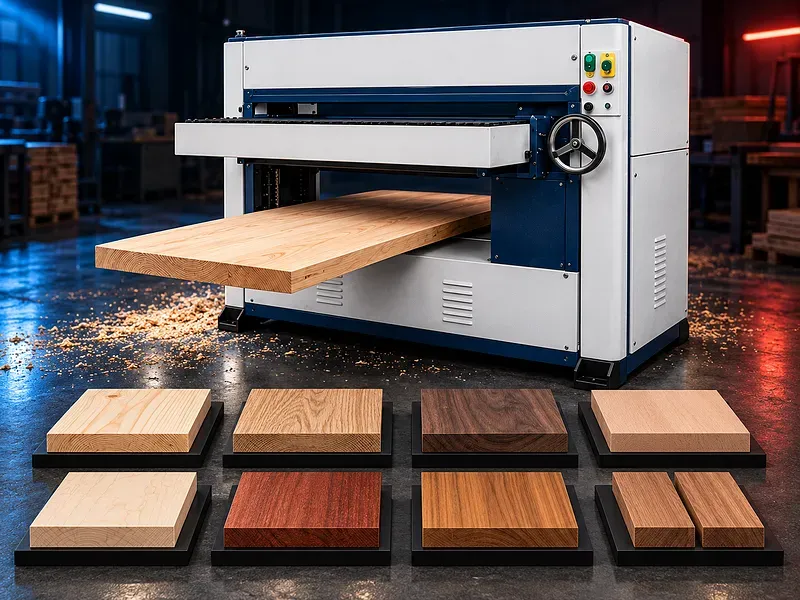
What a thicknesser planer does
The machine feeds a compatible timber workpiece beneath or between rotating cutterheads and removes a controlled layer to achieve the set thickness and surface condition. Pressure and feed rollers maintain contact and move the work through the cutting zone.
The result depends on the reference face timber condition grain direction cutter geometry depth of cut feed rate extraction setup and machine condition.
Single face and double side configurations
A single face thickness planer normally cuts one face while the opposite prepared face runs on the table. A verified double side planer may use upper and lower cutterheads to process two opposing faces during one pass.
The exact configuration cutterhead sequence workpiece reference and supported operation must be confirmed. A product title alone is not enough to establish double side capability.
Stock preparation and reference face
The workpiece should be free from metal stones loose knots severe splits and other hazards. Moisture content dimensions grain and defects should be checked before machining.
For a conventional thicknesser one face should normally be flattened by an appropriate preparation process before it becomes the table reference. A twisted board can remain twisted if it rocks or bends during feeding.
Potential timber materials
Potential work may include compatible softwood hardwood and selected engineered timber products when approved for the machine cutter material extraction and finished use.
Species density moisture resin silica inclusions knots grain direction laminations adhesive lines coating and internal foreign objects influence cutting load tool life finish and safety.
Working width and thickness range
Working width defines the maximum supported workpiece width under stated conditions. The thickness range depends on table position cutterhead layout feed rollers guards and the approved minimum part dimensions.
Maximum width does not prove capacity at every timber density depth of cut or feed speed. Approved capacity limits are required for the intended material and duty.
Depth of cut and stock allowance
Depth of cut is the material removed from a face in one pass. The permitted amount depends on workpiece width timber density moisture cutterhead condition motor load feed speed and finish requirement.
Heavy removal may require several passes. The process plan should distribute the allowance without exceeding machine tool or timber limits.
Cutterhead and knives
Possible cutter systems may use straight knives segmented inserts helical heads or another approved arrangement. Knife material geometry projection balance sharpness and setting affect cutting load finish vibration noise and service life.
Confirm cutterhead diameter speed knife quantity knife type setting method replacement procedure permissible projection balance requirement and approved tooling sources.
Feed rollers and pressure system
Infeed and outfeed rollers grip and transport the workpiece while pressure elements keep it referenced through the cut. Roller surface pressure height alignment and timing should suit the timber without excessive marking or slip.
The supplied reference to multi axis conveying requires verification. Confirm roller quantity drive arrangement sectional or solid rollers pressure adjustment minimum workpiece length and behavior with varying thickness.
Anti kickback protection
Anti kickback fingers or another approved device may help resist reverse movement of the workpiece toward the operator. Their design condition freedom of movement and correct position are important for protection.
Anti kickback equipment does not replace safe feeding guards suitable stock inspection or correct depth of cut. The exact protective system must be confirmed and tested.
Thickness setting and table adjustment
The operator sets the table or cutter position for the required finished thickness. A mechanical scale digital display powered lift or programmed positioning may be provided depending on the machine.
Confirm adjustment range resolution repeatability locking calibration backlash compensation and the procedure for approaching the target dimension.
Feed speed and surface finish
Feed speed interacts with cutter speed knife count depth of cut timber grain and desired surface. A slower or faster feed does not automatically improve quality in every material.
Trial pieces should establish settings that control tear out ripple marks burning compression and dimensional variation while keeping the machine within approved load limits.
Snipe tear out and other defects
Snipe is a thickness variation or deeper cut near the front or rear of a workpiece that can be influenced by support roller pressure table alignment part length and feeding technique. Tear out is affected by grain direction defects knife condition depth and feed.
Quality control should identify the defect cause before adjustment. Excessive sanding allowance should not be used to hide unstable machining.
Dust and chip extraction
Planing produces a high volume of chips and dust that can affect finish cooling feed mechanisms fire risk and operator exposure. Extraction should collect waste from the cutterhead enclosure without restricting safe operation.
Required airflow pressure duct size connection points filtration waste handling dust classification fire controls and housekeeping depend on timber material removal and local requirements.
Production workflow
Begin with approved part dimensions timber identification moisture check defect inspection machining allowance grain review cutter and feed settings and inspection method. Check guards extraction rollers anti kickback devices emergency functions and tool condition.
Run a sample measure thickness parallelism straightness and surface condition apply approved corrections then process the batch with regular checks tool monitoring and material traceability.
Quality and inspection
Inspection may cover thickness parallelism width straightness flatness surface roughness knife marks ripple snipe tear out burn marks compression scratches cracks and allowance for downstream sanding or profiling.
The quality plan should define datums tolerances gauges sampling calibration first piece approval knife change criteria correction limits and handling of nonconforming parts.
Potential applications
Potential applications include compatible furniture stock door and window components boards frames cabinet parts stair components moulding blanks flooring blanks and general solid wood sizing work.
Suitability depends on timber condition part geometry finished tolerance visual surface downstream sanding profiling moulding jointing coating and assembly requirements.
How to choose the correct machine
Provide timber species moisture density incoming and finished dimensions maximum width minimum and maximum thickness part length initial condition stock allowance grain quality tolerance quantity batch mix finish and target output.
Also define single face or double side needs cutter preference feed speed range extraction electrical supply floor space material support staffing maintenance capability noise controls and acceptance tests.
Technical information to verify
Approved documents must confirm machine configuration working width thickness range minimum workpiece length maximum depth of cut cutterhead quantity diameter speed knife type feed roller quantity feed speed table adjustment measurement system and repeatability basis.
Motor power electrical load extraction ports airflow requirements compressed air lubrication dimensions weight floor loading foundation noise basis guards anti kickback devices emergency stop braking controls standard equipment options tools documents training warranty service and acceptance method also require confirmation.
Safety and operating risks
Risks include cutter contact kickback ejected knots or fragments moving feed rollers pinch points sharp timber chips dust noise electrical energy stored pneumatic or mechanical energy jams heavy stock handling and knife changes.
The machine requires approved guards interlocks anti kickback protection emergency stops braking push and support methods safe distances extraction isolation knife change tools lifting controls training supervision and a documented risk assessment.
Installation and commissioning
Site preparation should cover delivery access level floor anchoring infeed and outfeed clearance timber storage support tables electrical supply compressed air when required extraction ducting dust collection fire controls lighting and maintenance access.
Commissioning should verify level table and cutter alignment roller pressure feed tracking thickness calibration extraction controls safety functions stopping behavior sample cuts operator training maintenance training documents and an agreed acceptance trial.
Maintenance and lifecycle support
Preventive maintenance should follow approved schedules for cutterheads knives inserts bearings belts chains gears feed rollers pressure elements tables lifts guides lubrication extraction sensors controls guards anti kickback devices and emergency systems.
Agree sharpening and replacement criteria knives inserts bearings belts chains rollers seals sensors filters lubricants setting gauges calibration tools technical documents training inspection records and service responsibility for the selected machine.
Limitations and publishing status
The supplied description does not verify single or double side configuration working capacity multi axis feeding casting construction precision noise energy use efficiency stability reliability maintenance convenience or safety performance.
Publication requires the exact approved datasheet machine configuration capacity table cutter and feed data extraction and safety instructions sample test results approved image technical review staging review and final content approval.
Technical review and next step
Send timber samples material data incoming and finished dimensions allowance quantities tolerances finish requirements extraction utilities and factory layout for technical review.
The review should define the suitable configuration cutter system feed arrangement supports extraction inspection acceptance trial installation training maintenance tooling and spare parts scope.
Questions we are asked
What is a woodworking thicknesser planer?
It is a machine that feeds compatible timber through a cutter and pressure system to produce a controlled thickness and surface.
Can a thicknesser flatten a twisted board?
Not reliably by itself. A conventional thicknesser follows the reference face on its table so the stock normally needs one properly prepared flat face first.
What is a double side planer?
A verified double side configuration uses upper and lower cutterheads to machine two opposing faces during one pass. The actual machine type must be confirmed.
What affects the surface finish?
Timber condition grain moisture cutter sharpness knife setting depth of cut feed speed roller pressure support extraction and machine alignment all affect the result.
What information is needed for selection?
Provide timber species moisture incoming and finished dimensions allowance quality tolerance quantities finish extraction utilities and factory layout.
Tell us the part you need to make
An engineer reads every request. Usually the same working day.
Related
- CNC WOOD ROUTER CNC routing solutions for cutting, drilling, engraving and machining suitable wood panels and furniture components.
- CNC ROUTER WITH ROTARY A CNC router equipped with a rotary attachment or axis for machining suitable cylindrical and shaped workpieces. Selection depends on the part geometry, material, dimensions, required operations, accuracy, and production volume.
- Automatic Edge Banding Machines Automatic edge banding machines apply and finish compatible edge material on straight panel edges through a controlled production sequence. Correct selection depends on the panel material dimensions edge tape adhesive production volume finish requirement installed processing units utilities and extraction system.