

WOODWORKING DUST COLLECTION
Wood Dust Collector with Two Collection Bags
A two bag wood dust collector supports source extraction of compatible sawdust chips and airborne woodworking dust. Correct selection depends on each connected machine dust load required airflow static pressure duct layout filtration method discharge arrangement duty cycle electrical supply noise limits and fire and explosion risk controls.
The collector draws contaminated air from compatible woodworking machines through hoods hoses or ducts. The air stream carries dust and chips toward the separation and filtration section while collected material is retained for controlled removal according to the verified system design. A two bag arrangement may use bags for collection filtration or a combination of both depending on the construction. The number of bags alone does not prove airflow filtration quality capacity or suitability. These values require the approved datasheet fan curve filter data and complete duct calculation.
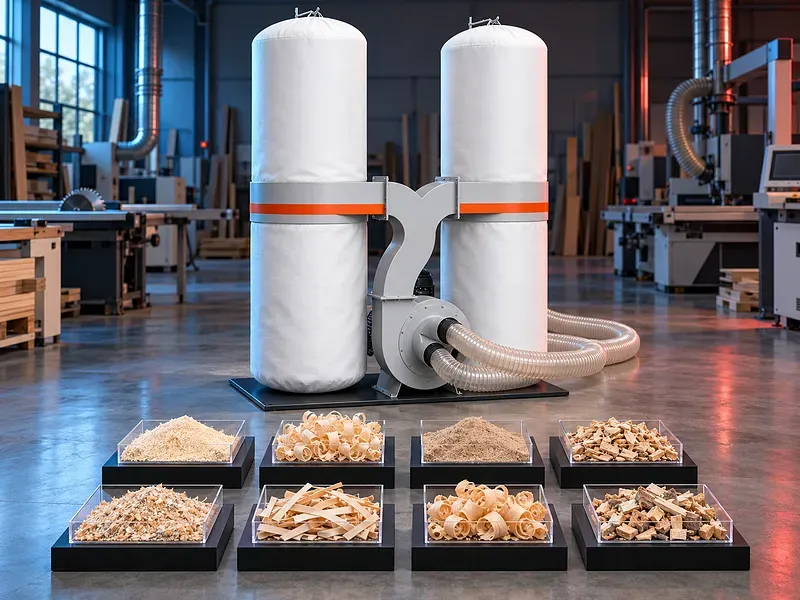
What the dust collector does
The system captures compatible dust chips and sawdust near their point of generation then conveys the contaminated air to a separation and filtration section. It supports cleaner controlled production and reduces material accumulation around connected equipment.
It is not a substitute for machine guarding housekeeping safe work methods respiratory protection or a documented combustible dust risk assessment.
Two bag configuration
The two bags may serve as collection bags filter bags or separate stages according to the approved construction. Bag material dimensions permeability treatment attachment and disposal method affect system behavior.
Confirm the function of each bag maximum fill condition cleaning method change procedure and approved replacements. Do not infer capacity from bag count alone.
Dust and chip characteristics
Identify wood species moisture resin content process and particle range from fine sanding dust to planer chips and saw offcuts. Coatings metal fragments hot particles and mixed waste may change the required solution.
Fine dry dust can remain airborne and may present health fire and explosion hazards. Suitability requires representative material data and a complete process risk assessment.
Connected woodworking machines
Provide every machine to be connected with each outlet size hood design expected dust load operating pattern and simultaneous use. The system must be sized for realistic combined demand and the highest resistance path.
Adding branches later can reduce capture performance unless fan and duct capacity are recalculated.
Source capture and hoods
Effective extraction begins at the source. A hood should capture material close to the cutter without obstructing operation adjustment inspection or guarding.
Confirm hood position enclosure capture direction opening area leakage and required transport velocity. Poor hood design cannot normally be corrected by increasing fan power alone.
Airflow and static pressure
Air volume controls capture while static pressure represents resistance through hoods ducts bends branches separators filters and discharge points. The operating point must come from a verified fan curve and system calculation.
Confirm airflow at every active hood total static pressure fan speed motor power filter condition and monitoring. Do not publish suction claims without approved test conditions.
Duct and hose network
Duct diameter length material bends junctions reducers flexible hose gates and branch balance determine velocity and pressure loss. The layout should minimize resistance and prevent settled dust.
Verify supports cleaning access grounding or bonding isolation devices discharge route and future expansion. Protect flexible connections from damage collapse and blockage.
Separation and filtration
The approved design may separate larger chips before air reaches the bags while filter media retains smaller particles. Performance depends on particle size airflow loading media and cleaning condition.
Confirm filter area media grade permeability cleaning method pressure limit emission basis and whether air is exhausted outdoors or returned indoors. Recirculation requires specific technical and safety approval.
Bag filling and waste discharge
Collected material must be removed before overfilling restricts airflow or creates unsafe handling. Bags or containers need secure attachment controlled release and a defined disposal route.
Confirm usable volume fill indication change frequency lifting dust containment waste classification storage and disposal.
Performance monitoring
Operators should detect reduced capture caused by full bags dirty filters closed gates leaks blockage belt slip fan damage or an unsuitable operating combination.
Define normal values warning limits shutdown criteria and recorded inspections for any pressure airflow current or alarm devices included.
Fire explosion and ignition control
Wood dust can be combustible. Risks include sparks hot particles static discharge overheated bearings electrical faults friction smoldering material and explosive dust clouds.
A qualified risk assessment must determine zoning construction grounding spark control isolation venting suppression location housekeeping and emergency requirements. Standard bags do not prove compliance.
Noise and operator exposure
Fan motor air movement duct vibration leakage and connected machines contribute to noise. Fine dust exposure depends on capture leakage filtration housekeeping and task duration.
Confirm measured data and workplace controls with the responsible safety team. Do not claim a dust free or silent workplace.
Installation and commissioning
Plan floor position service clearance bag removal duct supports electrical supply motor protection discharge route weather exposure noise vibration access and separation from ignition sources.
Commissioning should verify rotation current airflow at each hood branch balance leakage filter seating bag attachment safety functions containment cleaning and representative simultaneous production.
Operation and housekeeping
Before starting confirm bags filters gates ducts guards and waste containers are correctly installed. Use only the approved branch combination and run extraction for the required clearing period.
Maintain documented cleaning of floors ledges machines ducts and concealed areas. Prevent dust accumulation around motors bearings electrical panels and ignition sources.
Maintenance and lifecycle support
Preventive maintenance should cover bags filter media seals fan impeller bearings belts motor controls supports ducts hoses gates grounding devices and fire protection components.
Agree inspection cleaning replacement criteria approved consumables wear parts balancing performance tests manuals training service responsibility and recommended spare parts.
How to select the correct collector
Provide the machine list outlet sizes hood data duct layout simultaneous use dust type chip load working hours discharge location climate utilities floor space and expansion plan.
Selection should confirm airflow static pressure fan curve motor data filter area media cleaning waste capacity safety controls noise installation and acceptance measurements.
Technical information to verify
Approved documents must confirm airflow pressure fan type speed motor power electrical supply inlet sizes bag functions filter area media filtration basis cleaning method collection volume dimensions weight noise duty and ambient limits.
Discharge controls protection grounding fire measures standard equipment options consumables warranty service and acceptance criteria also require confirmation.
Limitations and publishing status
The supplied name confirms only a woodworking collector described with two bags. It does not verify airflow pressure motor power filtration efficiency bag function capacity inlet diameter noise safety compliance or suitability for specific machines.
Publication requires the exact approved datasheet fan curve filter certificate layout electrical data safety documents approved image technical review staging review and final content approval.
Technical review and next step
Send the machine list outlet sizes dust type duct layout simultaneous operating plan working hours utilities installation location and discharge requirement.
The review should define the operating point duct sizes hood changes filtration waste arrangement safety controls commissioning maintenance consumables and spare parts scope.
Questions we are asked
What is a two bag wood dust collector?
It is an extraction unit that moves compatible woodworking dust and chips through a fan and duct system to a separation and bag collection or filtration arrangement.
Do two bags mean higher capacity?
Not by themselves. Capacity depends on airflow pressure fan performance bag function filter area dust loading and discharge frequency.
Tell us the part you need to make
An engineer reads every request. Usually the same working day.
Related
- CNC WOOD ROUTER CNC routing solutions for cutting, drilling, engraving and machining suitable wood panels and furniture components.
- CNC ROUTER WITH ROTARY A CNC router equipped with a rotary attachment or axis for machining suitable cylindrical and shaped workpieces. Selection depends on the part geometry, material, dimensions, required operations, accuracy, and production volume.
- Automatic Edge Banding Machines Automatic edge banding machines apply and finish compatible edge material on straight panel edges through a controlled production sequence. Correct selection depends on the panel material dimensions edge tape adhesive production volume finish requirement installed processing units utilities and extraction system.