

WOOD CUTTING SOLUTIONS
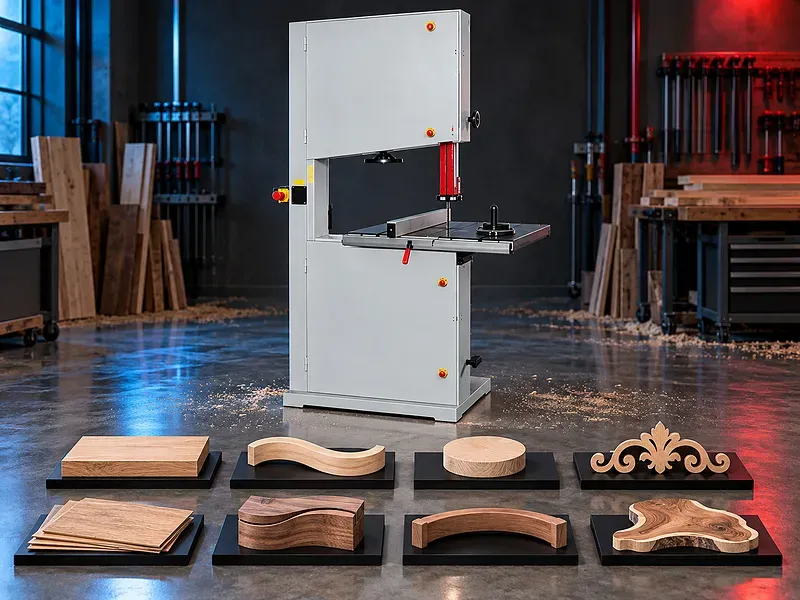
Wood Band Saw Machines for Straight and Profile Cutting
Wood band saw machines use a continuous toothed blade running around two or more wheels to cut compatible timber and wood based workpieces. Correct selection depends on the material blank dimensions cutting direction profile blade specification feed method finish tolerance output extraction and safety requirements.
The blade is installed around the saw wheels tensioned and guided so that one cutting section moves continuously through the work zone. The workpiece is then supported and fed through the blade using the approved table fence guide fixture or powered feed arrangement. Machine configurations vary between general workshop saws resawing machines contour cutting saws and production systems with powered feeding. Wheel diameter throat capacity cutting height blade width speed tilting functions and automation must be confirmed from the approved datasheet for the exact machine
How a wood band saw works
A continuous toothed blade runs around the machine wheels in one direction. The exposed cutting section passes through the work zone while the remaining blade remains enclosed and supported by the wheel and guide system.
The operator or feed system moves the workpiece against the cutting direction. Stable blade tracking tension guidance and controlled feeding are necessary for a consistent cut.
Potential cutting operations
Depending on the verified configuration the machine may perform straight cutting ripping crosscutting resawing sizing bevel cutting or contour cutting on compatible wood workpieces.
A narrow blade may support tighter curves while a wider blade may provide better stability for straight cuts. Operation capability must be matched to the machine guides wheels throat table and blade range.
Typical applications
Potential applications include furniture components joinery parts timber boards panels solid wood blanks curved components templates rough sizing and preparation before planing milling turning or assembly.
The required machine differs for workshop cutting heavy resawing thin lamella production curved work and automated production. The finished product and production route should define the selection.
Compatible material assessment
Potential materials may include compatible hardwood softwood plywood laminated timber and selected wood based boards when approved for the blade machine support and dust extraction system.
Species density moisture grain direction knots resin adhesive layers coatings embedded metal and internal defects influence cutting load blade heating tooth wear deviation finish and safety.
Workpiece dimensions and support
Confirm workpiece length width thickness weight and shape together with the desired cut and remaining support surface. Cutting height throat depth table size and material handling determine whether the part can be positioned safely.
Long wide heavy flexible or irregular workpieces may require infeed and outfeed supports roller tables fixtures handling aids or more than one operator according to the approved risk assessment.
Band saw blade selection
Blade width thickness tooth pitch tooth form material set weld quality and condition should match the timber thickness cutting direction curve radius feed method and finish requirement.
Confirm the machine approved blade length width and thickness ranges. A blade outside the permitted range can affect tracking tension guides wheels guarding cut quality and operating safety.
Blade tension and tracking
Correct tension helps the blade remain stable while tracking adjustment keeps it running in the approved position on the wheels. Excessive or insufficient tension can reduce blade life and affect the cut.
Verify the tension indication adjustment method tracking procedure wheel crown alignment blade installation steps and inspection criteria from the operating manual.
Blade guides and cutting clearance
Upper and lower guides support the blade close to the cutting zone and limit sideways movement. Guide position should be adjusted for the workpiece while maintaining safe clearance.
Confirm guide type adjustment wear limits lubrication restrictions replacement parts guard position and the permitted distance between the upper guide assembly and workpiece.
Saw wheels and drive system
The drive system rotates the wheels and blade within the approved speed range. Wheel condition alignment surface wear bearings and braking influence tracking vibration and stopping behavior.
Verify wheel diameter motor power blade speed or speed range drive arrangement brake stopping time electrical protection and response to a blade break or access door opening.
Table fence and fixtures
The table supports the work while the fence or fixture establishes the cutting reference. A tilting table or fence may support selected bevel work when included in the approved configuration.
Confirm table dimensions load capacity tilt range stops angle indication fence travel alignment mitre guide compatibility fixtures and safe support for narrow or irregular parts.
Manual and powered feeding
Manual feeding requires controlled pressure stable guidance and safe hand positioning. Push tools jigs and fences may be required to keep hands away from the blade and control small or narrow parts.
Powered feed may improve consistency for suitable straight cutting only when the machine includes a compatible feeder controls guarding and emergency system. Feed speed and pressure require verification.
Straight cutting and resawing
Straight cutting and resawing require blade stability correct fence alignment sufficient power controlled feed and adequate support. Timber stress grain and moisture may close or open the kerf and move the work during cutting.
Define required board thickness kerf allowance straightness surface condition and downstream planing allowance. Use a sample trial to verify drift control and achievable finish.
Contour and curved cutting
Contour cutting requires a blade narrow enough for the approved curve radius and sufficient clearance around the workpiece. Excessive twisting or forcing can damage the blade and reduce control.
Provide the drawing minimum internal radius material thickness blank size holding method and finish allowance so that blade choice table access and safe handling can be reviewed.
Cut quality and inspection
Inspection may cover dimensions straightness squareness bevel angle profile accuracy saw marks surface roughness burning tear out edge damage blade deviation and remaining allowance for later processes.
The quality plan should define references tolerances gauges templates first piece approval sampling frequency blade change criteria correction limits and treatment of nonconforming parts.
Production workflow
Begin with an approved drawing material identification blank inspection blade selection machine checks guide adjustment fence or fixture setup extraction settings and inspection method. Verify guards doors brakes and emergency functions before operation.
Run a sample cut inspect the result and correct only through approved adjustments. Release production after the setup blade and acceptance criteria are recorded.
Cycle time and production planning
Total cycle time includes material handling marking positioning guide and fence setup feeding cutting stopping unloading inspection cleaning blade changes and changeover. Output varies with material thickness cut length profile blade and handling method.
No feed rate cycle time or production quantity should be published without a timed trial using the actual workpiece blade finish requirement staffing and quality plan.
Dust chip and waste extraction
Band sawing creates sawdust chips and offcuts around the lower wheel table and cutting zone. Poor removal can affect visibility tracking mechanisms air quality housekeeping and fire risk.
Confirm extraction port quantity and size airflow pressure ducting filtration waste handling dust classification cleaning access grounding and fire controls for the intended materials.
Safety and operating risks
Risks include contact with the moving blade entanglement blade breakage ejected work kickback crushing pinch points unstable material dust noise electrical energy unexpected restart and manual handling.
The machine requires approved wheel and blade guards interlocked doors adjustable cutting zone protection braking emergency stop energy isolation secure work support suitable push devices extraction training supervision and a documented risk assessment.
Installation and commissioning
Site preparation should cover delivery access level floor anchoring operating clearance material flow infeed and outfeed support electrical supply extraction ducting dust collection fire controls lighting and maintenance access.
Commissioning should verify wheel and blade alignment blade tension tracking guides table and fence alignment braking extraction guards interlocks emergency functions sample cuts operator training maintenance training documents and an agreed acceptance trial.
Maintenance and lifecycle support
Preventive maintenance should follow approved schedules for blades blade welds wheels tires or wheel surfaces bearings drive belts guides tension and tracking systems table fence brakes extraction electrical controls guards interlocks and emergency devices.
Agree blade supply and welding requirements sharpening or replacement criteria guides bearings belts wheel coverings cleaning tools lubricants calibration checks manuals training inspection records service responsibility and recommended spare parts.
How to select the correct machine
Provide product drawings material type moisture incoming dimensions weight cutting direction straight or curved profiles minimum radius quantities batch mix tolerance finish downstream operations and target output.
Also define blade preferences manual or powered feed table and fence needs bevel requirements supports handling extraction electrical supply floor space staffing maintenance capability and acceptance tests.
Technical information to verify
Approved documents must confirm cutting height throat depth table size and load wheel diameter blade length width and thickness ranges blade speed motor power feed system fence travel table tilt guides tension tracking and braking.
Extraction demand electrical load dimensions weight floor loading noise basis guards safety functions standard equipment options blades fixtures manuals training warranty service and acceptance method also require confirmation.
Limitations and publishing status
The supplied description confirms only the general continuous band blade principle. It does not verify material range cutting capacity wheel quantity blade dimensions speed power accuracy finish feed system table tilt production output or safety configuration.
Publication requires the approved datasheet machine drawing blade and wheel data electrical and extraction information safety manual sample cut results approved image technical review staging review and final content approval.
Technical review and next step
Send product and cut drawings material data workpiece dimensions straight or curved requirements minimum radius quantities tolerances finish output utilities and factory layout for technical review.
The review should define the suitable machine blade guides fence fixtures supports feed method extraction inspection acceptance trial installation training maintenance consumables and spare parts scope.
Questions we are asked
What is a wood band saw machine?
It is a woodworking machine that moves a continuous toothed blade around saw wheels to cut a supported timber or wood based workpiece.
Can one band saw make straight and curved cuts?
Some configurations can perform both within their approved blade table throat guide and capacity limits. Blade selection and the minimum curve radius require verification.
How is the correct blade selected?
Selection depends on the material thickness cutting direction curve radius feed method finish and the machine approved blade length width thickness and tooth range.
Can the machine resaw thick timber?
Only when the verified cutting height power blade stability fence feed system and support arrangement suit the timber and required board thickness.
What information is needed for selection?
Provide the cut drawing material data workpiece dimensions weight straight or curved requirements minimum radius quantities tolerances finish output utilities and layout.
Tell us the part you need to make
An engineer reads every request. Usually the same working day.
Related
- CNC WOOD ROUTER CNC routing solutions for cutting, drilling, engraving and machining suitable wood panels and furniture components.
- CNC ROUTER WITH ROTARY A CNC router equipped with a rotary attachment or axis for machining suitable cylindrical and shaped workpieces. Selection depends on the part geometry, material, dimensions, required operations, accuracy, and production volume.
- Automatic Edge Banding Machines Automatic edge banding machines apply and finish compatible edge material on straight panel edges through a controlled production sequence. Correct selection depends on the panel material dimensions edge tape adhesive production volume finish requirement installed processing units utilities and extraction system.