

PANEL CALIBRATION AND SANDING
Wide Belt Sanders for Wood Panels Doors and Flooring
Wide belt sanders use one or more continuously moving abrasive belts to calibrate thickness or refine the surface of compatible wood panels doors flooring components and board materials. Correct selection depends on the material incoming thickness removal allowance working width abrasive sequence contact system tolerance finish output extraction utilities and safety requirements.
The abrasive belt runs around drive tension and contact elements while a tracking system maintains its operating position. The workpiece is supported and fed beneath the sanding head where a contact drum platen combination head or another approved unit applies controlled abrasive action. Configurations may be intended for heavy calibration fine finish sanding veneer sanding sealer or coating preparation or a combination of stages. Head quantity belt dimensions thickness range feed speed tolerance and suitability for painted or delicate surfaces must be confirmed from approved documents and representative trials.
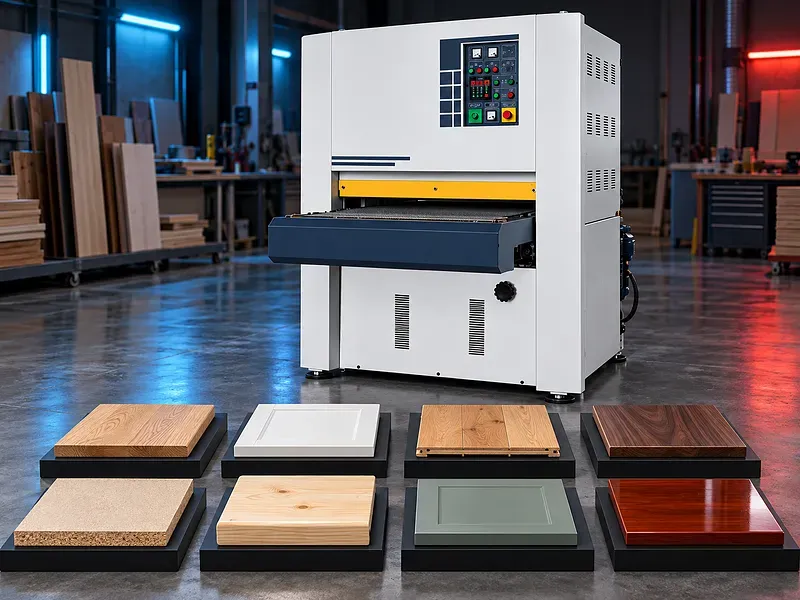
How a wide belt sander works
An endless abrasive belt moves continuously around the sanding head system. The workpiece travels on a conveyor beneath the belt while a contact drum platen or combined unit controls the abrasive contact.
The sanding head removes material or refines the surface according to the installed abrasive grit pressure speed feed and machine settings.
Calibration and finish sanding
Calibration sanding removes controlled stock to establish a target thickness or level a surface. It usually requires a rigid contact system suitable abrasive and sufficient power for the approved removal rate.
Finish sanding uses finer abrasive action to reduce scratches and prepare the surface for coating assembly or another process. One machine may combine stages when equipped with suitable heads.
Potential workpieces and applications
Potential work includes furniture panels cabinet doors table components flooring boards decorative panels solid wood laminations plywood and selected engineered wood boards.
Suitability depends on flat support surface part dimensions material condition finish and downstream operation. Profiled carved or deeply recessed workpieces generally need another sanding system.
Material and surface condition
Confirm timber species panel construction density moisture veneer thickness adhesive lines fillers coatings contamination flatness warp incoming thickness variation and previous machining marks.
These factors affect abrasive selection stock removal belt loading heat surface quality and the risk of sanding through veneer or coating.
Abrasive belt selection
Belt length width backing abrasive mineral grit coating pattern joint and anti static properties should suit the machine material removal and finish requirement.
Confirm the approved belt dimensions grit range joint direction storage conditions replacement criteria and compatibility with raw wood veneer primer sealer or cured coating.
Belt tension and tracking
The tension system holds the belt within its approved operating condition while tracking or oscillation keeps the belt aligned across the head. Incorrect tension or tracking can affect finish belt life and safety.
Verify tension method tracking sensors oscillation movement edge monitoring belt break detection adjustment procedure air quality requirement and safe response to a fault.
Contact drum and platen
A contact drum can provide controlled cutting action for calibration or sanding according to its diameter hardness covering and pressure. A platen spreads contact over a larger area and may suit finer finishing depending on its design.
Confirm head type hardness contact width segmented or continuous platen arrangement pressure control wear limits and application for each planned material and finish.
Multiple sanding heads
Machines may combine drum platen combination brush or cleaning heads in a selected sequence. Early heads may remove more stock while later heads refine the scratch pattern.
Verify head quantity order independent adjustment speed control contact system abrasive grit sequence interference zones and whether every head can be bypassed when required.
Conveyor and workpiece holding
The feed conveyor supports and moves the panel beneath the heads. Pressure rollers shoes or vacuum holding may help keep the workpiece stable when included.
Confirm minimum and maximum part dimensions conveyor condition feed speed pressure adjustment vacuum demand part spacing and safe handling of short narrow thin warped or slippery workpieces.
Thickness setting and calibration
Working thickness may be set through manual digital or powered adjustment according to the configuration. The machine reference should be calibrated against an approved measurement method.
Verify thickness range adjustment resolution position feedback table or head movement parallelism compensation calibration procedure recipe storage and control permissions.
Stock removal and sanding sequence
Define incoming thickness target thickness removal allowance and permitted number of passes. Stock removal depends on grit head type contact pressure abrasive speed feed speed material and available motor load.
A staged grit sequence should avoid deep scratches excessive heat belt loading surface waves and unnecessary abrasive consumption. Representative trials are required.
Veneer and coated panel protection
Thin veneer and coated surfaces have limited removal allowance. Thickness variation high spots hard contact or worn abrasives can cause local breakthrough or edge damage.
Confirm veneer thickness coating cure condition permitted removal grit sequence pressure method edge treatment and inspection before production.
Surface quality and inspection
Inspection may cover final thickness thickness variation flatness scratch pattern roughness chatter waves burning belt marks edge rounding veneer or coating breakthrough dents pressure marks and residual dust.
The quality plan should define references tolerances gauges lighting reference panels first piece approval sampling abrasive change limits correction rules and control of nonconforming parts.
Production workflow
Begin with an approved workpiece drawing material and surface inspection target thickness finish specification abrasive sequence head setup feed and pressure settings extraction settings and inspection method. Verify guards interlocks and emergency functions.
Run representative panels measure thickness and inspect the complete surface. Record approved settings and belt condition before controlled production.
Cycle time and production capacity
Total cycle time includes handling identification measurement setup belt changes feeding sanding repeated passes dust removal inspection stacking and changeover.
No high efficiency easy belt replacement accuracy cycle time or output claim should be published without a timed and measured trial using the actual material removal finish staffing and quality plan.
Dust extraction and fire risk
Wide belt sanding can generate a large volume of fine combustible dust. Inadequate extraction can affect finish belt tracking sensors mechanisms air quality housekeeping and fire or explosion risk.
Confirm hood coverage extraction airflow pressure ducting filtration dust classification grounding static control fire and explosion protection waste handling and compatibility with approved materials and coatings.
Safety and operating risks
Risks include moving abrasive belts rotating drums conveyor and pressure devices entanglement crushing pinch points belt failure ejected parts dust fumes noise electrical energy pneumatic energy static unexpected motion and manual handling.
The machine requires approved enclosures interlocks emergency stops braking safe setup mode energy isolation controlled feeding extraction belt fault detection training supervision and a documented risk assessment.
Installation and commissioning
Site planning should cover delivery access foundation and floor loading leveling anchoring service clearance panel flow loading support electrical and air supplies extraction ducting dust collection fire controls lighting waste handling and maintenance access.
Commissioning should verify geometry thickness reference head alignment belt tension and tracking conveyor pressure and vacuum systems extraction controls guards interlocks emergency functions sample panels training documents and an agreed acceptance trial.
Maintenance and lifecycle support
Preventive maintenance should follow approved schedules for sanding heads drums platens bearings drives tension and tracking systems conveyors pressure rollers vacuum system guides lubrication extraction sensors electrical controls guards interlocks and emergency devices.
Agree abrasive supply storage and replacement criteria contact coverings platens wear parts bearings belts filters cleaning tools lubricants calibration checks manuals training inspection records service responsibility and recommended spare parts.
How to select the correct machine
Provide workpiece drawings material construction incoming and target thickness removal allowance working width part length quantities batch mix finish downstream coating process tolerance and target output.
Also define calibration or finish sanding needs head and grit preferences feed method veneer and coating requirements extraction utilities floor layout handling staffing maintenance capability and acceptance tests.
Technical information to verify
Approved documents must confirm working width thickness and part length ranges belt dimensions head quantity type and speed drum and platen data abrasive grit range conveyor speed pressure or vacuum system adjustment and calibration functions.
Motor power extraction demand electrical and air requirements control functions accuracy test basis dimensions weight foundation floor loading noise basis guards safety functions standard equipment options abrasives manuals training warranty service and acceptance method also require confirmation.
Limitations and publishing status
The supplied description does not verify efficiency guaranteed accuracy easy belt replacement material range working dimensions head arrangement speed tolerance finish output extraction or safety configuration.
Publication requires the approved exact datasheet machine layout head belt and abrasive data electrical and pneumatic drawings extraction and safety documents representative panel results approved image technical review staging review and final content approval.
Technical review and next step
Send workpiece drawings and samples material data incoming and target thickness removal allowance finish requirement quantities output utilities and factory layout for technical review.
The review should define the suitable heads abrasive sequence contact system feed pressure or vacuum extraction inspection acceptance trial installation training maintenance consumables and spare parts scope.
Questions we are asked
What is a wide belt sander?
It is a woodworking machine that moves one or more endless abrasive belts over supported workpieces for thickness calibration or surface finishing.
Can it calibrate panel thickness?
Calibration is possible only when the verified head type power thickness control stock removal and material support suit the required allowance and tolerance.
Can it sand veneered or painted panels?
Only with a verified low removal process suitable abrasive contact system cured coating or known veneer thickness and representative sample approval.
Does it guarantee sanding accuracy and high output?
Accuracy finish and output depend on the exact machine setup material abrasive sequence feed extraction maintenance and acceptance method and require measured trials.
What information is needed for selection?
Provide material construction incoming and target thickness removal allowance width length finish quantities output utilities and factory layout.
Tell us the part you need to make
An engineer reads every request. Usually the same working day.
Related
- CNC WOOD ROUTER CNC routing solutions for cutting, drilling, engraving and machining suitable wood panels and furniture components.
- CNC ROUTER WITH ROTARY A CNC router equipped with a rotary attachment or axis for machining suitable cylindrical and shaped workpieces. Selection depends on the part geometry, material, dimensions, required operations, accuracy, and production volume.
- Automatic Edge Banding Machines Automatic edge banding machines apply and finish compatible edge material on straight panel edges through a controlled production sequence. Correct selection depends on the panel material dimensions edge tape adhesive production volume finish requirement installed processing units utilities and extraction system.