

MULTIFUNCTION WOODWORKING SOLUTIONS
Universal Combined Woodworking Machines
Universal combined woodworking machines integrate several compatible machining functions into one workshop platform. Correct selection depends on the installed function groups timber and panel materials part dimensions required capacities tooling changeover frequency extraction electrical supply safety controls floor space and production volume.
Potential configurations may combine circular sawing surface planing thickness planing spindle moulding and horizontal mortising or drilling. The exact function set motors shafts tables fences guards and accessories vary and must be confirmed from the approved machine datasheet. A combined machine can reduce the floor area needed for selected workshop processes, but every change between functions requires correct isolation setup tooling guarding extraction and verification. Integrated functions may have different capacity productivity and ergonomics from dedicated machines.
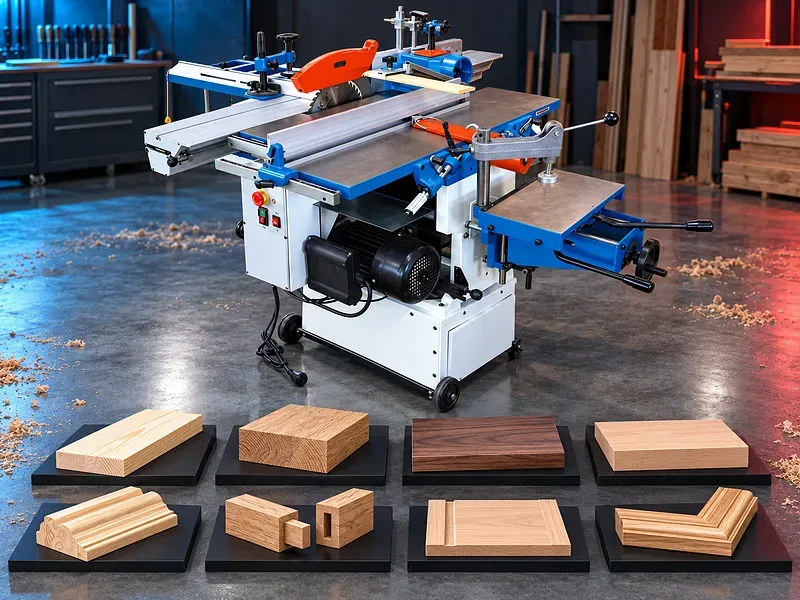
What a universal combined machine does
The machine brings multiple woodworking stations onto one base so an operator can complete selected preparation cutting shaping and joint making tasks after setting up the appropriate station.
The machine should be treated as a configurable platform rather than a fixed list of functions. Installed equipment and permissible operations require exact confirmation.
Who may consider a combined machine
A combined machine may suit selected workshops training facilities repair work custom production prototypes or varied small batches where floor space and broad process access are important.
Suitability depends on workload changeover time part size tolerance staffing safety capability and production planning. High volume or continuous work may justify dedicated machines for critical operations.
Potential materials
Potential work may include compatible solid timber plywood medium density fiberboard particleboard and selected wood based products when the specific station tooling extraction and process approve them.
Material name alone is not enough. Density moisture resin abrasive content laminations coating embedded contaminants dimensions and defects affect load finish tool life and safety.
Function configuration
A requested configuration may include a saw unit surface jointer thickness planer spindle moulder and mortising or drilling unit. Other versions may include fewer functions different table arrangements or optional accessories.
The supplied reference to five groups and three motors should not be published until the exact machine drawing motor schedule and standard equipment list confirm them.
Changeover between operations
Changing functions may require stopping and isolating the machine moving tables or guards installing tools adjusting fences connecting extraction and verifying rotation speed and clearances.
A documented changeover procedure should define tool selection locking calibration guard position extraction connection test run and release. Changeover time should be measured with the real process.
Circular sawing function
A saw unit may support straight rip or crosscut work and selected angled cuts when the table carriage fences blade tilt or guides are designed for them. A scoring blade may be available for compatible coated panels in some configurations.
Confirm blade diameter bore speed cutting height rip capacity crosscut capacity angle range scoring system carriage fence riving knife guard and approved blades.
Surface planing function
The surface planing or jointing station may create one flat reference face and a straight edge using infeed and outfeed tables a fence and a guarded cutterhead.
Working width table length depth of cut fence angle cutterhead type minimum workpiece dimensions guard arrangement and extraction require confirmation. Surface planing does not by itself set the opposite face to a parallel thickness.
Thickness planing function
The thicknessing station references a prepared face and machines the opposite face to a controlled thickness. Feed rollers move the stock through the cutter and pressure system.
Confirm thickness range working width minimum part length maximum depth of cut feed speed thickness setting anti kickback system table support and capacity for the intended timber.
Spindle moulding function
A spindle moulder may machine compatible edges profiles rebates grooves and selected tenons with approved cutters guides and work holding. Tool rotation speed and guard configuration must suit the cutter and operation.
Confirm spindle diameter usable height speed steps or control table opening fence ring guards power feed compatibility tenoning carriage tooling limits and extraction.
Mortising and drilling function
A horizontal mortising or drilling unit may use a chuck or router type tool to create compatible holes and slots through controlled table movement when included.
Confirm chuck capacity spindle speed travel in each axis table size work holding depth stops tool compatibility guards and extraction. A spindle extension mentioned in general text does not prove the actual unit design.
Motors drives and function isolation
The machine may use shared or independent motors and shafts depending on the design. Sharing drives can affect setup permissible simultaneous operation starting sequence and protection.
Confirm motor quantity power allocation rotation directions speed ranges belts gears brakes overload protection electrical controls and interlocks that prevent unsafe operation of unused stations.
Tables fences and measurement
Each function depends on suitable reference tables fences guides stops and scales. Flatness alignment rigidity locking and calibration influence straightness squareness profile dimensions and repeatability.
The technical review should verify table and fence dimensions travel ranges digital or mechanical indication extension supports and calibration procedures for each station.
Tooling and work holding
Saw blades planer knives spindle cutters drills mortising tools push blocks clamps featherboards power feeders and jigs should be approved for the station speed material and operation.
The scope should define standard and optional tooling tool ownership sharpening balancing setting gauges storage change procedures and replacement sources.
Dust and chip extraction
Sawing planing moulding and mortising create different chip and dust loads. The active station should connect to extraction that provides the required airflow without leaving unused openings uncontrolled.
Confirm port sizes airflow pressure duct switching filtration waste handling dust classification fire controls and housekeeping for every function and material.
Production workflow
Begin with approved drawings material identification a process route tooling list reference faces allowances settings and inspection plan. Plan the operation order to reduce repeated changeovers and unsafe material movement.
For each station isolate configure install tools set guards connect extraction run a test inspect the result and release the batch. Record adjustments tool changes rejects and process deviations.
Quality and inspection
Inspection may cover length width thickness flatness straightness squareness angles profiles grooves rebates holes slots surface finish tear out burn marks chatter and assembly fit according to the drawing.
The quality plan should define datums tolerances gauges sampling calibration first piece approval tool change criteria correction limits and handling of nonconforming parts.
Space productivity and limitations
One base may use less floor area than several dedicated machines, but working clearance is still required around infeed outfeed tables carriages fences and long workpieces.
Production output is affected by changeover material handling station capacity operator skill extraction and inspection. No labor saving capacity or efficiency claim should be published without a timed process study.
How to choose the correct machine
Provide product drawings timber and panel materials incoming and finished dimensions required saw planing thicknessing moulding and mortising operations tolerances quantities batch mix finish and target output.
Also define required function groups capacities tooling motors speed ranges tables fences carriages power feed extraction electrical supply floor space support equipment staffing maintenance capability and acceptance tests.
Technical information to verify
Approved documents must confirm the installed functions motor quantity power allocation saw capacity blade and angle data planer width and tables thickness range and feed spindle dimensions and speeds mortising travels chuck capacity and every station tool limit.
Controls brakes overload protection interlocks extraction ports airflow requirements electrical load compressed air dimensions weight floor loading foundation noise basis guards safety functions standard equipment options tools documents training warranty service and acceptance method also require confirmation.
Safety and operating risks
Risks include contact with saw blades cutterheads spindle tools and drills kickback ejected timber moving carriages feed rollers pinch points sharp workpieces dust chips noise electrical energy stored mechanical energy changeover errors and heavy handling.
The machine requires approved guards riving and anti kickback devices where applicable emergency stops braking isolation safe changeover procedures push and holding devices extraction tool speed verification training supervision and a documented risk assessment.
Installation and commissioning
Site preparation should cover delivery access level floor anchoring clearance around every function timber and panel storage support tables electrical supply extraction ducting dust collection fire controls lighting and maintenance access.
Commissioning should verify level table and fence alignment cutter and blade setup spindle rotation travels extraction controls interlocks guards stopping behavior sample operations operator training maintenance training documents and an agreed acceptance trial.
Maintenance and lifecycle support
Preventive maintenance should follow approved schedules for blades cutterheads knives spindles bearings belts chains gears tables slides fences carriages feed rollers brakes lubrication extraction sensors controls guards and emergency devices.
Agree sharpening and replacement criteria blades knives cutters drills belts bearings guards springs filters lubricants setting and calibration tools technical documents training inspection records and service responsibility.
Limitations and publishing status
The supplied description does not verify five functions three independent motors supported materials cutting angle range capacities precision ease of use compactness tool change convenience output or suitability for hobby professional or small workshop use.
Publication requires the exact approved datasheet configuration and motor schedule capacity and tooling data extraction and safety instructions sample test results approved image technical review staging review and final content approval.
Technical review and next step
Send product drawings material data process route dimensions quantities tolerances finish tooling needs extraction utilities and workshop layout for technical review.
The review should define the suitable function set capacities tools guards changeover process extraction inspection acceptance trial installation training maintenance consumables and spare parts scope.
Questions we are asked
What is a universal combined woodworking machine?
It is a configurable machine platform that integrates several woodworking functions on one base for selected workshop operations.
Which functions can be included?
Potential functions include circular sawing surface planing thickness planing spindle moulding and horizontal mortising or drilling. The exact installed groups must be verified.
Can all functions operate at the same time?
Not necessarily. Motors shafts guards controls and interlocks may limit simultaneous operation. The approved operating manual must define the permitted sequence.
Does a combined machine replace dedicated machines?
It may provide broad workshop capability in less floor area but each function can have capacity productivity changeover and ergonomic limits compared with a dedicated machine.
What information is needed for selection?
Provide product drawings materials operations dimensions quantities tolerances finish function capacities tooling extraction utilities and workshop layout.
Tell us the part you need to make
An engineer reads every request. Usually the same working day.
Related
- CNC WOOD ROUTER CNC routing solutions for cutting, drilling, engraving and machining suitable wood panels and furniture components.
- CNC ROUTER WITH ROTARY A CNC router equipped with a rotary attachment or axis for machining suitable cylindrical and shaped workpieces. Selection depends on the part geometry, material, dimensions, required operations, accuracy, and production volume.
- Automatic Edge Banding Machines Automatic edge banding machines apply and finish compatible edge material on straight panel edges through a controlled production sequence. Correct selection depends on the panel material dimensions edge tape adhesive production volume finish requirement installed processing units utilities and extraction system.