

WOOD PANEL CUTTING SOLUTIONS
Panel Saws for Wood Based Sheet Materials
Panel saws divide compatible full size boards into accurately planned components for furniture cabinetry fit out and panel processing work. Machine selection depends on the panel material dimensions thickness cut pattern edge quality tolerance production volume blade system handling method dust extraction and required cutting functions.
Panel saw is a broad machine category that may include sliding table saws horizontal beam saws and vertical panel saws. These configurations differ in panel support feeding automation cutting direction capacity and suitability for rip crosscut or angled work. A clean repeatable cut requires more than a sharp blade. Panel flatness blade selection scoring alignment guides feed rate support dust extraction measurement setup and preventive maintenance all affect edge quality and finished dimensions.
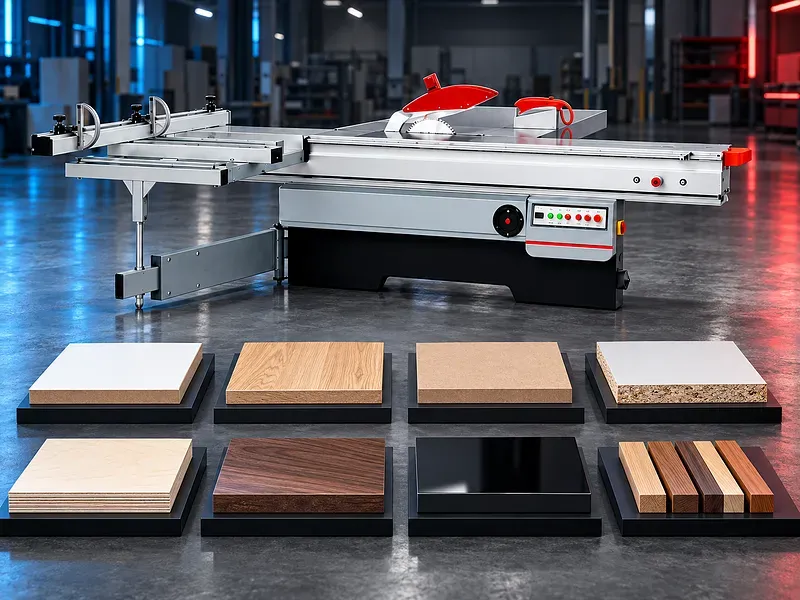
What a panel saw does
A panel saw cuts compatible sheet material into smaller rectangular parts according to an approved cutting plan. The panel or saw carriage is guided through a controlled path so the blade follows the intended cut line.
The exact machine type determines how panels are loaded referenced clamped moved and unloaded and whether rip crosscut miter or programmed cutting is supported.
Panel saw configurations
A sliding table saw carries the panel on a guided carriage past a rotating blade and may support flexible workshop cutting. A horizontal beam saw may clamp panels and move a saw carriage through programmed cuts for batch production. A vertical panel saw supports the sheet upright to reduce floor area and manual lifting distance in selected operations.
This page does not identify the exact configuration. The approved machine datasheet and image must confirm the type and supported cutting functions.
Potential panel materials
Potential work may include compatible solid wood panels particleboard medium density fiberboard plywood laminated boards veneered panels and selected composite sheet products when approved for the machine and blade.
Material described only as wood is not enough for approval. Density internal bonding abrasiveness coating veneer direction moisture resin content embedded contaminants and heat sensitivity affect cutting and blade selection.
Main blade selection
Blade diameter kerf tooth count tooth geometry body thickness material and speed should suit the panel and cut direction. A blade chosen for rip cutting may behave differently in crosscutting laminated boards or coated panels.
Use only approved blades within the spindle diameter bore speed rotation and guarding limits. Blade supplier data and a sample cut should confirm the expected edge quality.
Scoring blade and coated panels
A scoring blade may create a shallow cut on the lower face before the main blade reaches the material when the selected machine includes this system. Correct width alignment depth and direction can help control breakout on compatible laminated panels.
Scoring is not included in every panel saw. Blade adjustment matching to the main kerf maintenance and trial results require verification.
Panel guidance and reference
Straight cuts depend on stable reference surfaces and controlled movement. Sliding tables fences crosscut guides pressure beams clamps pushers or vertical supports may provide this function according to the machine type.
Guide straightness fence squareness carriage play clamping force measuring scale digital readout and reference calibration should be checked through approved procedures.
Rip crosscut and miter capability
Rip cutting follows the longer panel direction or material grain while crosscutting divides the part across its width. Miter or angled cuts require an approved adjustable guide table saw unit or programmed function.
Do not claim every cut type for every panel saw. Maximum dimensions angle range workpiece support blade exposure and accuracy must be confirmed for the exact configuration.
Cutting plan and material yield
A cutting plan defines the sequence orientation quantity and dimensions of parts taken from each panel. It should consider blade kerf trim allowance grain or decorative direction material defects labels and downstream machining references.
Optimization software may support material yield in compatible automated systems when included. Yield and waste results depend on accurate part data constraints and real panel quality.
Panel handling and support
Large panels require stable support before during and after cutting. Roller tables air tables sliding carriages lifting aids vacuum devices or team handling may be needed according to sheet size mass surface sensitivity and machine design.
The handling plan should prevent dropping bending scratching unexpected movement and operator reach near the blade. Safe loading and unloading space must be included in the layout.
Feed rate and cutting condition
Feed rate should match the blade material thickness cut direction motor capability and desired edge quality. Feeding too quickly or unevenly may increase breakout vibration load or dimensional variation while feeding too slowly may create heat or burn marks in some materials.
The approved process should define blade speed feed method cutting height panel stack limit and conditions for different material groups.
Dust and chip extraction
Sawing produces dust chips and fine particles that can affect visibility finish cooling mechanisms fire risk and operator exposure. Extraction should collect material close to the blade and other emission points.
Required airflow pressure duct size connection points filtration dust classification waste handling fire controls and housekeeping depend on the panel material machine enclosure and local requirements.
Production workflow
Begin with approved drawings a cut list material identification cutting plan blade selection and inspection method. Check the machine condition blade guards extraction guides references supports and emergency functions before operation.
Run a sample cut measure length width squareness edge condition and visible surface breakout apply approved corrections then release production with regular checks and material traceability.
Quality and inspection
Inspection may cover part length width squareness straightness parallelism edge breakout saw marks burning chipping delamination surface scratches kerf position and identification according to the drawing.
The control plan should define datums tolerances gauges calibration first part approval sampling blade change criteria correction limits and handling of nonconforming parts.
Potential applications
Potential applications include compatible cabinet parts shelves doors worktops furniture components partition panels shop fitting elements interior panels packaging parts and general rectangular wood based components.
Suitability depends on material part size visible faces edge banding allowance downstream drilling routing coating assembly and production requirements.
How to choose the correct panel saw
Provide panel material full sheet dimensions thickness maximum part length and width smallest part cut directions miter needs finish standard tolerance quantity batch mix cut list and target output.
Also define stack cutting needs scoring requirement loading method lifting aids optimization software labeling extraction compressed air electrical supply floor space staffing maintenance capability and acceptance tests.
Technical information to verify
Approved documents must confirm machine configuration maximum cutting length and width cutting height panel thickness stack capacity minimum part dimensions main blade and scoring blade diameters blade speed feed speed spindle data motor power angle capability and measurement system.
Table carriage beam fence clamps pushers controls software guards safety functions extraction ports airflow requirements electrical load compressed air dimensions weight floor loading foundation noise basis standard equipment options tools documents training warranty service and acceptance method also require confirmation.
Safety and operating risks
Risks include blade contact kickback ejected offcuts moving carriages pressure beams clamps automatic pushers sharp panels dust noise electrical energy stored pneumatic energy manual handling jams and blade changes.
The machine requires approved guards riving and anti kickback devices where applicable interlocks emergency stops push tools safe distances extraction isolation blade change procedures panel support lifting controls training supervision and a documented risk assessment.
Installation and commissioning
Site preparation should cover delivery access level floor anchoring working clearance loading and unloading area panel storage electrical supply compressed air extraction ducting dust collection fire controls lighting and maintenance access.
Commissioning should verify level alignment carriage or beam movement fence squareness blade and scoring alignment clamping measuring system extraction controls safety functions sample cuts operator training maintenance training documents and an agreed acceptance trial.
Maintenance and lifecycle support
Preventive maintenance should follow approved schedules for blades scoring units spindles belts bearings carriages guides fences clamps pressure beams pushers lubrication extraction sensors controls guards and emergency devices.
Agree blade sharpening and replacement criteria recommended blades belts bearings guides seals sensors filters lubricants calibration tools software backups technical documents training and service responsibility for the selected machine.
Limitations and publishing status
The supplied description does not verify panel saw type blade quality cut finish corrosion resistance durability power accuracy cutting functions material range capacity productivity or suitability for every industrial application.
Publication requires the exact approved datasheet machine configuration blade and scoring data capacity table safety and extraction instructions sample cut results approved image technical review staging review and final content approval.
Technical review and next step
Send panel samples material specifications full sheet and part dimensions cut lists quantities tolerances finish requirements handling method utilities extraction data and factory layout for technical review.
The review should define the suitable machine configuration blade system guides automation handling optimization extraction inspection acceptance trial installation training maintenance and spare parts scope.
Questions we are asked
What is a panel saw?
It is a woodworking machine category used to divide compatible full size panels into smaller parts according to a cutting plan.
Which panel saw configuration is suitable?
The choice between a sliding table beam or vertical panel saw depends on panel size cut pattern production volume handling space automation and required cutting functions.
Can one panel saw make rip crosscut and miter cuts?
Only when the selected configuration guides tables software and angle range support those operations. Exact capability must be verified from the approved datasheet.
Why is a scoring blade used?
A scoring blade may prepare the lower face of compatible laminated panels before the main blade to help control breakout when correctly adjusted.
What information is needed for selection?
Provide panel material and dimensions thickness part sizes cut list cut directions angles tolerance finish quantity handling method extraction utilities and factory layout.
Tell us the part you need to make
An engineer reads every request. Usually the same working day.
Related
- CNC WOOD ROUTER CNC routing solutions for cutting, drilling, engraving and machining suitable wood panels and furniture components.
- CNC ROUTER WITH ROTARY A CNC router equipped with a rotary attachment or axis for machining suitable cylindrical and shaped workpieces. Selection depends on the part geometry, material, dimensions, required operations, accuracy, and production volume.
- Automatic Edge Banding Machines Automatic edge banding machines apply and finish compatible edge material on straight panel edges through a controlled production sequence. Correct selection depends on the panel material dimensions edge tape adhesive production volume finish requirement installed processing units utilities and extraction system.