

SAWMILL AND TIMBER RESAWING
Horizontal Band Saw Mills for Logs Cants and Timber Boards
Horizontal band saw mills use a continuous toothed blade in a horizontal cutting plane to convert compatible logs cants or timber blocks into boards slabs and resawn sections. Correct selection depends on material diameter and length condition target board thickness blade specification feed arrangement handling yield tolerance output utilities extraction and safety requirements.
The log cant or timber block is secured on the machine bed or carriage while the saw head or workpiece feed system moves the horizontal blade through the material. The cutting height is then adjusted for the next board according to the approved sawing plan and machine reference. Configurations may differ in bed length log diameter cutting width blade size head movement feed system hydraulic handling thickness setting debarking support and automation. Accuracy delivery claims manufacturing methods appearance and customization should not be published without approved evidence for the exact machine and project
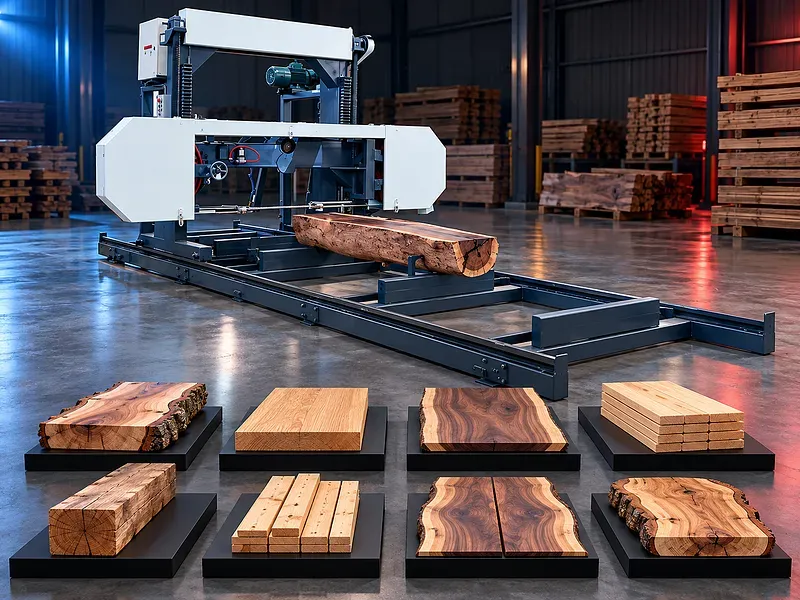
How a horizontal band saw mill works
A continuous blade runs around saw wheels with the cutting section arranged horizontally. The saw head or material carriage moves along the cut while the timber remains supported and restrained.
After each pass the board is removed and the cutting height is repositioned for the next thickness according to the sawing plan and verified machine controls.
Logs cants and resawing applications
Potential work includes breaking down compatible round logs producing slabs and boards resawing cants splitting thick timber and preparing stock for drying planing flooring furniture joinery or structural processing.
The suitable configuration differs for primary log breakdown and accurate resawing of prepared cants. Material form and required product should define the machine.
Timber condition and grading
Confirm timber species density moisture diameter or cross section length taper sweep knots checks rot embedded metal stones bark contamination frozen condition and internal stress.
Material inspection and metal detection may be required before cutting. Defects can affect blade life feeding straightness yield and operator safety.
Sawing plan and finished boards
Provide the incoming log or cant dimensions target board thickness widths lengths quantities grading rules kerf allowance drying shrinkage and downstream machining allowance.
The sawing plan should consider taper defects heartwood sapwood orientation grain appearance and material handling. Theoretical yield requires confirmation with real logs and grading.
Blade selection
Blade length width thickness tooth pitch tooth form set material weld quality and condition should suit the machine wheels timber dimensions feed speed and required surface.
Confirm the approved blade range tooth preparation sharpening or replacement policy weld inspection tension limits and availability of suitable consumables.
Blade tension and tracking
Correct blade tension supports stability while tracking keeps the blade in the approved position on the wheels. Incorrect settings can increase deviation heat wear and breakage risk.
Verify tension method indication tracking controls wheel alignment guide setup blade installation inspection criteria and safe response to a blade fault.
Saw wheels shaft and drive
The wheel and drive system moves the blade within the approved speed and load range. Wheel condition alignment bearings shafts covers braking and drive stability affect tracking vibration and stopping behavior.
Verify wheel diameter shaft construction and test basis motor power blade speed drive arrangement braking stopping time lubrication and protection after a blade break or cover opening.
Blade guides and cut support
Guides support the blade close to the work and limit sideways movement. Their position and clearance should match the cutting width while avoiding contact with the timber or contamination.
Confirm guide type travel adjustment cooling or lubrication method wear limits replacement parts cleaning and protection from bark chips resin and sawdust.
Bed carriage and head movement
The bed or carriage supports the timber while rails wheels guides racks chains cables screws or hydraulic drives move the saw head or workpiece according to the design.
Verify travel length movement method feed range straightness reference structural load lubrication protection alignment calibration and service access.
Log clamping turning and leveling
Stops clamps dogs supports bunks or hydraulic handling devices may locate level turn and restrain logs or cants. Secure control is required throughout cutting and board removal.
Confirm quantity travel capacity pressure contact design taper compensation loading method handling sequence safe zones and behavior after power or hydraulic loss.
Thickness setting and cut positioning
Board thickness may be positioned manually digitally or through powered controls depending on the machine. The setting should include kerf and any required allowance.
Confirm adjustment resolution position feedback scale calibration compensation recipe or pattern functions and the stated basis for dimensional repeatability.
Feed speed and cutting conditions
Suitable feed depends on timber species moisture diameter cut width blade tooth preparation blade speed available power chip evacuation and required surface.
Excessive feed can cause deviation overload heat and roughness while very low feed may also affect tooth loading and productivity. Representative trials are required.
Kerf yield and material recovery
The band blade kerf together with defects trim allowance and sawing pattern affects the amount of usable timber recovered from each log or cant.
Thin kerf may improve theoretical recovery only when blade stability preparation and cut quality remain acceptable. Yield claims require measured production data and a defined grading method.
Cut quality and inspection
Inspection may cover board thickness variation straightness parallelism taper surface roughness washboarding blade marks burning deviation edge condition cracks and downstream allowance.
The quality plan should define datums tolerances gauges sampling first log or cant approval blade change criteria correction limits grading and handling of nonconforming boards.
Production workflow
Begin with an approved sawing plan timber identification inspection and grading blade selection machine and guide checks clamping and handling setup thickness reference extraction settings and inspection method. Verify guards interlocks brakes and emergency functions.
Run a representative log or cant inspect all boards and record approved feed thickness settings and blade condition before controlled production.
Cycle time and production capacity
Total cycle time includes log handling loading positioning clamping cutting head return board removal turning repositioning inspection stacking blade service and changeover.
No fast stable delivery high precision cycle time output or recovery claim should be published without timed and measured trials using the real material sawing plan staffing and quality criteria.
Sawdust chip and waste handling
Sawmilling produces sawdust bark chips slabs and offcuts around the blade wheels bed and material handling area. Poor removal can affect tracking mechanisms visibility air quality housekeeping and fire risk.
Confirm extraction or conveyor requirements port sizes airflow pressure waste collection cleaning access dust classification grounding and fire controls for the intended production.
Safety and operating risks
Risks include moving blade wheels saw head carriage clamps hydraulic devices log movement blade breakage ejected material crushing pinch points unstable loads dust noise electrical energy hydraulic pressure and manual handling.
The machine requires approved guards interlocks emergency stops braking safe setup mode energy isolation controlled log support exclusion zones extraction lifting plans training supervision and a documented risk assessment.
Installation and commissioning
Site planning should cover delivery access foundation and floor loading rail or bed alignment anchoring operating clearance log storage lifting and handling routes electrical and hydraulic supplies extraction or waste removal lighting drainage weather protection and maintenance access.
Commissioning should verify geometry wheel blade and guide alignment tension and tracking travel feed clamping thickness setting extraction controls guards interlocks emergency functions sample cuts training documents and an agreed acceptance trial.
Maintenance and lifecycle support
Preventive maintenance should follow approved schedules for blades welds wheels shafts bearings guides tension and tracking systems rails carriage drives clamps hydraulics lubrication extraction electrical controls guards interlocks and emergency devices.
Agree blade supply sharpening and welding requirements wheel coverings guides bearings belts seals hoses filters lubricants alignment tools calibration checks manuals training inspection records service responsibility and recommended spare parts.
How to select the correct machine
Provide timber species condition log or cant dimensions weights taper defects target board sizes sawing pattern kerf allowance quantities batch mix tolerance surface grading downstream process and target output.
Also define loading turning clamping handling feed thickness control blade service extraction or waste system utilities site layout staffing maintenance capability environment and acceptance tests.
Technical information to verify
Approved documents must confirm maximum log or cant diameter width length and weight cutting width and height bed travel blade dimensions wheel diameter blade speed motor power feed range thickness setting clamping and handling functions.
Accuracy test basis hydraulic and electrical requirements extraction or waste handling dimensions weight foundation loading noise basis guards safety functions standard equipment options customization scope blades tools manuals training warranty service and acceptance method also require confirmation.
Customization and manufacturing claims
Customization should be limited to options supported by approved engineering drawings capacity calculations safety review price and delivery terms. Not every working area or specification can be changed safely.
Claims about laser cut bodies CNC ground shafts appearance near zero error or delivery performance require traceable inspection records and approved commercial evidence before publication.
Limitations and publishing status
The supplied description does not verify precision near zero error stable delivery internal manufacturing method beauty full customization material capacity blade data speed power accuracy output recovery extraction or safety configuration.
Publication requires the approved exact datasheet machine layout blade wheel shaft feed clamping and handling data electrical and hydraulic drawings safety documents sample cut results approved image technical review staging review and final content approval.
Technical review and next step
Send sawing plans timber data log or cant dimensions target boards kerf allowance quantities tolerances output utilities environment and factory layout for technical review.
The review should define the suitable machine blade guides feed clamping handling thickness control waste system inspection acceptance trial installation training maintenance consumables and spare parts scope.
Questions we are asked
What is a horizontal band saw mill?
It is a sawmill machine that moves a horizontal continuous band blade through supported logs cants or timber blocks to produce boards slabs or resawn sections.
Can it process round logs and prepared cants?
Some configurations can process both within their verified clamping handling cutting width height length and weight limits.
How is board thickness controlled?
Thickness may be positioned manually digitally or by powered controls depending on the machine. Calibration kerf compensation and repeatability require verification.
What information is needed for selection?
Provide timber data log or cant dimensions target boards sawing plan kerf allowance quantities tolerances output utilities environment and site layout.
Tell us the part you need to make
An engineer reads every request. Usually the same working day.
Related
- CNC WOOD ROUTER CNC routing solutions for cutting, drilling, engraving and machining suitable wood panels and furniture components.
- CNC ROUTER WITH ROTARY A CNC router equipped with a rotary attachment or axis for machining suitable cylindrical and shaped workpieces. Selection depends on the part geometry, material, dimensions, required operations, accuracy, and production volume.
- Automatic Edge Banding Machines Automatic edge banding machines apply and finish compatible edge material on straight panel edges through a controlled production sequence. Correct selection depends on the panel material dimensions edge tape adhesive production volume finish requirement installed processing units utilities and extraction system.