

AUTOMATED PANEL CUTTING
CNC Beam Saws for Panel Cutting and Batch Production
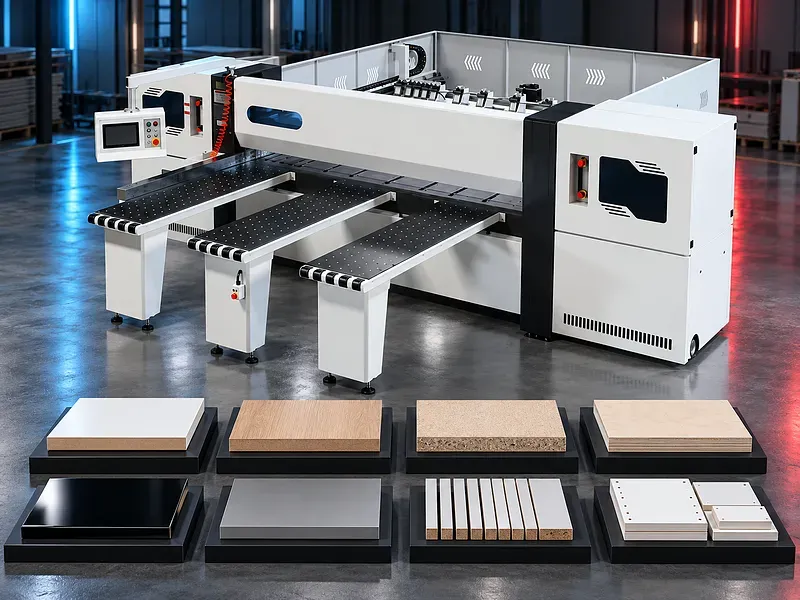
CNC beam saws position and clamp compatible panels under a pressure beam while a programmed saw carriage travels through the cutting line. Correct selection depends on panel material and size stack height cutting plan edge quality tolerance batch mix output handling extraction utilities software and safety requirements.
Panels are loaded and referenced against the machine positioning and alignment system. The pressure beam holds the panel or stack during cutting while the main blade and any verified scoring blade travel with the saw carriage to complete the programmed cut. Some configurations may support stacked panels automatic optimization powered side alignment air tables labeling loading or unloading systems and additional dust control. These functions and any claims about speed accuracy languages certification installation warranty or support require approved evidence for the exact machine.
How a CNC beam saw works
The positioning system moves a compatible panel or stack to the programmed dimension. The pressure beam descends to restrain the material while the saw carriage passes through the cutting line and then returns according to the machine cycle.
The exact sequence may include referencing side alignment scoring main cutting carriage return waste handling and repositioning. Every movement must remain within the installed control and safety logic.
Pressure beam and panel restraint
The pressure beam holds the panel close to the cutting line to reduce movement and support stable cutting. Pressure distribution and contact surfaces should suit the panel finish thickness stack and fragility.
Verify beam lifting method pressure control stroke contact design segmented or continuous arrangement sensing maintenance access and safe behavior after a power or air loss.
Saw carriage and cutting direction
The saw carriage carries the blade system through the panel along the machine cutting axis. Some cycles may cut during one travel direction while others may use a verified operating sequence that differs by design.
Confirm carriage travel speed cutting speed return speed drive system guides lubrication blade lift sequence braking collision zones and access for blade replacement and service.
Main blade and scoring blade
The main blade performs the panel separation. A scoring blade may be included to reduce breakout on coated surfaces when correctly aligned and matched to the main blade and material.
Verify blade diameters bore kerf tooth geometry speed rotation height adjustment scoring arrangement alignment limits sharpening policy and approved blade combinations.
Potential panel materials
Potential work may include compatible medium density fibreboard particleboard plywood laminated panels melamine faced boards selected solid wood panels and certain plastics when approved for the blade machine extraction and fire controls.
ABS PVC acrylic and other thermoplastics require specific review because heat chip behavior fumes melting edge quality and static can affect the process. Material suitability should be proven by approved documents and a sample cut.
Panel dimensions and stack cutting
Confirm maximum and minimum panel length width thickness weight and permissible stack height. The stack should remain flat aligned and supported while the pressure beam and blade system stay within their approved limits.
Multiple panel cutting may improve throughput for suitable repeated parts but stack quantity depends on material thickness flatness surface condition pressure blade projection motor load extraction and required edge quality.
Positioning grippers and references
A positioning pusher or carriage may use controlled grippers to reference and move the panels. The gripping system should retain the material without unacceptable marks movement or collision.
Confirm positioning travel gripper quantity opening force locations minimum trim allowance measurement reference position feedback compensation and behavior with narrow flexible or slippery panels.
Side alignment and squaring
A side alignment device may position the panel against a reference before cutting to support square parts. Powered or encoder monitored alignment is configuration dependent and does not prove accuracy without a stated test method.
Verify aligner travel pressure contact location sensor or encoder arrangement calibration compensation minimum part size cycle sequence and compatibility with stacks and delicate surfaces.
Cut optimization software
Optimization software may arrange parts on sheets to reduce waste and organize the cutting sequence according to entered dimensions grain direction trim rules priorities and machine constraints.
Confirm whether optimization is included or optional together with supported file formats part and material databases labeling integration network functions license terms user permissions backups training and nesting rules.
Control interface and language support
The control should present machine status programs dimensions alarms and operating functions required for the installed configuration. Interface language availability varies by control version and licensed software.
Do not publish support for every special language without an approved language list. Verify translation completeness alarm text manuals training screens updates and local character handling.
Loading unloading and material flow
Manual loading may use air flotation tables and support surfaces to reduce sliding effort. Automated systems may include lifts conveyors storage connections or return handling when included in the approved project.
Review incoming sheet packs finished part flow offcuts scrap zones labeling sorting operator reach lifting equipment floor space and interfaces with upstream and downstream equipment.
Dust curtain and extraction
Dust control may use extraction at the saw carriage pressure beam or cutting enclosure together with curtains seals and duct connections. A hinged or lifting curtain is only one possible design and requires model confirmation.
Verify port quantity and size airflow pressure ducting hood movement filtration waste handling dust classification access for cleaning grounding and fire controls for every approved material.
Cut quality and inspection
Inspection may cover part length width squareness diagonal difference edge straightness chipping breakout saw marks burning melting burrs surface damage and labeling accuracy.
The quality plan should define references tolerances gauges sampling first cut approval blade change criteria scoring adjustment correction limits traceability and handling of nonconforming parts.
Production workflow
Begin with an approved cutting list panel identification material and stack inspection program or optimization result blade selection positioning setup extraction settings and quality method. Verify guards interlocks pressure functions and emergency devices.
Run a sample cutting pattern inspect dimensions squareness edge condition and labels when applicable. Record approved corrections before releasing controlled batch production.
Cycle time and production capacity
Total cycle time includes loading referencing positioning side alignment pressure beam movement scoring cutting carriage travel return repositioning unloading labeling sorting inspection waste handling and changeover.
No claim of higher efficiency faster operation stack output or parts per shift should be published without a timed trial using the real cutting plan materials stack policy handling method staffing and quality criteria.
Safety and operating risks
Risks include rotating saw blades moving carriage pusher grippers and pressure beam crushing and pinch points ejected fragments sharp edges panel movement dust fumes noise electrical energy pneumatic energy unexpected automatic motion program errors and manual handling.
The machine requires approved enclosures interlocked access doors pressure beam protection emergency stops safe setup mode energy isolation controlled loading zones blade management extraction operator training supervision and a documented risk assessment.
Installation and commissioning
Site planning should cover delivery access foundation and floor loading machine leveling anchoring operating clearances panel storage material flow loading tables electrical and air supplies extraction ducting network access when approved lighting waste handling and maintenance access.
Commissioning should verify geometry positioning calibration pressure beam saw and scoring alignment side reference extraction programs optimization interfaces guards interlocks emergency functions sample cuts training documents and an agreed acceptance trial.
Maintenance and lifecycle support
Preventive maintenance should follow approved schedules for blades scoring system arbor bearings carriage guides drives racks chains or screws pressure beam grippers aligner air tables lubrication extraction sensors electrical cabinet controls guards interlocks and emergency devices.
Agree blade sharpening and replacement criteria consumables wear strips gripper pads bearings belts filters lubricants calibration tools software backups licenses manuals training inspection records service responsibility and recommended spare parts.
How to select the correct machine
Provide panel materials and finishes sheet dimensions thickness and weight stack policy cutting lists part sizes trim rules grain direction tolerances edge requirement quantities batch mix shift pattern and target output.
Also define optimization labeling loading unloading side alignment air table blade and scoring requirements extraction electrical and air supply network needs floor layout staffing maintenance capability and acceptance tests.
Technical information to verify
Approved documents must confirm cutting length and height stack limit panel size and weight saw and scoring blade data motor power carriage speed pusher travel positioning feedback grippers pressure beam side alignment table and extraction demand.
Control software languages optimization functions file formats accuracy test basis cycle definitions electrical and air requirements dimensions weight foundation floor loading noise basis guards safety functions standard equipment options manuals training warranty service and acceptance method also require confirmation.
Certification packaging warranty and support
Certification should only be published after receiving a valid declaration certificate scope applicable standards and identification that matches the exact machine. Packaging material and transport protection should be confirmed in the approved shipping specification.
Warranty duration exclusions free parts remote assistance manuals videos installation responsibility response time and permanent support are commercial commitments that require approved written terms before publication.
Limitations and publishing status
The supplied description does not verify stack capacity higher efficiency safe operation material compatibility special language support dust curtain design optimization side alignment accuracy pressure beam drive certification packaging warranty installation or permanent technical support.
Publication requires the exact approved datasheet layout software list blade data electrical and pneumatic drawings extraction requirements safety documents certification file commercial terms sample cut results approved image technical review staging review and final content approval.
Technical review and next step
Send cutting lists panel data sheet sizes thickness stack policy part dimensions tolerances edge quality batch mix target output factory utilities and layout for technical review.
The review should define the suitable capacity blades scoring positioning side alignment optimization loading extraction inspection acceptance trial installation training maintenance consumables and spare parts scope.
Questions we are asked
What is a CNC beam saw?
It is a panel cutting machine that positions and clamps compatible panels under a pressure beam while a programmed saw carriage completes the cutting line.
Can multiple panels be cut together?
Stack cutting may be possible within the verified stack height material flatness pressure blade projection power extraction and edge quality limits.
Does the machine include cut optimization?
Optimization may be standard optional or external depending on the control and software package. Functions formats licensing and training require confirmation.
Can it cut MDF particleboard and plastic panels?
Material suitability depends on the exact panel blade cutting data extraction and safety controls. Plastics require special review for heat fumes melting and static.
What information is needed for selection?
Provide panel data sheet sizes thickness stack policy cutting lists part dimensions tolerances edge quality batch mix output utilities and factory layout.
Tell us the part you need to make
An engineer reads every request. Usually the same working day.
Related
- CNC WOOD ROUTER CNC routing solutions for cutting, drilling, engraving and machining suitable wood panels and furniture components.
- CNC ROUTER WITH ROTARY A CNC router equipped with a rotary attachment or axis for machining suitable cylindrical and shaped workpieces. Selection depends on the part geometry, material, dimensions, required operations, accuracy, and production volume.
- Automatic Edge Banding Machines Automatic edge banding machines apply and finish compatible edge material on straight panel edges through a controlled production sequence. Correct selection depends on the panel material dimensions edge tape adhesive production volume finish requirement installed processing units utilities and extraction system.