

4 Four Side Wood Moulder Planer for Profile Moulding
4 Four Side Wood Moulder Planer for Profile Moulding
4 Four Side Wood Moulder Planer for Profile Moulding process compatible timber on multiple faces in one controlled pass to establish width thickness straightness and selected profiles. Correct selection depends on the finished section incoming stock allowance timber condition spindle arrangement tooling feed speed tolerance surface quality output extraction utilities and safety requirements.
The workpiece is guided through a sequence of cutter spindles while feed rollers and pressure elements control its movement and reference surfaces. A typical process establishes a base and side reference before the remaining faces or profiles are machined according to the installed spindle sequence. Configurations vary in spindle quantity orientation working dimensions feed system cutterhead type adjustment control and profiling capability. Suitability for flooring window components mouldings furniture parts architectural joinery or high volume production must be verified from the actual section drawing material and approved machine data.
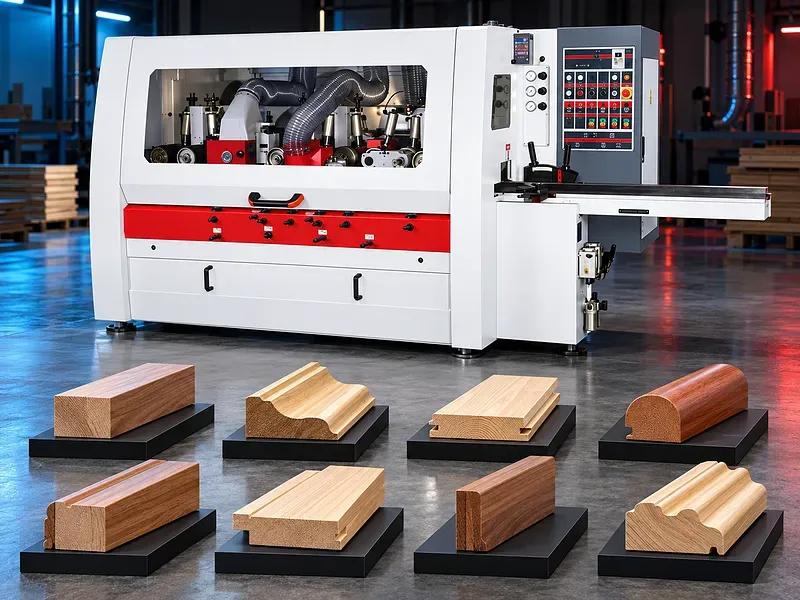
What a four sided planer does
The machine feeds a compatible timber workpiece through several cutter stations so that multiple faces can be machined in one pass. The installed sequence may establish flatness straightness width thickness and selected profiles.
Four sided operation does not mean every profile or timber condition is supported. Capability depends on spindle arrangement tooling travels references pressure devices and available stock allowance.
Potential finished products
Potential products include dimensioned timber floor boards window and door components furniture rails frame parts battens slats wall and ceiling profiles architraves skirting boards mouldings and selected architectural woodwork.
The exact product range depends on the cross section length timber behavior tooling and downstream process. Hollow curved tapered or highly irregular parts may require another method.
Incoming timber requirements
Confirm timber species density moisture content grain direction knots checks resin adhesive lines previous coatings metal contamination incoming length width thickness straightness twist and machining allowance.
Stock should provide sufficient stable allowance for the required references and final section. Excessive bow twist cup or variable allowance can affect feeding pressure cutter load and finished dimensions.
Finished section and machining allowance
Provide a dimensioned section drawing showing final width thickness profiles grooves rebates tongues radii chamfers decorative details and critical reference faces.
Define incoming dimensions and the removal allowance on each face. The review should confirm whether the material can be cleaned up without exceeding cutter spindle feed or pressure limits.
Spindle sequence and orientation
A machine may use lower right left upper or additional universal spindles in a selected sequence. Early stations commonly create references that later stations follow.
Verify spindle quantity orientation order travel adjustment overlap working direction rotation and whether the arrangement can produce the required section without collisions or unsupported cuts.
Straightening table and references
The infeed table fence and first cutting stations help establish stable bottom and side references. Table length adjustment and fence alignment influence how bowed or rough stock enters the remaining stations.
Confirm straightening table length adjustment range reference fences wear plates lubrication restrictions calibration method and permissible incoming bow or twist.
Feed rollers and pressure system
Feed rollers move the timber through the cutters while pressure shoes plates or rollers keep it against the references. Contact force should control the part without unacceptable marks deformation or slip.
Verify roller type quantity drive pressure adjustment positions lifting response anti kickback devices minimum part length support and behavior after power or air loss.
Cutterheads knives and tooling
Tooling may include straight planing heads profile cutterheads grooving tools saw units or approved specialist tools. Cutter diameter width profile projection mass speed and rotation should suit the spindle timber and final section.
Confirm arbor interface tool limits hydraulic or mechanical clamping balancing knife setting replacement sharpening guards extraction access and approved tool drawings.
Planing and profile moulding
Straight planing establishes flat faces and finished dimensions. Profile moulding adds shaped features only when the installed spindles tooling travel pressure and guide system support the required section.
Complex or deep profiles may reduce feed speed require multiple tools or need another pass. Validate the actual section through tool design review and a sample trial.
Feed speed and cutting conditions
Suitable feed speed depends on timber species moisture stock allowance tool diameter knife count spindle speed profile depth finish requirement chip load and machine stability.
Published maximum feed does not prove acceptable finish on every product. Verify working feed speed tool life motor load and surface quality using representative stock.
Dimensional adjustment and control
Working width thickness and spindle positions may be adjusted manually digitally or through powered axes depending on the configuration. Stored settings may support repeat jobs when the control includes this function.
Confirm adjustment resolution position feedback compensation recipe capacity permissions diagnostics backups calibration and changeover method.
Surface quality and dimensional inspection
Inspection may cover width thickness straightness flatness squareness parallelism profile dimensions tongue and groove fit surface roughness knife marks tear out burning chatter dents and feed marks.
The quality plan should define datums tolerances gauges templates first piece approval sampling calibration tool wear correction limits and handling of nonconforming parts.
Production workflow
Begin with an approved section drawing timber identification moisture and stock inspection tooling plan spindle setup feed and pressure settings extraction settings and quality method. Verify guards interlocks anti kickback devices and emergency functions.
Run a sample length inspect all faces dimensions profile and assembly fit where required. Record approved corrections before releasing controlled production.
Cycle time and production capacity
Total production time includes timber grading loading referencing feeding machining unloading inspection stacking tool setting changeover and waste handling. Continuous feed may support volume production when material flow and machine capacity match the job.
No high volume suitability feed output or parts per shift claim should be published without a timed trial using the actual timber section allowance tooling staffing and quality plan.
Chip extraction and fire control
Multiple cutterheads can generate a high volume of chips and fine dust. Poor extraction can affect finish tool load feed mechanisms visibility air quality housekeeping and fire risk.
Confirm hood design port quantity and size airflow pressure ducting filtration waste handling dust classification cleaning access grounding spark and fire controls for the approved timber and tools.
Safety and operating risks
Risks include rotating cutterheads driven feed rollers anti kickback action entanglement crushing pinch points ejected timber tool breakage chips dust noise electrical energy pneumatic energy unexpected motion jams and manual handling.
The machine requires approved enclosures interlocks emergency stops safe setup mode energy isolation anti kickback controls workpiece support extraction tool verification loading zones training supervision and a documented risk assessment.
Installation and line integration
Site planning should cover delivery access foundation and floor loading leveling anchoring service clearance timber storage infeed and outfeed support electrical and air supplies extraction ducting waste handling fire controls lighting and maintenance access.
Production line integration may include conveyors feeders detectors marking stacking or downstream sanding when approved. Interfaces speed matching accumulation safety zones controls and responsibilities require project engineering.
Commissioning and acceptance
Commissioning should verify machine geometry table and fence references spindle alignment rotation and runout feed and pressure systems anti kickback extraction controls guards interlocks emergency functions and lubrication.
Acceptance should use representative timber and approved sections to verify dimensions profile surface quality feed stability changeover training documents and agreed production conditions.
Maintenance and lifecycle support
Preventive maintenance should follow approved schedules for spindles bearings cutterheads toolholders feed rollers chains gears drives tables fences pressure devices guides lubrication extraction sensors electrical controls guards interlocks and emergency devices.
Agree knife and tool supply sharpening and setting criteria wear plates rollers bearings belts chains seals filters lubricants calibration tools software backups manuals training inspection records service responsibility and recommended spare parts.
How to select the correct machine
Provide finished section drawings timber species moisture incoming and final dimensions stock allowance length range quantities batch mix tolerances finish downstream operations shift pattern and target output.
Also define spindle and tooling needs feed method changeover control extraction utilities floor layout handling staffing maintenance capability future profiles and acceptance tests.
Technical information to verify
Approved documents must confirm working width thickness and length ranges spindle quantity sequence orientation travel diameter speed power and interface cutter limits feed speed and roller arrangement pressure system and table data.
Accuracy test basis extraction demand electrical and air requirements control functions dimensions weight foundation floor loading noise basis guards safety functions standard equipment options tooling manuals training warranty service and acceptance method also require confirmation.
Limitations and publishing status
The supplied description does not verify every product capability large scale production suitability material range spindle arrangement working dimensions speed accuracy finish tooling profile limits output extraction or safety configuration.
Publication requires the approved exact datasheet machine layout spindle and tool data electrical and pneumatic drawings extraction and safety documents sample section results approved image technical review staging review and final content approval.
Technical review and next step
Send finished section drawings timber data incoming dimensions allowance length quantities tolerances finish output utilities and factory layout for technical review.
The review should define the suitable spindle sequence tools references feed pressure extraction inspection acceptance trial line integration installation training maintenance consumables and spare parts scope.
Questions we are asked
What is a four sided planer?
It is a woodworking machine that feeds compatible timber through multiple cutter spindles to machine several faces and selected profiles in one controlled pass.
Can it produce mouldings and profiles?
Only when the verified spindle arrangement tooling travel pressure and guide system support the required section. A tool review and sample trial are required.
Which products can be processed?
Potential products include dimensioned timber flooring window and door parts furniture components and mouldings within the approved material section and capacity limits.
Is it suitable for large scale production?
Suitability depends on working feed speed material flow tool life changeover staffing extraction quality requirements and verified output under the real production plan.
What information is needed for selection?
Provide finished section drawings timber data incoming dimensions stock allowance length quantities tolerances finish output utilities and factory layout.
Tell us the part you need to make
An engineer reads every request. Usually the same working day.
Related
- CNC WOOD ROUTER CNC routing solutions for cutting, drilling, engraving and machining suitable wood panels and furniture components.
- CNC ROUTER WITH ROTARY A CNC router equipped with a rotary attachment or axis for machining suitable cylindrical and shaped workpieces. Selection depends on the part geometry, material, dimensions, required operations, accuracy, and production volume.
- Automatic Edge Banding Machines Automatic edge banding machines apply and finish compatible edge material on straight panel edges through a controlled production sequence. Correct selection depends on the panel material dimensions edge tape adhesive production volume finish requirement installed processing units utilities and extraction system.