

CNC PLATE AND MULTI STRIP CUTTING
Gantry CNC Plasma Flame and Multi Strip Cutter
A gantry CNC cutting machine can combine plasma profile cutting oxyfuel flame cutting and multiple parallel flame torches for compatible steel plate and strip production. Correct selection depends on material grade plate size thickness cut geometry strip widths output edge quality plasma source torch count gases extraction table layout utilities and safety requirements.
The gantry travels along parallel rails while one or more cutting stations move across the bridge under CNC control. Plasma can process approved electrically conductive metals while oxyfuel flame cutting is normally selected for approved carbon and low alloy steels where the oxidation process is suitable. A multi strip arrangement uses several aligned flame torches to cut parallel strips in one pass when plate grade thickness torch spacing gas supply and thermal control are approved. Plasma flame and strip modes have different capabilities and must not be presented as interchangeable.
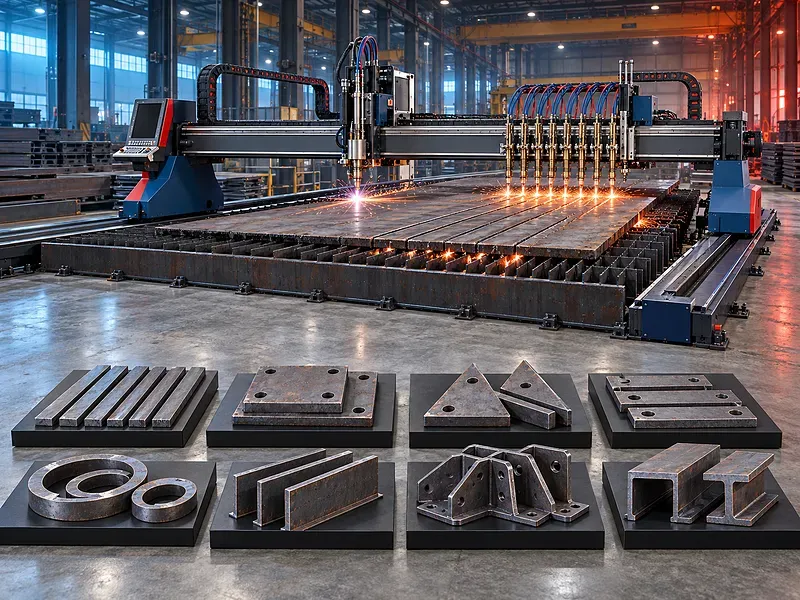
What the gantry cutting machine does
The machine positions plasma or oxyfuel torches over a plate according to a CNC program. It may cut profiles holes bevel ready edges or parallel strips only when the exact torch heads controls and process package support those operations.
The complete result depends on the machine structure cutting process consumables gases table extraction programming and material handling.
Plasma cutting mode
Plasma uses an electric arc and high velocity ionized gas to cut approved conductive metal. Source power torch consumables gas process height control pierce method and material determine the useful thickness range speed and edge quality.
Confirm source and torch compatibility duty cycle cut chart marking support consumables life and approved material range.
Oxyfuel flame cutting mode
Oxyfuel preheats the workpiece and uses cutting oxygen to sustain oxidation and remove molten oxide. It is generally associated with approved carbon and low alloy steels and is not a universal process for stainless steel or aluminum.
Confirm fuel gas oxygen purity pressure torch nozzles preheat pierce method thickness range speed and safe ignition sequence.
Multi torch strip cutting
Parallel flame torches can divide a plate into several straight strips during one travel. Productivity depends on usable bridge width number of torches spacing range gas capacity plate flatness thermal input and strip handling.
Define equal or variable strip widths edge allowance common reference kerf compensation torch isolation remnant handling and acceptance checks.
Materials plates and production plan
Provide material grade certification plate width length thickness flatness surface condition rust scale coating temperature and storage history. Define profiles strips quantities nesting priorities remnants and downstream welding or machining.
Material chemistry and condition affect pierce cut stability dross heat distortion and edge acceptance.
Gantry rails motion and positioning
The bridge should travel square to the rails with stable synchronized drives while the carriage positions each cutting station across the plate. Rail alignment backlash acceleration cable management and contamination control affect accuracy.
Confirm travel ranges positioning feedback reference sequence calibration compensation collision protection and behavior after interruption.
Torch height control and piercing
Automatic height control may use process voltage or another verified method to maintain torch distance as the plate moves or distorts. Pierce height delay cut height and corner behavior must match the cut chart.
Oxyfuel and plasma use different sensing ignition piercing and height strategies. Verify each mode independently.
CNC programming and nesting
Programming should convert approved drawings into process paths with lead ins lead outs pierce points kerf compensation cutting order corner control and remnants. Nesting can improve plate utilization when material and process rules are correct.
Confirm file formats software licenses postprocessor version user permissions simulation backups job recovery and change control.
Cut table extraction and slag handling
The table supports the plate and receives sparks molten metal slag and fumes. The approved solution may use a dry extraction table water table sectional dampers or another controlled arrangement.
Confirm load capacity slat design replacement extraction airflow filtration water management slag removal fire control cleaning access and environmental obligations.
Cut quality and inspection
Inspect dimensions hole size edge angle squareness kerf width dross striations top edge rounding heat affected zone distortion and remaining machining allowance. Define the applicable drawing standard gauges sampling and correction limits.
Quality claims require approved test plates material thickness consumables settings and acceptance criteria.
Gases compressed air and utilities
The line may require electricity cutting oxygen fuel gas plasma gases compressed air extraction cooling water network and grounding according to the selected process package.
Confirm purity pressure flow storage separation regulators flashback protection leak testing ventilation and simultaneous demand with qualified utility and safety reviews.
Safety and operating risks
Risks include arc radiation flame hot metal sparks fumes gases fire explosion electrical energy pressurized systems moving gantry collision noise sharp plate edges and material handling.
Controls require guarded zones emergency stops gas isolation flashback protection extraction grounding eye and body protection lifting plans training supervision and a documented risk assessment.
Installation commissioning and acceptance
Site planning should cover foundation rail alignment floor loads plate storage crane routes table extraction gas installation electrical supply grounding cooling clearance and maintenance access.
Commissioning should test geometry motion height control each process mode gas safety extraction programs representative plates operator training and agreed acceptance cuts.
Maintenance consumables and lifecycle support
Preventive maintenance should cover rails racks drives gearboxes carriage cables torch lifters height sensors plasma torch oxyfuel valves regulators hoses table extraction cooling controls and safety devices.
Agree electrodes nozzles shields oxyfuel tips filters slats lubricants spare parts cut charts software backups manuals training inspection and service responsibility.
How to select the correct configuration
Provide plate grades sizes thickness range profile drawings strip widths quantities shift pattern quality standard target output downstream process utilities layout extraction and material handling.
The review should select plasma source oxyfuel package torch count bridge and rail size table height control software gases extraction consumables and acceptance tests.
Technical information to verify
Approved documents must confirm effective cutting size rail span and length torch types number and spacing plasma source thickness and speed charts oxyfuel range gases height control marking positioning accuracy repeatability and drive data.
Also verify power air gas cooling extraction table capacity dimensions weight foundation noise safety functions standard equipment options software consumables training warranty service and acceptance method.
Limitations and publishing status
The uploaded image shows a gantry plasma station and several parallel flame torches but does not verify any printed dimensions thickness speeds power gases accuracy weight or capacity.
Publication requires the exact approved datasheet process cut charts layout utility schedule safety documents approved image rights sample cuts technical review staging review and final content approval.
Questions we are asked
What processes can the machine combine?
It may combine approved plasma profile cutting oxyfuel flame cutting and parallel multi torch strip cutting in one gantry platform.
Can oxyfuel cut every metal?
No. Oxyfuel suitability depends on material chemistry and is generally associated with approved carbon and low alloy steels.
What information is needed for selection?
Provide plate grades sizes thicknesses profile drawings strip widths quantities quality output utilities extraction layout and handling requirements.
Tell us the part you need to make
An engineer reads every request. Usually the same working day.
Related
- CNC Hydraulic Press Brake CNC-controlled hydraulic press brakes for bending sheet metal components according to defined angles, dimensions and production requirements.
- CNC TUBE BENDING MACHINE CNC tube bending machines control the bending sequence to produce defined tube and pipe geometries. Selection depends on the material, section, diameter, wall thickness, bend radius, part geometry, accuracy, and production volume.
- CNC Gantry Plasma Cutting Machines A CNC gantry plasma cutting machine moves one or more cutting stations across a guided bridge to process suitable electrically conductive plate and supported profiles. The correct configuration depends on the material, thickness, plate size, part geometry, edge quality, bevels, secondary operations, extraction, automation, and required output.