

PRECISION SURFACE GRINDING
Surface Grinding Machines
Surface grinding machines remove controlled amounts of material to produce flat surfaces precise dimensions and consistent finishes. Manual and CNC configurations can support toolrooms maintenance workshops mold and die work and production applications when the machine wheel workholding and process are matched to the component requirement.
A surface grinder uses a rotating abrasive wheel and controlled movement between the wheel and workpiece to finish flat faces shoulders slots and selected profiles. The process can improve flatness parallelism thickness control and surface quality after milling heat treatment or other manufacturing stages when the complete setup is suitable. The correct machine cannot be selected from the category name alone. Workpiece material hardness dimensions weight geometry stock allowance tolerance finish batch size duty cycle wheel specification coolant workholding inspection method and available utilities must be reviewed against the approved data for the exact model.
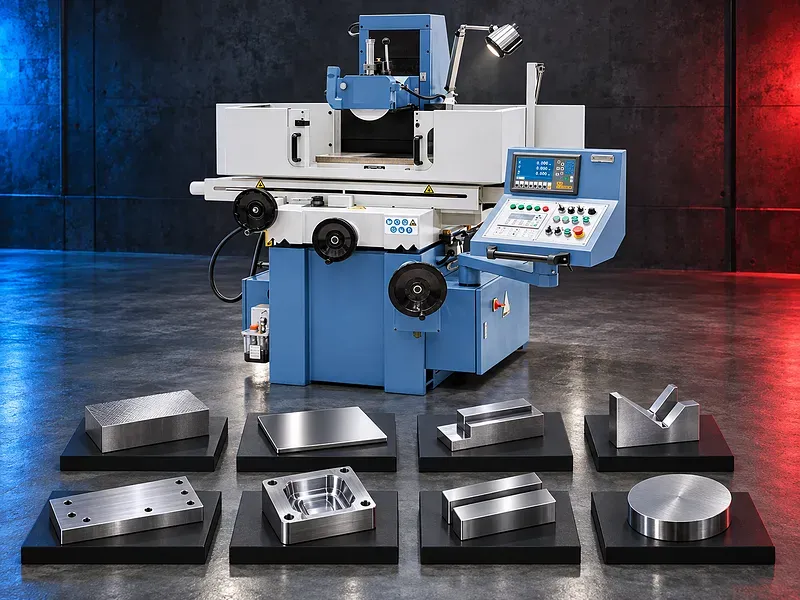
Surface grinding process
The abrasive wheel removes small controlled amounts of material as the workpiece moves relative to the wheel. The selected method may use the wheel periphery or face according to the verified machine design and required feature.
Process stability depends on machine geometry spindle condition wheel balance wheel dressing workholding coolant delivery stock allowance feed depth of cut thermal control and inspection.
Suitable applications
Potential applications include finishing plates blocks spacers shims guides fixtures machine parts tooling components mold and die elements repair parts and other workpieces that require controlled flat surfaces.
Suitability depends on the verified work envelope table load magnetic or mechanical holding arrangement material response to grinding required tolerance finish and production pattern.
Manual and CNC configurations
Manual machines may suit toolroom repair training and low volume work where the operator controls setup and cycles. Hydraulic or automatic table movement may support more consistent repetitive passes depending on the model.
CNC configurations may automate axis movement dressing compensation cycle control and repeat production. The exact axes software functions measuring options and automation level require confirmation from the approved model documentation.
Machine structure and guideways
The base column saddle table wheelhead guideways and spindle system form the structural path that resists grinding forces. Rigidity geometry vibration control lubrication and thermal behavior influence the finished result.
Machine mass or appearance alone does not prove capacity or accuracy. Foundation mounting leveling guideway design wear condition and maintenance must be considered.
Grinding wheel selection
Wheel selection should match workpiece material hardness stock removal target finish contact area machine power wheel speed coolant and dressing method. Abrasive type grit size grade structure bond dimensions and permitted speed must be verified for the application.
An incorrect wheel can cause loading glazing burn chatter poor finish rapid wear or unsafe operation. Wheel supplier guidance and the machine manual should govern selection mounting use and storage.
Wheel dressing and balancing
Dressing restores the wheel cutting surface and geometry by exposing fresh abrasive and correcting loading or shape. Dressing frequency depth speed and tool selection affect cutting behavior finish heat and wheel consumption.
Balancing reduces vibration and supports spindle life surface quality and process stability. The required balancing equipment and procedure depend on wheel size speed flange and machine design.
Workholding and magnetic chuck
Ferromagnetic parts may be held on a suitable magnetic chuck when the contact area thickness geometry and magnetic conditions are appropriate. Pole layout cleanliness burr removal support and demagnetizing requirements must be considered.
Nonmagnetic thin irregular or difficult parts may require mechanical clamps vacuum special fixtures adhesives or another approved method. Workholding must resist grinding forces without distortion movement or collision.
Coolant and thermal control
Suitable grinding fluid can control heat lubricate the contact zone flush swarf support wheel performance and protect surface quality. Fluid type concentration filtration flow direction temperature and maintenance should match the material wheel and process.
Poor coolant delivery or contaminated fluid can contribute to burn loading dimensional drift corrosion health risks and reduced wheel life. Mist control and safe fluid handling should be included in the site plan.
Accuracy surface finish and inspection
Acceptance may include flatness parallelism thickness size squareness profile and surface roughness as relevant to the drawing. Measurement method datum strategy temperature cleanliness and calibrated instruments should be defined before production.
Machine positioning resolution does not by itself prove finished part accuracy. Spindle runout wheel condition dressing thermal stability stock distribution workholding operator method and inspection all affect the result.
Cycle planning and productivity
A grinding cycle may include rough passes semi finishing finishing spark out dressing inspection and part cleaning. The sequence should balance stock removal thermal control wheel wear finish and dimensional stability.
Productivity claims require verified part data and a tested process. Actual output depends on material hardness part size stock allowance tolerance finish loading method dressing frequency wheel life handling and inspection.
How to choose the correct machine
Provide the component drawing material hardness overall dimensions weight ground areas stock allowance tolerances flatness parallelism finish quantity batch size and required output.
Selection should consider table size and load longitudinal cross and vertical travels maximum grinding envelope spindle and wheel data feed ranges chuck type control level dressing system coolant filtration dust or mist control utilities floor space and service access.
Technical information to verify
The approved exact model source must confirm manufacturer brand model machine configuration table dimensions table load travels grinding capacity distance from wheel to table wheel dimensions spindle speed spindle power feed ranges and control system.
It must also confirm magnetic chuck dressing equipment balancing arrangement coolant and filtration lubrication accuracy test standard electrical supply dimensions weight foundation requirements guards safety devices included accessories and optional equipment.
Safety requirements
The risk assessment should address wheel burst wheel damage sparks swarf pinch and crush points table movement workpiece release coolant mist electrical hazards noise lifting and manual handling.
Wheel inspection permitted speed correct flanges guards mounting balancing dressing safe stand off checks emergency stops chuck verification operating instructions training personal protective equipment and maintenance controls must follow approved documentation and site requirements.
Installation and commissioning
Site planning should cover foundation or floor capacity leveling lifting route electrical supply grounding coolant filtration mist extraction drainage lighting ventilation wheel storage inspection space and maintenance access.
Commissioning should verify installation geometry lubrication spindle operation wheel and guard setup table movement chuck function coolant delivery safety devices trial grinding and the agreed part acceptance method.
Maintenance and lifecycle support
Preventive maintenance should cover lubrication guideways spindle bearings drive system feeds hydraulic components where fitted magnetic chuck coolant filtration electrical controls guards and periodic geometry checks.
The exact supply scope installation training maintenance intervals consumables spare parts warranty and service commitments require confirmation in the approved technical and commercial offer.
Limitations and alternative processes
A surface grinder is not automatically suitable for every material geometry tolerance finish stock allowance size weight duty cycle or production target. Material behavior residual stress heat and workholding can limit the process.
Cylindrical grinding centerless grinding double disc grinding jig grinding lapping honing milling hard turning or another process may be more suitable depending on the feature and production requirement.
Technical review and next step
Send the component drawing with material hardness dimensions weight ground surfaces stock allowance tolerances finish quantities duty pattern current process inspection method and target output.
SAKKARY MACHINERY will review the grinding method machine envelope wheel and spindle requirements workholding dressing coolant filtration inspection utilities safety alternative processes and information that still requires manufacturer verification.
Questions we are asked
What is a surface grinding machine?
It is a precision machine that uses a rotating abrasive wheel and controlled movement to remove material and finish supported flat surfaces.
Which parts can be surface ground?
Potential parts include plates blocks spacers guides fixtures tooling components mold and die elements and repair parts within the verified work envelope and holding conditions.
Can the machine grind hardened materials?
Possibly but suitability depends on the exact material hardness wheel specification machine capability coolant and required result. These factors must be verified for the application.
What is the difference between manual and CNC surface grinders?
Manual machines rely more on operator control while CNC machines may automate axes cycles dressing and compensation. Exact functions depend on the verified model.
Does display resolution equal grinding accuracy?
No. Finished accuracy also depends on machine geometry spindle wheel dressing thermal stability workholding process settings and inspection.
What information is required for selection?
Provide the drawing material hardness dimensions weight ground surfaces stock allowance tolerances finish quantities duty pattern and target output
Tell us the part you need to make
An engineer reads every request. Usually the same working day.
Related
- Heavy-Duty Gap-Bed Conventional Lathes Heavy-duty conventional lathes for turning large-diameter, long, and heavy rotational components. The gap-bed design provides additional swing near the headstock for suitable short workpieces.
- Gantry Type Milling Machine A gantry-type milling machine provides an open working area for machining suitable large or heavy components. Selection depends on workpiece dimensions, weight, material, required operations, tolerances, finish, and production requirements.
- Boring Machine for Workshop Machining A boring machine for drilling, enlarging, finishing, and aligning suitable holes in individual parts and small production batches. The correct model depends on workpiece size, material, hole diameter, depth, tolerance, surface finish, setup, tooling, and required output.