

Electric Steel Cutting Solutions
Electric Steel Bar & Rebar Cutting Machine
Electric cutting machine for cutting reinforcing steel bars, hot-rolled round steel, screw-thread rebar and selected flat, square and angle steel sections for construction and metalworking applications
Steel bar and rebar cutting machines are designed for cutting reinforcing steel and metal bars into the required lengths for construction, reinforcement preparation and general metalworking applications. According to the supplied product description, the machine can be used with normal carbon steel, hot-rolled round steel and screw-thread rebar used in reinforced-concrete construction. Selected flat, square and angle steel sections can also be cut, subject to the machine configuration and verified capacity. The machine provides an electric cutting solution for workshops, reinforcement preparation areas and production environments where repetitive cutting of steel bars and sections is required.
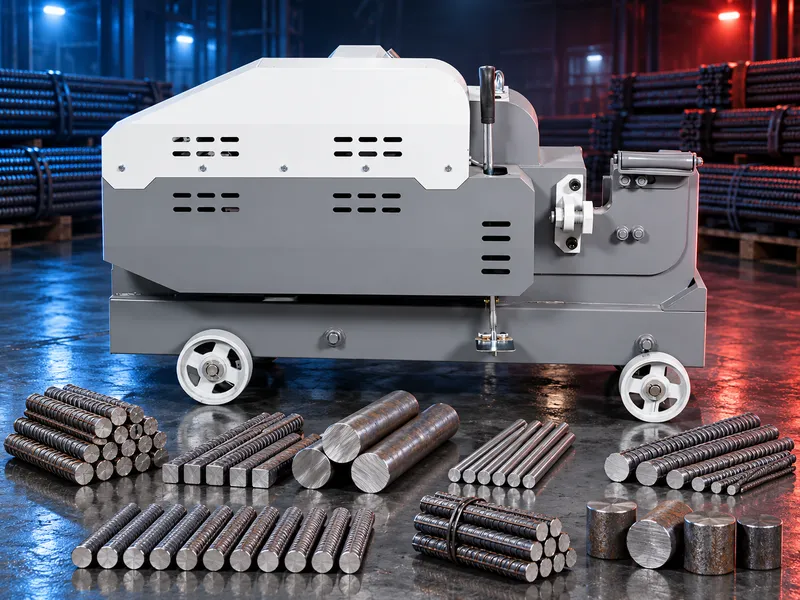
Suitable Materials
- Normal carbon steel
- Hot-rolled round steel
- Screw-thread rebar / reinforcing bar
- Flat steel — subject to verified capacity
- Square steel — subject to verified capacity
- Angle steel — subject to verified capacity
Typical Applications
- Rebar preparation for reinforced-concrete construction
- Cutting steel bars to required lengths
- Construction-site reinforcement preparation
- Steel fabrication workshops
- Metalworking and bar-processing applications
Key Functions
- Electric steel-bar cutting
- Repetitive cutting of reinforcing bars
- Cutting round and threaded bars
- Capability for selected steel sections, subject to machine configuration
How to Select the Correct Machine
- Specify the material to be cut.
- Provide the bar or section shape: round, rebar, flat, square or angle.
- Specify minimum and maximum material dimensions.
- Define the required cut length and production volume.
- Confirm the required cutting capacity for each material and profile.
- Confirm electrical supply and final machine configuration before ordering.
Questions we are asked
What is a steel bar and rebar cutting machine?
It is an electric cutting machine used to cut reinforcing bars and steel bars into required lengths for construction and metalworking applications.
What materials can the machine cut?
The supplied description lists normal carbon steel, hot-rolled round steel and screw-thread rebar. It also states that flat, square and angle steel can be cut, subject to the capacity and configuration of the selected machine.
Where is a rebar cutting machine used?
Typical applications include reinforced-concrete construction, rebar preparation, steel fabrication workshops and general bar-processing operations.
Can it cut round and threaded reinforcing bars?
Yes. The supplied product description specifically includes hot-rolled round steel and screw-thread rebar.
Can it cut flat, square and angle steel?
The supplied description states that these sections can be cut. The allowable dimensions and capacity should be confirmed for the selected machine before ordering.
What information is required to select the correct machine?
Provide the material type, bar or section shape, minimum and maximum dimensions, required cut lengths, production volume and available electrical supply
Tell us the part you need to make
An engineer reads every request. Usually the same working day.
Related
- Heavy-Duty Gap-Bed Conventional Lathes Heavy-duty conventional lathes for turning large-diameter, long, and heavy rotational components. The gap-bed design provides additional swing near the headstock for suitable short workpieces.
- Gantry Type Milling Machine A gantry-type milling machine provides an open working area for machining suitable large or heavy components. Selection depends on workpiece dimensions, weight, material, required operations, tolerances, finish, and production requirements.
- Boring Machine for Workshop Machining A boring machine for drilling, enlarging, finishing, and aligning suitable holes in individual parts and small production batches. The correct model depends on workpiece size, material, hole diameter, depth, tolerance, surface finish, setup, tooling, and required output.