

Cold Sawing & Tube Cutting Solutions
Stainless Steel Pipe Cold Saw & Tube Cutting Machine
Cold sawing and tube cutting solutions for round, square and profiled metal tubes, with circular saw or die-cutting configurations selected according to material, section size, wall thickness, cut geometry and production volume.
A pipe cold saw is designed for controlled cutting of metal tubes and profiles using a circular HSS or carbide-tipped blade, typically with coolant to manage cutting temperature and support blade life. Depending on the machine configuration, systems can be supplied for round, square and rectangular tube cutting. For applications that require shaped cuts, corner preparation or profile-specific shearing, hydraulic die-cutting configurations may be used with tooling designed around the required tube geometry. Circular cold saw and hydraulic die-cutting systems are different cutting concepts and should be selected according to the finished part requirement. SAKKARY MACHINERY can help define the suitable configuration based on tube material, outside dimensions, wall thickness, cut angle, required cut length, production rate, automation level and downstream welding or fabrication process.
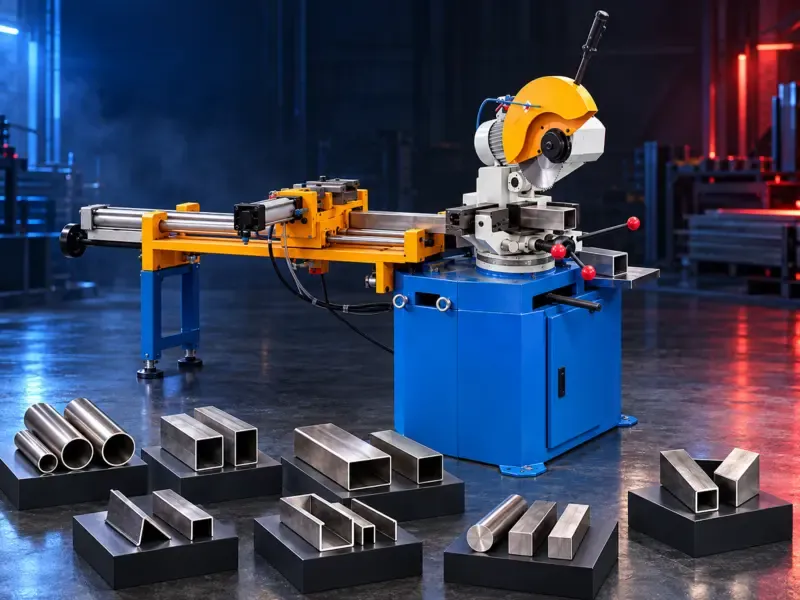
What Does a Pipe Cold Saw Do?
- Cuts metal tubes and profiles with a rotating circular saw blade.
- Supports round, square and rectangular sections according to machine capacity.
- Can use coolant to control cutting temperature and support blade performance.
- Can be configured for straight cuts and, on suitable machines, angular cuts such as 45° and 90°.
- Available in manual, semi-automatic and automatic configurations depending on the selected model.
Two Main Cutting Configurations
1. Circular Cold Saw
- Uses a circular HSS or carbide-tipped saw blade.
- Suitable for repetitive tube, pipe, bar and profile cutting.
- Machine selection depends on section size, wall thickness, material and required cut angle.
- Blade diameter, spindle speed, motor power and clamping system vary by model.
2. Hydraulic Die Cutting / Shearing
- Uses profile-specific tooling or dies rather than a conventional circular saw blade.
- Can be considered for shaped or compound cuts used in fabrication and welded joints.
- Die geometry must be matched to the tube/profile and required finished cut.
- Hydraulic capacity, die design and allowable material/thickness must be verified for the selected machine.
Materials
- Stainless steel tubes and pipes
- Carbon steel tubes and profiles
- Selected non-ferrous metal tubes and profiles, subject to blade/tooling and machine compatibility
Tube & Profile Shapes
- Round tube / pipe
- Square tube
- Rectangular tube
- Selected profiles subject to clamping and tooling configuration
Typical Applications
- Stainless steel fabrication
- Furniture and metal furniture production
- Railings, handrails and architectural metalwork
- Kitchen and commercial equipment fabrication
- Automotive and component fabrication
- General metalworking workshops
- Tube and profile production lines
- Welded frames and structures
How to Select the Correct Machine
- Define the material grade to be cut.
- Specify tube/profile shape: round, square, rectangular or special profile.
- Provide outside dimensions or diameter and wall thickness.
- Define the required cut type: straight, miter/angle or shaped die cut.
- Specify finished cut length and required length tolerance.
- Define required production rate or pieces per hour/shift.
- Choose the required automation level: manual, semi-automatic or automatic/CNC.
- Confirm blade preference or die-cutting requirement.
- Confirm electrical supply and available compressed air/hydraulic requirements where applicable.
- Provide sample drawings or photos for non-standard cuts.
Information Required for Quotation
- Tube material and grade
- Round diameter or square/rectangular dimensions
- Wall thickness
- Cut length
- Cut angle or joint geometry
- Required quantity / production rate
- Manual, semi-automatic or automatic preference
- Part drawing or sample photo
- Electrical supply
- Any requirement for automatic feeding, length stop, bundle loading or discharge system
Technical Data — To Be Verified by Exact Model
- Maximum round cutting capacity
- Maximum square/rectangular cutting capacity
- Wall-thickness range
- Blade type and blade diameter
- Spindle/blade speed
- Main motor power
- Cutting angle range
- Clamping method
- Feeding method and feed length
- Coolant system and pump specification
- Hydraulic/pneumatic requirements
- Electrical supply
- Machine dimensions and weight
- Automation/CNC control options
- Accuracy and repeatability
- Available dies, fixtures and accessories
Important Selection Note
Do not use generic capacity figures such as 100–325 mm, motor ratings such as 2.0–3.3 kW, or blade diameters such as 250–350 mm as universal specifications. These values vary substantially by machine series and must be taken from the exact manufacturer datasheet for the selected model.
Questions we are asked
What is a stainless steel pipe cold saw?
It is a metal-cutting machine that uses a circular saw blade to cut tubes, pipes and profiles. Suitable blade selection, clamping and coolant are determined by the material and section being processed.
Can the same machine cut round and square tubes?
Many machines can process more than one section shape, but the allowable round, square and rectangular capacities must be confirmed for the exact model and clamping system.
What is the difference between a cold saw and a hydraulic die cutter?
A circular cold saw removes material with a rotating blade. A hydraulic die-cutting or shearing system uses shaped tooling to produce a profile-specific cut. They are different processes and are selected according to the required finished geometry.
Can the machine cut stainless steel?
Yes, suitable configurations can cut stainless steel. Blade type, cutting speed, coolant and machine capacity must be matched to the stainless grade, tube size and wall thickness.
Can it make 45-degree cuts?
Selected cold saw machines can provide angular or miter cutting. The available angle range and capacity at each angle must be verified for the selected model.
Is coolant required?
Many cold saw configurations use coolant to manage heat and support blade performance. The exact coolant system depends on the machine and blade application.
Is the machine manual or automatic?
This product category can include manual, semi-automatic pneumatic/hydraulic and automatic or CNC-fed configurations. Selection depends on production volume and required automation.
What information should I send for a quotation?
Send the tube material, shape, dimensions, wall thickness, cut length, cut angle or drawing, required production rate and preferred automation level.
Tell us the part you need to make
An engineer reads every request. Usually the same working day.
Related
- Heavy-Duty Gap-Bed Conventional Lathes Heavy-duty conventional lathes for turning large-diameter, long, and heavy rotational components. The gap-bed design provides additional swing near the headstock for suitable short workpieces.
- Gantry Type Milling Machine A gantry-type milling machine provides an open working area for machining suitable large or heavy components. Selection depends on workpiece dimensions, weight, material, required operations, tolerances, finish, and production requirements.
- Boring Machine for Workshop Machining A boring machine for drilling, enlarging, finishing, and aligning suitable holes in individual parts and small production batches. The correct model depends on workpiece size, material, hole diameter, depth, tolerance, surface finish, setup, tooling, and required output.