

Combined Punching, Shearing & Forming
Hydraulic Ironworker Combined Punching & Shearing Machine
Multi-function hydraulic ironworker for punching, shearing, notching and selected forming operations on bars, flats, angles and structural sections — combining several workshop processes in one machine.
Hydraulic ironworkers combine multiple metalworking operations in one machine, providing a practical solution for fabrication workshops and structural-steel production. Depending on the machine configuration and installed tooling, operations can include punching, angle shearing, flat-bar shearing, round and square bar shearing, rectangular and V-notching, and shearing of selected structural sections. Optional or configuration-dependent tooling may also support press-brake bending, angle bending and pipe notching. An intelligent back-gauge system can assist with repeat positioning where included in the selected configuration. Final cutting, punching and forming capacities must be confirmed against the exact machine model, material grade, profile dimensions and tooling before selection.
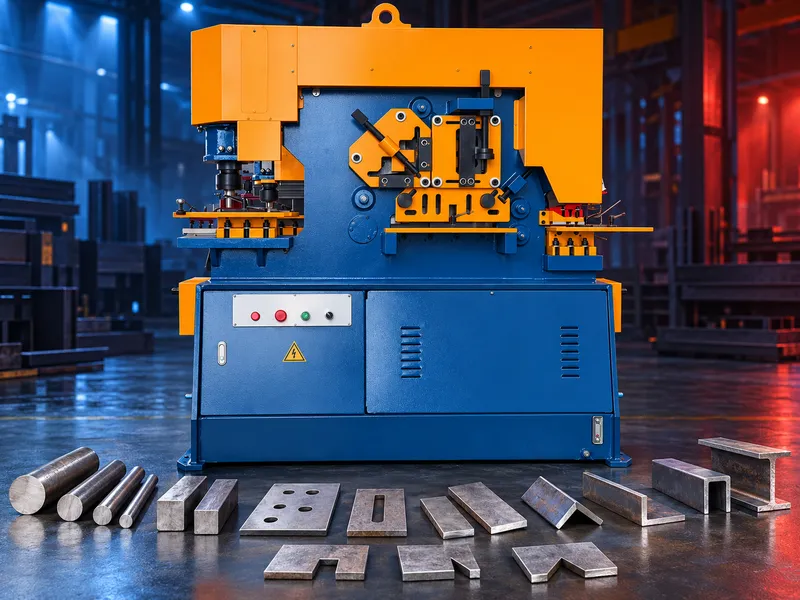
Main Operations
- Punching
- Angle shearing
- Flat-bar shearing
- Round-bar shearing
- Square-bar shearing
- Rectangular notching
- V-notching
- Channel shearing*
- I-beam shearing*
- T-bar shearing*
- Press-brake bending*
- Angle bending
- Pipe notching
Typical Applications
- Metal fabrication workshops
- Structural-steel fabrication
- General industrial maintenance and fabrication
- Frames and supports
- Brackets, plates and profiles
- Bar and section preparation
Selection Information Required
- Material type and grade
- Profile type: flat, round, square, angle, channel, I-beam or T-bar
- Maximum material dimensions or diameter
- Required punching diameter and material thickness
- Required operations and tooling
- Required production volume
- Electrical supply and workshop layout
Questions we are asked
What is a hydraulic ironworker?
A hydraulic ironworker is a combined metalworking machine designed to perform several operations such as punching, shearing and notching within one system.
What operations can a hydraulic ironworker perform?
Depending on configuration and tooling, operations can include punching, angle and flat-bar shearing, round and square bar shearing, notching and selected structural-section cutting and forming operations.
Can it cut round and square bars?
Yes, when the selected machine is equipped with the appropriate bar-shearing station and has sufficient capacity for the required material and size.
Can an ironworker cut channels, I-beams and T-bars?
Some configurations support these profiles. The exact profile type and maximum section size must be verified for the selected machine and tooling.
Can the machine perform bending operations?
Selected configurations and tooling can support press-brake bending, angle bending or other forming operations. These capabilities should be confirmed for the exact machine.
What information is needed to select the correct ironworker?
Provide the material grade, profile type and dimensions, punching requirements, required operations, production volume and electrical supply.
Tell us the part you need to make
An engineer reads every request. Usually the same working day.
Related
- Heavy-Duty Gap-Bed Conventional Lathes Heavy-duty conventional lathes for turning large-diameter, long, and heavy rotational components. The gap-bed design provides additional swing near the headstock for suitable short workpieces.
- Gantry Type Milling Machine A gantry-type milling machine provides an open working area for machining suitable large or heavy components. Selection depends on workpiece dimensions, weight, material, required operations, tolerances, finish, and production requirements.
- Boring Machine for Workshop Machining A boring machine for drilling, enlarging, finishing, and aligning suitable holes in individual parts and small production batches. The correct model depends on workpiece size, material, hole diameter, depth, tolerance, surface finish, setup, tooling, and required output.