

CONTROLLED HYDRAULIC HOSE ASSEMBLY
Hydraulic Hose Crimping Machines
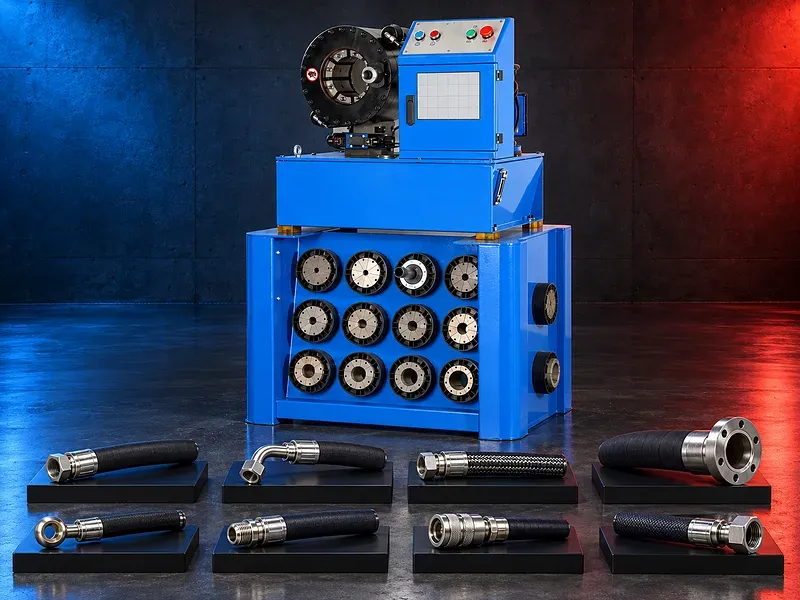
Hydraulic hose crimping machines compress compatible ferrules and fittings onto prepared hose ends to produce controlled hose assemblies. Safe repeatable results depend on the approved hose fitting ferrule die set crimp diameter preparation method inspection and machine capability working together as one verified system.
A hose crimper closes segmented dies around the fitting ferrule until the specified crimp dimension is reached. The machine may use manual settings mechanical stops digital diameter control stored programs or automated functions according to the verified model. The correct machine cannot be selected from hose pressure or nominal size alone. Hose construction reinforcement outside diameter fitting series ferrule crimp specification die profile maximum opening crimping range force control production volume electrical supply mobility inspection method and applicable assembly standard must be reviewed.
Hose crimping principle
The crimp head closes a matched set of segmented dies around the ferrule. The ferrule deforms and grips the hose and fitting stem according to the approved assembly design.
The machine creates the deformation but does not define a safe assembly by itself. The approved crimp dimension and procedure must come from the compatible hose and fitting system.
Hose fitting and ferrule compatibility
The hose construction size reinforcement fitting stem ferrule material and geometry must be approved for use together. Similar nominal sizes from different product families are not automatically interchangeable.
Mixing unverified hose fittings ferrules or crimp data can cause leakage fitting pullout hose damage reduced pressure capability or sudden failure.
Potential applications
Potential users include hydraulic service workshops equipment maintenance construction agriculture manufacturing transport mining and industrial plants that assemble or repair supported hydraulic hose lines.
Application suitability depends on the approved hose system pressure temperature fluid routing impulse duty environment cleanliness and legal or customer requirements.
Manual semiautomatic and automatic operation
Manual machines may use hand controls and direct diameter settings for varied service work. Semiautomatic machines may control closing opening and return functions. Automatic systems may store recipes guide the operator or integrate production steps.
The exact control functions memory capacity sensors barcode support reporting and automation level require confirmation from approved model documentation.
Hose cutting and end preparation
The hose should be cut squarely to the approved length without crushing contamination or reinforcement damage. Loose particles should be controlled according to the cleanliness requirement.
Some hose systems require skiving while others are designed for no skive assembly. External or internal skiving depth length and method must follow the approved hose and fitting instructions.
Fitting insertion and marking
The fitting should be inserted to the specified depth using the approved lubrication and assembly method. An insertion mark can help verify that the hose has not backed out before or during crimping.
Incorrect insertion depth misalignment damaged stems contamination or wrong ferrules can create hidden assembly defects.
Die selection and installation
The die set must match the machine head fitting family ferrule profile target diameter and supported range. Die identification should be clear and controlled.
Dies should be clean complete undamaged correctly seated and lubricated only as permitted. Mixed segments damaged faces or incorrect installation can distort the crimp and damage the machine.
Crimp diameter and calibration
The finished crimp diameter should be set from the approved crimp chart and measured at the specified location and orientation with a suitable calibrated instrument.
Machine setting and finished diameter are not always the same. Springback die condition temperature material variation and calibration can affect the result so trial verification may be required.
Crimp cycle and process control
A controlled cycle may include selecting the die and recipe preparing and inserting the assembly positioning the ferrule closing to the target opening the head measuring the crimp and recording the result.
Repeat production may require first piece approval periodic checks tool life monitoring recipe control operator identification and traceability according to the quality plan.
Quality inspection and testing
Inspection may include hose and fitting identity insertion depth crimp diameter crimp length symmetry ferrule position surface damage cleanliness labeling and routing requirements.
Proof pressure burst impulse leakage pull off or other tests should be performed only when required by the applicable standard or approved quality plan using suitable controlled test equipment.
Cleanliness and contamination control
Cutting and assembly can introduce rubber metal fibers dust and lubricant into the hose. Cleaning capping storage and work area controls should match the hydraulic system cleanliness target.
A visually clean hose is not proof of internal cleanliness. Required flushing projectile cleaning sampling or verification must follow the approved process.
How to choose the correct machine
Provide the hose manufacturer family construction sizes outside diameters fitting and ferrule series approved crimp diameters production quantities duty pattern mobility needs utilities and quality requirements.
Selection should consider crimp range maximum opening maximum fitting diameter head shape die system available force control resolution repeatability cycle speed foot or hand controls quick change storage table electrical supply portability and service access.
Technical information to verify
The approved exact model source must confirm manufacturer brand model machine type crimping range maximum opening maximum fitting diameter force or pressure basis die dimensions control method setting resolution repeatability and cycle times under stated conditions.
It must also confirm motor and pump data electrical supply or manual drive head orientation foot pedal die sets included optional dies dimensions weight oil requirement guards safety devices maintenance and environmental limits.
Productivity and workshop flow
Productivity depends on hose cutting preparation cleaning fitting insertion die changes crimp cycle measurement marking testing and material handling rather than crimp speed alone.
A practical cell may need a hose cutter skiving equipment cleaning equipment fitting storage gauges labeling pressure testing and controlled records in addition to the crimper.
Safety requirements
The risk assessment should address crushing and pinch points sudden die movement stored hydraulic energy hose or fitting ejection sharp wire reinforcement cutting equipment oil leaks electrical hazards and manual handling.
Guards safe foot pedal placement emergency stops secure assembly positioning correct dies pressure relief isolation operating instructions training personal protective equipment and maintenance controls must follow approved documentation and site requirements.
Installation maintenance and support
Site planning should cover a stable bench or floor position electrical supply or manual operation grounding oil temperature lighting clean storage for dies hose and fittings measuring space and safe operator access.
Preventive maintenance should cover hydraulic oil filters hoses fittings seals pump valves crimp head slide surfaces master dies die sets controls gauges guards calibration and periodic verification. Supply scope training spare parts warranty and service commitments require approved confirmation.
Limitations and alternative processes
A hydraulic hose crimping machine is not automatically suitable for every hose fitting ferrule material diameter pressure temperature impulse duty or certification requirement.
A different crimper larger head special die swaging machine dedicated production cell reusable fitting system or approved external hose assembly supplier may be more suitable depending on the hose program.
Technical review and next step
Send the hose and fitting manufacturer references sizes ferrule series approved crimp charts sample assemblies production quantities utilities inspection method testing requirements and target output.
SAKKARY MACHINERY will review machine range opening die compatibility control calibration workflow inspection safety alternatives and information that still requires manufacturer verification.
Questions we are asked
What is a hydraulic hose crimping machine?
It is a machine that closes matched dies around a ferrule to compress a compatible fitting onto a prepared hydraulic hose end.
Can one crimp setting be used for all hoses of the same size?
No. The approved crimp diameter depends on the specific hose fitting ferrule and manufacturer system even when nominal sizes appear similar.
How is crimp quality checked?
Quality may be checked through component identity insertion depth finished crimp diameter position condition cleanliness and any testing required by the approved plan.
Can fittings from different brands be mixed?
Only when the exact combination and crimp data are formally approved. Similar appearance or nominal size does not establish compatibility.
Does correct crimp diameter guarantee a safe hose assembly?
No. Compatibility preparation insertion cleanliness material condition inspection and required testing also affect assembly safety and performance.
What information is required for machine selection?
Provide hose and fitting references sizes outside diameters ferrule series approved crimp charts production quantities utilities and quality requirements
Tell us the part you need to make
An engineer reads every request. Usually the same working day.
Related
- Heavy-Duty Gap-Bed Conventional Lathes Heavy-duty conventional lathes for turning large-diameter, long, and heavy rotational components. The gap-bed design provides additional swing near the headstock for suitable short workpieces.
- Gantry Type Milling Machine A gantry-type milling machine provides an open working area for machining suitable large or heavy components. Selection depends on workpiece dimensions, weight, material, required operations, tolerances, finish, and production requirements.
- Boring Machine for Workshop Machining A boring machine for drilling, enlarging, finishing, and aligning suitable holes in individual parts and small production batches. The correct model depends on workpiece size, material, hole diameter, depth, tolerance, surface finish, setup, tooling, and required output.