

Large-Capacity Metal Cutting Solutions
Heavy-Duty Horizontal Band Saw Machines
Heavy-duty horizontal band saw machines for accurate cutting of large solid bars, blocks, pipes, profiles and structural sections. Available configurations cover large cutting capacities and can be selected according to material size, section, production requirements and handling needs.
Heavy-duty horizontal band saw machines are designed for demanding metal-cutting applications where large cross-sections, heavy workpieces and repeatable cutting performance are required. Their rigid double-column construction supports stable sawing conditions and helps reduce vibration during demanding cuts. The semi-automatic hydraulic cutting cycle simplifies routine operation, while adjustable blade speed and cutting pressure allow the cutting process to be adapted to different materials and cross-sections. Depending on the selected configuration, equipment may include hydraulic clamping, blade tensioning, coolant systems, chip conveyors, laser alignment, top clamping and material roller tables. This machine range is suitable for steel service centers, heavy fabrication workshops, forging operations, mold and die production and general metal-processing applications. Final machine selection should be based on the exact workpiece dimensions, material grade, required cut type, production volume and material-handling arrangement
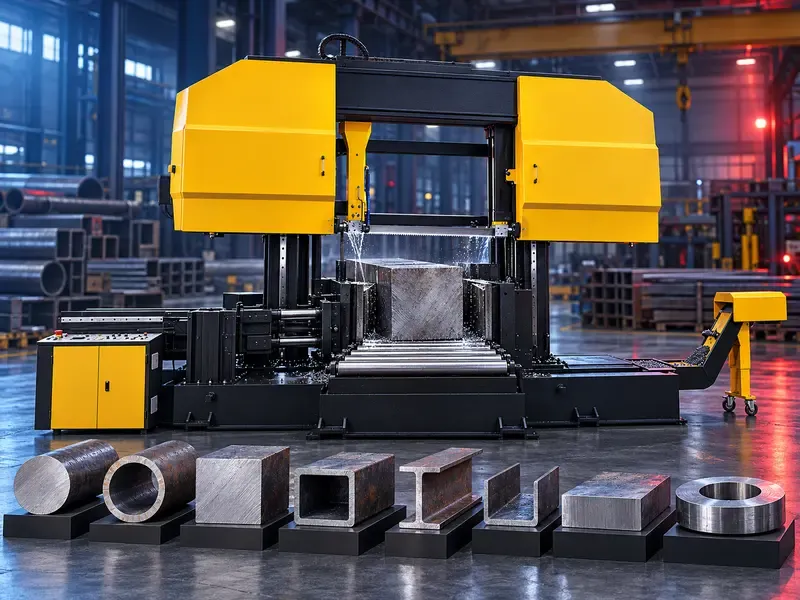
Heavy-Duty Cutting for Large Metal Sections
The range is intended for large and difficult cutting jobs involving solid bars, blocks, pipes, profiles and structural sections. The double-column architecture provides a rigid guide structure for the saw frame and is suited to heavy industrial use.
Available Cutting Capacity Range at 90°
- Round materials: Ø825 to Ø1,500 mm
- Rectangular materials: from 950 × 790 mm up to 1,500 × 1,500 mm
- Square materials: from 790 × 790 mm up to 1,500 × 1,500 mm
- Angle-cutting capability: available on selected configurations
Actual cutting capacity and available functions vary according to the selected machine configuration and application requirements.
Typical Workpieces
- Large solid round bars
- Large square and rectangular blocks
- Pipes and hollow sections
- Structural steel profiles and sections
- Forged and pre-machined workpieces
- Large stock for mold and die production
- Heavy metal-processing workpieces requiring controlled sawing
Core Machine Characteristics
- Rigid double-column construction for demanding cutting conditions
- Semi-automatic hydraulic cutting cycle
- Adjustable blade speed for different material requirements
- Adjustable cutting pressure according to section and application
- Heavy-duty workholding and material support options depending on configuration
- Coolant-assisted sawing where equipped
- Configurations available for large cross-sections and heavy workpieces
Available Equipment & Options
Depending on the selected configuration, the machine can be specified with:
- Hydraulic material clamping
- Blade tensioning system
- Coolant system
- Chip conveyor
- Laser cutting-line alignment
- Top clamping for suitable workpieces
- Infeed and outfeed material roller tables
- Angle-cutting configuration on selected machines
Industrial Applications
- Steel service centers and stockholders
- Heavy steel fabrication
- Forging and metalworking operations
- Mold and die production
- Machinery manufacturing
- Large-component preparation before machining
- General industrial metal processing
How to Select the Correct Band Saw
- Define the workpiece shape: round, square, rectangular, pipe, profile or irregular section.
- Confirm the maximum workpiece dimensions at the required cutting angle.
- Specify the material grade and whether it is solid or hollow.
- Define the required cut type: straight 90° cutting or angle cutting.
- Confirm production volume and expected cutting frequency.
- Define the longest and heaviest workpiece that must be supported.
- Select the required clamping, roller tables and material-handling arrangement.
- Confirm the required coolant, chip-removal and blade-management options.
- Verify electrical supply and installation conditions before ordering.
Information Required for a Quotation
- Material type and grade
- Workpiece shape
- Maximum diameter or width × height
- Solid or hollow section
- Wall thickness for pipes or hollow profiles
- Required cutting angle
- Maximum material length and approximate weight
- Required daily or monthly cutting volume
- Preferred automation level
- Required infeed/outfeed roller tables or handling equipment
- Site electrical supply
- Photos or drawings of representative workpieces, when available
Technical Data to Confirm for the Selected Configuration
- Exact cutting capacity at 90° and at available angles
- Blade dimensions
- Blade speed range
- Main motor power
- Hydraulic system power and configuration
- Coolant system details
- Machine dimensions and net weight
- Table or working height
- Clamping arrangement
- Material support and roller-table dimensions
- Angle-cutting range, if applicable
- Electrical supply
- Included standard equipment and optional accessories
Questions we are asked
What is a heavy-duty horizontal band saw used for?
It is used for cutting large metal bars, blocks, pipes, profiles and structural sections in demanding industrial applications.
What cutting capacities are available?
The supplied range covers round materials from Ø825 to Ø1,500 mm, rectangular sections from 950 × 790 mm up to 1,500 × 1,500 mm, and square sections from 790 × 790 mm up to 1,500 × 1,500 mm at 90°. Exact capacity depends on the selected configuration.
Can these machines cut at an angle?
Angle cutting is available on selected configurations. The required angle and workpiece size should be confirmed before machine selection.
What is the advantage of double-column construction?
The double-column layout provides a rigid support structure for the saw frame, making it suitable for large sections and demanding cutting conditions.
Are the machines fully automatic?
This page describes a heavy-duty range with semi-automatic hydraulic cutting cycles. Automation level and feeding arrangements should be confirmed for the selected configuration.
What options can be added?
Depending on configuration, options may include hydraulic clamping, blade tensioning, coolant systems, chip conveyors, laser alignment, top clamping and material roller tables.
What information should I send to request a quotation?
Send the material grade, workpiece shape and dimensions, whether it is solid or hollow, required cutting angle, maximum length and weight, production volume and any material-handling requirements.
Tell us the part you need to make
An engineer reads every request. Usually the same working day.
Related
- Heavy-Duty Gap-Bed Conventional Lathes Heavy-duty conventional lathes for turning large-diameter, long, and heavy rotational components. The gap-bed design provides additional swing near the headstock for suitable short workpieces.
- Gantry Type Milling Machine A gantry-type milling machine provides an open working area for machining suitable large or heavy components. Selection depends on workpiece dimensions, weight, material, required operations, tolerances, finish, and production requirements.
- Boring Machine for Workshop Machining A boring machine for drilling, enlarging, finishing, and aligning suitable holes in individual parts and small production batches. The correct model depends on workpiece size, material, hole diameter, depth, tolerance, surface finish, setup, tooling, and required output.