

Valve Surface Cleaning & Finishing
Shot Blasting Machine for Copper & Brass Valves
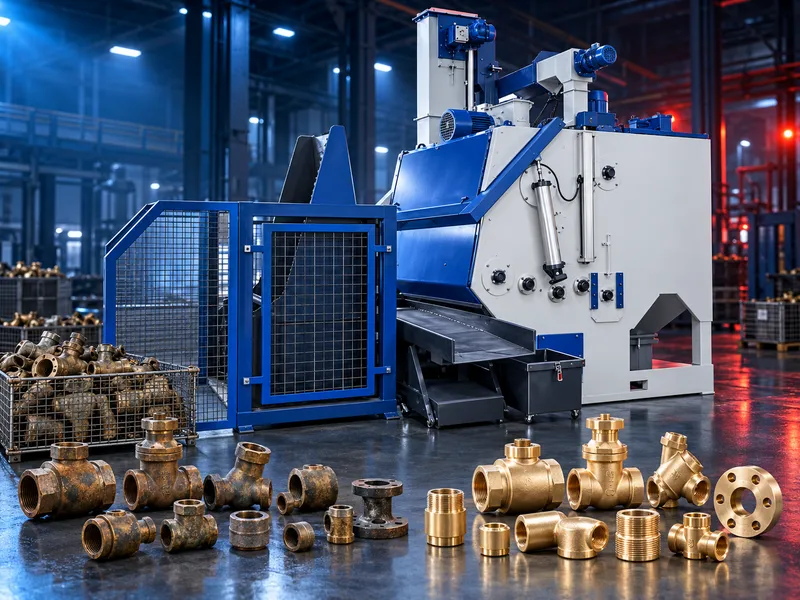
Industrial shot blasting equipment for cleaning, deburring and surface finishing of copper, brass and compatible alloy valves using high-speed blasting media. The system is intended to remove oxide layers, casting residues and surface burrs while preparing a cleaner, more uniform valve surface.
The Copper & Brass Valve Shot Blasting Machine is a specialized surface-treatment solution for valve manufacturers and metal component producers that require controlled cleaning and finishing after casting, machining or other manufacturing operations.
High-speed blasting media acts on the component surface to remove oxide scale, casting residues and suitable burrs, helping improve surface cleanliness and appearance before subsequent inspection, assembly or finishing operations.
Depending on the exact machine configuration, the system may be arranged for batch or continuous production. Dust collection and filtration can be integrated to capture blasting dust and support cleaner workshop operation.
Machine selection should be based on valve material, component dimensions, batch size, required surface condition, production output and the selected blasting media and handling method.
Applications
- Copper valve surface cleaning
- Brass valve surface cleaning
- Copper-alloy and compatible non-ferrous component finishing, subject to process verification
- Removal of oxide layers and heat scale
- Removal of casting residues
- Deburring of suitable edges and machining burrs
- Surface preparation before inspection, assembly or subsequent finishing
- Valve and fitting manufacturing applications
Key Functions
- Shot blasting surface cleaning
- Oxide and scale removal
- Casting-residue removal
- Deburring of suitable components
- Surface finishing and appearance improvement
- Optional shot-peening effect where the process, media and parameters are specifically configured for it
- Batch or continuous processing depending on machine configuration
- Dust collection and filtration depending on supplied system
Typical Workpieces
- Copper valves
- Brass valves
- Valve bodies
- Valve components
- Selected copper-alloy castings
- Selected brass fittings and compatible components, subject to machine and process configuration
How the Process Works
- Load the valves or components into the machine using the applicable loading method.
- Expose the workpieces to controlled high-speed blasting media.
- Remove oxide, scale, casting residues and suitable surface burrs according to the selected process.
- Separate or recover blasting media according to the machine configuration.
- Collect generated dust through the filtration system where equipped.
- Unload the cleaned components for inspection or the next production stage.
How to Select the Correct Machine
- Valve or component material
- Minimum and maximum workpiece dimensions
- Workpiece weight
- Required surface condition
- Type and severity of oxide, scale or burrs
- Required production capacity
- Batch or continuous production requirement
- Blasting media type
- Loading and unloading method
- Dust collection requirements
- Available electrical supply and installation space
Technical enquiry CTA
Send the valve material, minimum and maximum dimensions, workpiece weight, photos of the current surface condition and required production output to determine the suitable shot blasting configuration.
Questions we are asked
What is a copper valve shot blasting machine?
It is an industrial surface-treatment machine that uses high-speed blasting media to clean and finish copper, brass and compatible alloy valve components.
What contaminants can the machine remove?
According to the supplied product information, the process is intended to remove oxide layers, heat scale, casting residues and suitable machining burrs. Actual results depend on the workpiece, media and process parameters.
Can it be used for brass valves?
Yes, the supplied application information includes copper and brass valve cleaning. Exact suitability should be confirmed for the specific alloy, component geometry and required finish.
Does shot blasting strengthen the surface?
Shot peening can introduce compressive stress when the machine, media and process parameters are specifically configured for a controlled peening process. This should not be stated as a guaranteed result for every shot blasting setup without process verification.
Can the machine work in batch production?
The supplied information describes batch and continuous processing as possible arrangements. The exact handling method depends on the selected machine configuration.
Does it include dust collection?
Dust collection and filtration are described as part of the solution concept. The number of filtration stages and actual filtration specification should be confirmed for the selected machine.
What valve sizes can it process?
The supplied marketing information mentions a DN15-DN400 range, but this should be verified against the exact machine model before publishing it as a fixed capacity.
What information is needed to select the machine?
Provide the valve material, workpiece dimensions and weight, current surface condition, required finish, batch size or production target and preferred handling method.
Tell us the part you need to make
An engineer reads every request. Usually the same working day.
Related
- Heavy-Duty Gap-Bed Conventional Lathes Heavy-duty conventional lathes for turning large-diameter, long, and heavy rotational components. The gap-bed design provides additional swing near the headstock for suitable short workpieces.
- Gantry Type Milling Machine A gantry-type milling machine provides an open working area for machining suitable large or heavy components. Selection depends on workpiece dimensions, weight, material, required operations, tolerances, finish, and production requirements.
- Boring Machine for Workshop Machining A boring machine for drilling, enlarging, finishing, and aligning suitable holes in individual parts and small production batches. The correct model depends on workpiece size, material, hole diameter, depth, tolerance, surface finish, setup, tooling, and required output.