

CNC MACHINES
CNC Grinding Machines
CNC grinding machines are used for controlled surface finishing and precision material removal. Selection depends on the grinding operation, part geometry, material, tolerances, surface finish, and production volume.
CNC grinding machines control the movement of the grinding wheel and workpiece to produce specified dimensions, geometry, and surface finish. Available machine types may include surface, cylindrical, internal, centerless, and tool-grinding configurations.
The correct solution must be selected from the part drawing, material condition, stock allowance, tolerance, finish requirement, batch size, and inspection method. Explore related CNC machines or send your component details for a technical application review.
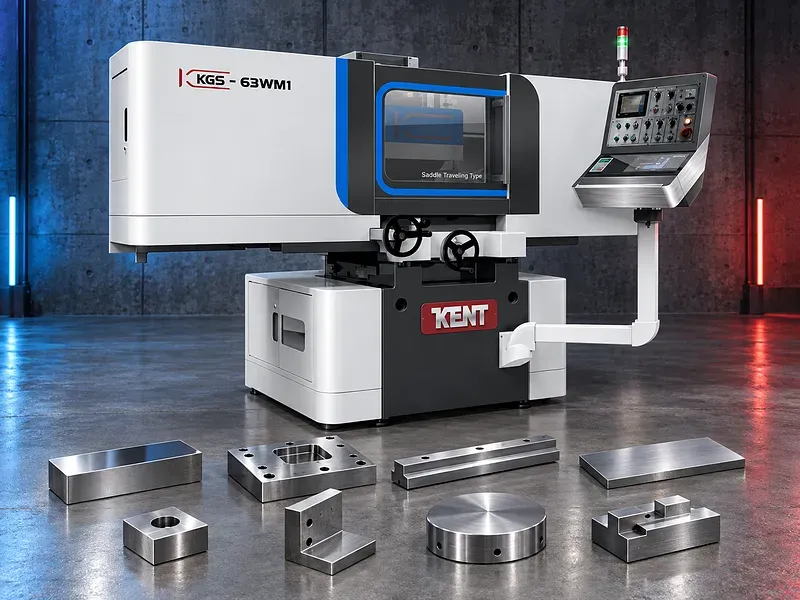
What are CNC grinding machines?
CNC grinding machines use programmed axis movements to control the grinding process. Machine architecture, grinding method, achievable tolerances, surface finish, and automation functions vary by manufacturer and model.
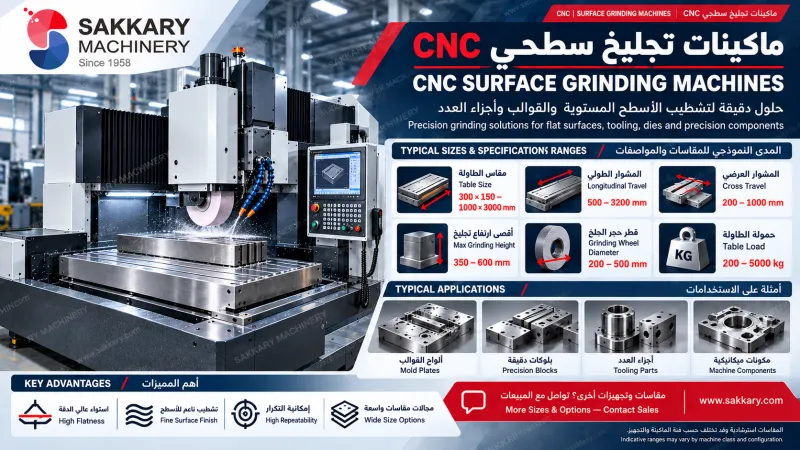
Common grinding machine types
- CNC surface grinding machines
- CNC cylindrical grinding machines
- CNC internal grinding machines
- CNC centerless grinding machines
- CNC tool and cutter grinding machines
- CNC profile grinding machines
- Specialized grinding machines for defined components
Typical applications
- Finishing flat and parallel surfaces
- External cylindrical grinding
- Internal bore grinding
- Grinding shafts, journals, and bearing surfaces
- Producing profiles, shoulders, and precision features
- Grinding cutting tools where supported
- Finishing hardened or previously machined components
- Every application must be checked against the drawing, material, heat-treatment condition, and verified machine capability.
- Potential production benefits
- Programmed control of the grinding cycle
- Repeatable positioning under controlled conditions
- Consistent process parameters across production batches
- Support for automated dressing and measurement where equipped
- Reduced manual adjustment on suitable applications
- Integration with loading and inspection systems where available
- No accuracy, finish, output, or cycle-time result should be promised without a model-specific process review and grinding trial where required.
How to choose a CNC grinding machine
- Identify the required grinding process
- Provide a complete component drawing
- Confirm the material and heat-treatment condition
- Define the dimensions and weight of the workpiece
- State the stock allowance before grinding
- Confirm dimensional and geometric tolerances
- Define the required surface finish
- Identify internal, external, flat, or profile features
- Confirm batch size and target output
- Define the grinding-wheel type and size with a qualified specialist
- Review dressing, gauging, loading, coolant, and filtration needs
- Confirm inspection and quality-control methods
- Review electrical supply, extraction, foundation, and site conditions
Technical data to verify
- Manufacturer, brand, model, and country of origin
- Grinding process and machine configuration
- Maximum workpiece dimensions and weight
- Grinding length, width, diameter, or bore range
- Table, wheelhead, spindle, and axis travels
- Grinding-spindle speed, power, and interface
- Workhead and tailstock specifications where applicable
- Axis resolution, positioning, and repeatability
- Verified machining accuracy and surface-finish conditions
- CNC control and grinding software
- Wheel-dressing and balancing systems
- In-process or post-process measuring systems
- Coolant, filtration, mist-extraction, and chip-management systems
- Loading, unloading, and automation options
- Dimensions, weight, power, foundation, and safety requirements
Grinding wheels and process conditions
Grinding-wheel specification, dressing method, coolant, speeds, feeds, and stock removal must be selected for the workpiece material and required result. These values must come from approved technical sources and a qualified process review.Limitations and alternatives
Grinding is generally a finishing process and may not be the appropriate first operation for removing large amounts of material. Turning, milling, hard turning, honing, lapping, or another finishing process may be more suitable depending on the component and production requirement.
Installation and lifecycle support
Installation planning must consider the foundation, leveling, electrical supply, coolant system, filtration, mist extraction, temperature control, wheel handling, guarding, and inspection equipment. The supply, training, maintenance, spare-parts, consumables, and warranty scope must be confirmed in the approved offer.
Request an application review
Send the component drawing, material, heat-treatment condition, dimensions, grinding allowance, tolerances, surface finish, and production quantity. SAKKARY MACHINERY will review the application before recommending a grinding solution.
Questions we are asked
Which CNC grinding machine type is suitable for my component?
The choice depends on whether the required operation is surface, external cylindrical, internal, centerless, profile, or tool grinding.
What information is required for machine selection?
Provide the drawing, material, heat-treatment condition, dimensions, grinding allowance, tolerances, required finish, and production quantity.
Can a CNC grinding machine achieve the required tolerance and finish?
This must be verified against the selected model, process conditions, wheel specification, workholding, measurement method, and grinding trial where necessary.
How is the grinding wheel selected?
Wheel type, abrasive, grade, bond, structure, dimensions, and dressing method must be selected by a qualified specialist for the material and application.
What site systems may be required?
Requirements may include a suitable foundation, electrical supply, coolant, filtration, mist extraction, temperature control, and inspection equipment.
Tell us the part you need to make
An engineer reads every request. Usually the same working day.
Related
- VICTOR Slant-Bed CNC Lathes Slant-bed CNC turning machines from VICTOR Taichung for machining shafts, bushings, flanges, threaded parts, and other rotational components. The appropriate model is selected according to the workpiece, operations, accuracy, and production requirements.
- CNC Vertical Machining Center (VMC) Vertical CNC machining solutions for milling, drilling, tapping and producing engineered metal components.
- CNC Wire EDM Machines Precision machining solutions for producing complex profiles in electrically conductive materials using a CNC-controlled wire electrode.