

LARGE FORMAT ULTRAVIOLET LASER MARKING
Gantry Type Large Format UV Laser Marking Machine
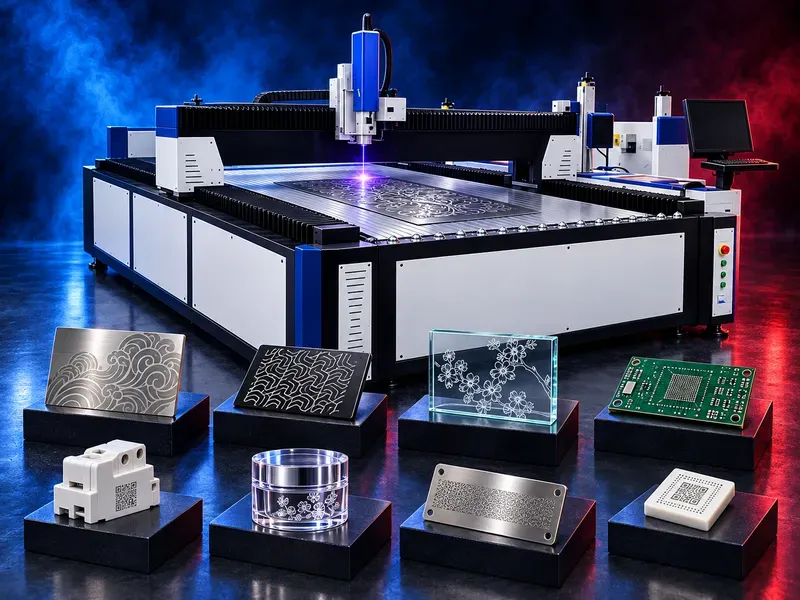
A gantry type UV laser marking machine combines an ultraviolet laser source with programmable large area motion for fine marking engraving or other verified microprocessing tasks. Correct selection depends on material response workpiece size mark content field stitching quality laser power and wavelength focus motion accuracy extraction cooling software safety and production volume.
EN The gantry positions the laser processing field across a large work area so one large component or multiple smaller parts can be processed in a controlled layout. Calibration between optical fields and mechanical axes is critical to avoid visible stitching or position error. UV laser processing can reduce the heat affected zone on some materials compared with longer wavelength methods but the result remains material and parameter dependent. It should not be described as heat free or damage free without evidence. Claims for a specific wavelength frequency conversion technology ultra fine accuracy high speed micro drilling glass segmentation silicon wafer cutting or suitability for food and medical packaging require verification from the exact source data application trials and compliance review.
What the machine does
The machine moves a UV laser marking field across a large programmed area to create approved marks engravings or microfeatures on compatible workpieces.
Marking capability should be separated from drilling cutting or material segmentation claims unless each process is verified.
UV laser source
Confirm laser architecture wavelength rated power pulse characteristics repetition range beam quality cooling and rated operating conditions. A commonly referenced UV wavelength or frequency conversion method must not be assumed for every source.
Source stability and service support affect long term mark consistency and availability.
Reduced thermal influence
Short wavelength UV energy can produce fine interaction with some polymers glass ceramics coatings and electronic materials using lower effective heat input. Material chemistry absorption and parameters still control discoloration cracking debris and heat effect.
Approve thermal limits through representative samples and inspection rather than a general cold marking claim.
Gantry and large working area
The gantry extends processing beyond one optical field by positioning the head or workpiece across programmed coordinates. Usable area load capacity clearance and axis travel must match the actual parts and fixtures.
Confirm repeatability straightness flatness acceleration cable management and safe travel limits.
Field stitching and calibration
Large graphics may be divided into adjacent laser fields. Optical distortion axis calibration focus variation and part flatness can create visible seams or misregistration between fields.
Define stitching tolerance calibration artefacts verification frequency and acceptance method for the largest artwork.
Focus and surface variation
UV marking quality depends on focal position spot size and surface height. Large or warped parts may require autofocus height mapping a controlled fixture or multiple focus zones.
Confirm permissible height variation focus method sensing range and collision protection.
Material compatibility
Provide the exact material grade composition color coating surface finish transparency thickness and safety data. Plastics glass ceramics coated metals semiconductor materials and packaging films can respond differently.
Approve each material finish and process through documented samples before production.
Marking engraving drilling and cutting
Surface marking and engraving generally require different energy settings from micro hole drilling glass scribing or wafer cutting. These advanced processes can require special optics motion debris control and process development.
Do not combine them into one capability statement without separate verified limits and acceptance samples.
Packaging applications
Marking food or medical packaging requires confirmation that the laser process does not compromise barrier performance cleanliness readability traceability seal areas or product safety. Regulatory and customer requirements may apply.
Validate the exact packaging structure ink adhesive and contents environment with the responsible quality and compliance teams.
Mark content and traceability
The system may create text graphics codes serial data or other patterns when software and optics support the required resolution and contrast. Code quality also depends on quiet zones cell size surface and verification method.
Use an appropriate verifier when a barcode or matrix code carries production or regulatory traceability.
Fixtures and batch processing
Fixtures should locate large parts or arrays repeatably without blocking the laser path or extraction. Multiple parts in one setup can improve handling efficiency only when every position remains in focus and within calibrated accuracy.
Confirm fixture datum loading error proofing changeover identification and inspection sampling.
Software and data integration
Confirm vector and raster formats variable data serialisation code generation layer control field stitching camera alignment user permissions recipes and communication interfaces.
Validate data flow and prevent duplicate missing or incorrect identifiers when marks are linked to production records.
Extraction debris and cleanliness
UV processing can generate fumes particles fragments or deposited residue depending on the material. Extraction filtration and local capture should protect people optics products and the workspace.
Sensitive packaging medical or semiconductor applications may require additional cleanliness controls verified by the responsible process owner.
Cooling and utilities
The laser source and optics may require controlled cooling while the machine also needs stable electrical power extraction and sometimes compressed air or process gas. Requirements depend on the exact configuration.
Monitor utilities and interlocks and stop processing when approved limits are not maintained.
Quality control
Inspect mark position dimensions contrast depth edge definition stitching registration readability surface damage debris and heat effect according to the approved application.
For drilling or cutting also inspect feature size taper cracks recast residue separation and affected zone using suitable metrology.
Productivity
Accepted output depends on mark area detail density field count axis travel focus changes loading fixture quantity data handling inspection and process parameters.
Measure accepted parts per shift on representative artwork rather than relying on nominal marking or travel speed.
Common process risks
Wrong material poor focus optical contamination calibration drift part movement inadequate extraction unstable cooling or incorrect data can cause faint marks distortion field seams debris cracks damaged surfaces or traceability errors.
Stop production and correct material optics calibration fixtures utilities or data when results fall outside acceptance criteria.
Safety and operator protection
The machine contains ultraviolet laser radiation high voltage moving gantry axes fumes particles hot spots and possible fragile material debris. A suitable enclosure interlocks emergency stops extraction guarding signage and personal protection must follow the verified laser class and risk assessment.
Never bypass interlocks. Procedures must cover setup focus calibration sample testing breakage response optics cleaning isolation and maintenance.
Installation and site readiness
Confirm floor load level access electrical supply earthing cooling extraction discharge permissions compressed air environmental temperature humidity cleanliness material storage workpiece handling and maintenance clearance.
Large travel requires protected machine boundaries and collision free routes for loading and service.
Training maintenance and lifecycle support
Training should cover material approval artwork recipes fixtures focusing calibration field stitching code verification quality checks safe recovery isolation and daily inspection.
Preventive maintenance should address optics source cooling axes rails drives encoders cables extraction filters sensors interlocks fixtures electrical connections and emergency devices. Prepare approved consumables and spares.
How to select the correct machine
Start with materials and safety data part sizes weights surface variation sample files mark or microprocess requirements quality criteria quantities data integration utilities floor plan cleanliness and compliance needs.
Selection should confirm source wavelength and power work area load capacity gantry accuracy optics focus stitching calibration fixtures extraction cooling software laser class service support and sample approval.
Technical information requiring verification
Verify laser wavelength architecture rated power pulse data work area axis travel load capacity marking field spot size focus method positioning and stitching data supported materials process limits speed software extraction cooling utilities dimensions and total weight.
Confirm laser class interlocks standards application qualification packaging compliance responsibilities installation commissioning training warranty service scope consumables spares and marking drilling cutting or glass and wafer acceptance tests as applicable.
Publishing status
This page describes the machine category process and selection logic. Exact wavelength technology power work area speed accuracy materials applications compliance utilities standards and commercial commitments require an approved data sheet safety documentation and technical review before publication.
Questions we are asked
What is a gantry UV laser marking machine?
It combines a UV laser marking field with programmable large area motion for fine marking engraving and other verified microprocessing tasks.
Why use a gantry system?
It can position one laser field across a larger work area but requires accurate axis calibration focus control and field stitching.
Is UV marking completely cold?
No. It can reduce thermal influence on some materials but heat effect remains dependent on material absorption and process parameters.
Can it cut glass or silicon wafers?
Only if the exact source optics motion process limits and sample results are verified for that application.
Is it suitable for food or medical packaging?
Suitability requires material testing and quality and compliance approval to confirm packaging integrity cleanliness readability and product safety.
What information is needed for selection?
Provide material data part sizes weights surface variation sample files quality criteria quantities data requirements utilities cleanliness and compliance needs.
Tell us the part you need to make
An engineer reads every request. Usually the same working day.
Related
- Industrial Marking Solutions Laser and industrial marking solutions selected according to the material, mark content, contrast, permanence, production speed, and integration requirements.
- CO2 Laser Engraving and Cutting Machine A CO2 laser engraving and cutting machine processes compatible nonmetal materials by directing a controlled laser beam over the workpiece. Correct selection depends on whether the task is engraving or cutting material composition and thickness required edge and mark quality work area laser power extraction cooling software and production volume.
- MOPA Fiber Laser Marking Machine for Precision & Color Marking MOPA fiber laser marking solution for precision marking, stainless-steel color marking, anodized aluminium blackening, controlled surface processing and selected electronics applications.