Short answer
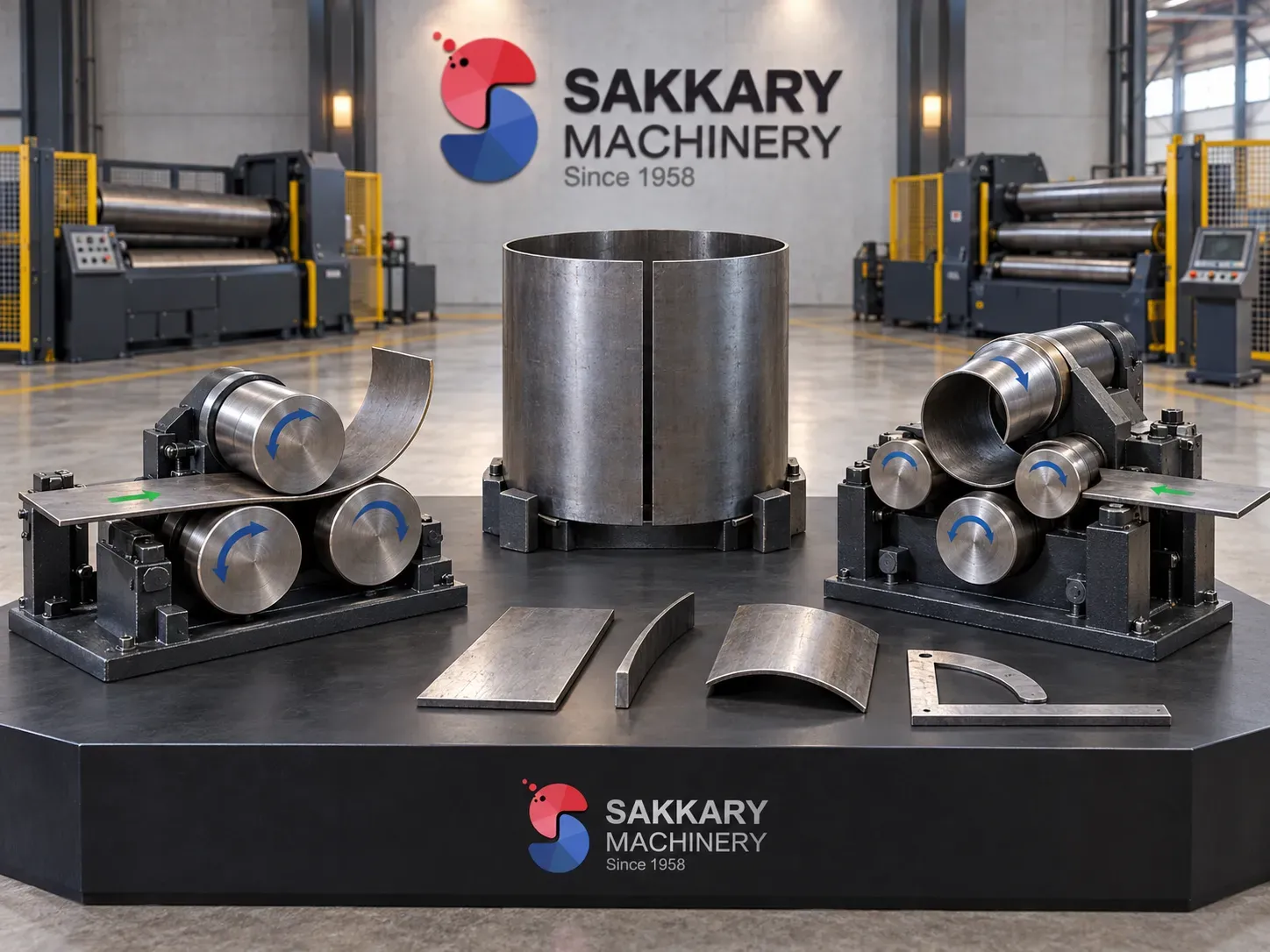
Roll count alone does not decide suitability. Define the material, thickness and width range, minimum and routine diameters, prebending allowance, remaining straight end, cone work, plate support, handling and repeatability, then verify trials and calculations.
Define the complete part
Record developed length, final diameter, roundness, seam preparation, straight-end allowance, orientation, weight and whether the job is cylindrical or conical.
Compare process sequence
Map loading, squaring, prebending, rolling, checking, removal and rerolling. Compare operator intervention and support requirements for the actual plate.
Verify capacity correctly
Capacity depends on material strength, thickness, width, diameter, roll geometry and process assumptions. Use the exact manufacturer's calculation and approved application review.
Decision inputs
• Material properties
• Thickness and width range
• Routine and minimum diameter
• Prebend and straight-end acceptance
• Cylinder or cone mix
• Plate handling and support
Frequently Asked Questions
Does four-roll always mean better?
No. It changes the process and handling, but fit depends on the application and verified configuration.
Can capacity be taken from thickness alone?
No. Width, strength, diameter and process assumptions are essential.
Next step
Send representative shell drawings and material data for an application review.
Suggested internal links
• Relevant machine category or solution page
• Closest published selection guide
• Relevant cost or maintenance article
• Technical request form
Sources and verification status
Sources used: SAKKARY MACHINERY controlled product-content schema and website governance, plus general process references. Any model-specific capacity, material, application or commitment must be verified against that exact model's official catalogue before publication. Status: Needs Verification.
Need a machine, tooling or a service visit?
Request a price