Blog Machinery Selection & Buying Guides
Fiber, CO2 or UV Laser Marking: Which Source Fits the Application?
1 min read
Short answer
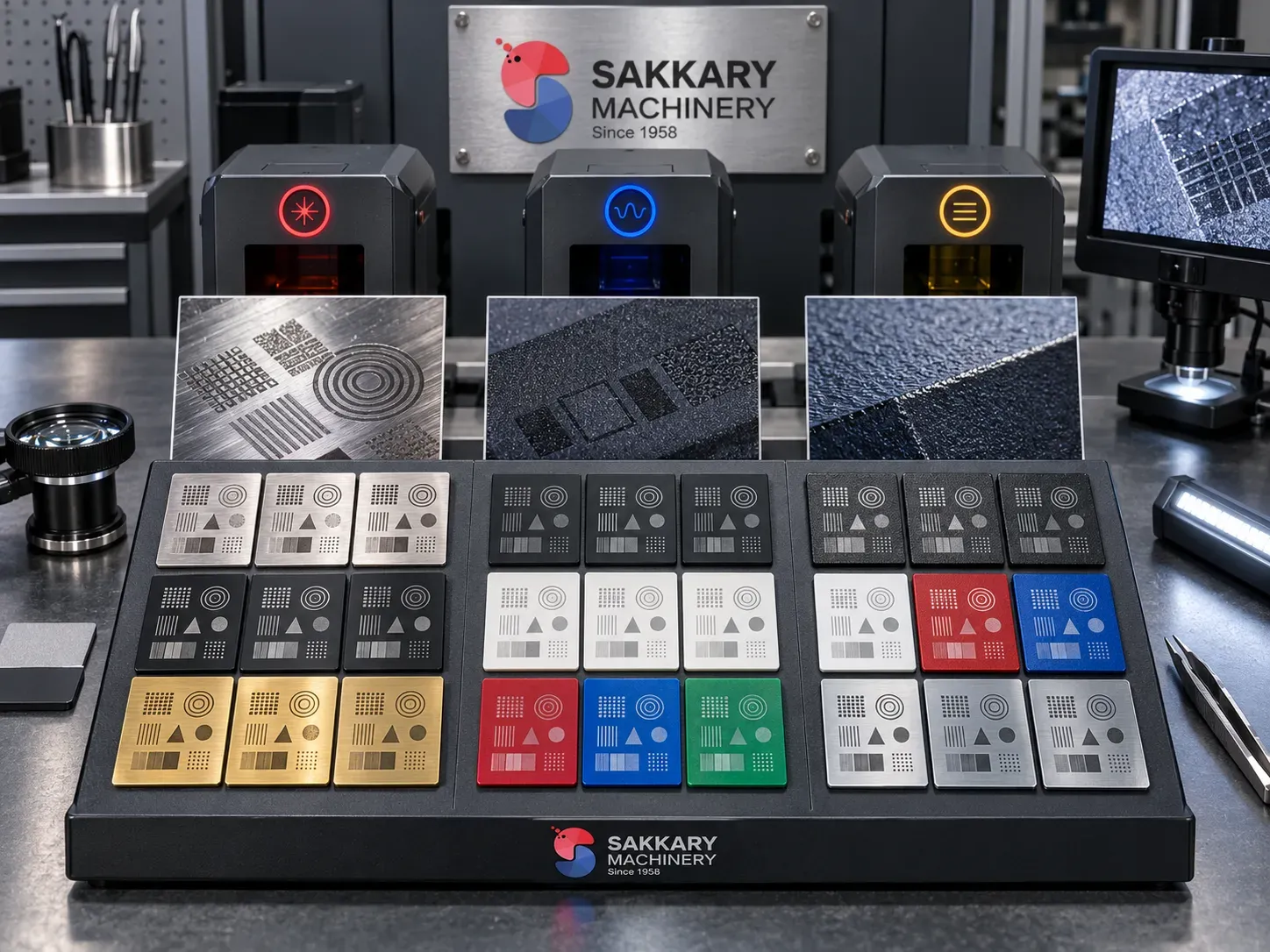
Source names are not substitutes for application testing. Define the substrate, coating, mark content, contrast, depth, permanence, readability, heat sensitivity, geometry and cycle; then validate samples using the exact proposed configuration.
Define the mark
Specify text, logo, code, serial, data matrix or traceability requirement, including size, grade, verification method and expected environment.
Test material interaction
Different metals, plastics, coatings and finishes respond differently. Use representative material batches and record visual, dimensional and functional effects.
Plan integration
Review focus, field size, part presentation, fixtures, guarding, extraction, vision, code data, line speed, rejects and rework. Safety controls must match the exact system.
Decision inputs
• Material and coating
• Mark type and permanence
• Contrast, depth and readability
• Part geometry and field size
• Cycle and data integration
• Safety, extraction and validation
Frequently Asked Questions
Is fiber laser only for metal?
Do not generalize; suitability must be proven on the actual substrate and configuration.
Can a visual sample prove code quality?
No. Codes should be verified using the required inspection method.
Next step
Send representative samples and the required mark file for controlled trials.
Suggested internal links
• Relevant machine category or solution page
• Closest published selection guide
• Relevant cost or maintenance article
• Technical request form
Sources and verification status
Sources used: SAKKARY MACHINERY controlled product-content schema and website governance, plus general process references. Any model-specific capacity, material, application or commitment must be verified against that exact model's official catalogue before publication. Status: Needs Verification.
Need a machine, tooling or a service visit?
Request a price