Blog Machinery Selection & Buying Guides
Hydraulic or Mechanical Press: How to Choose the Process
1 min read
Short answer
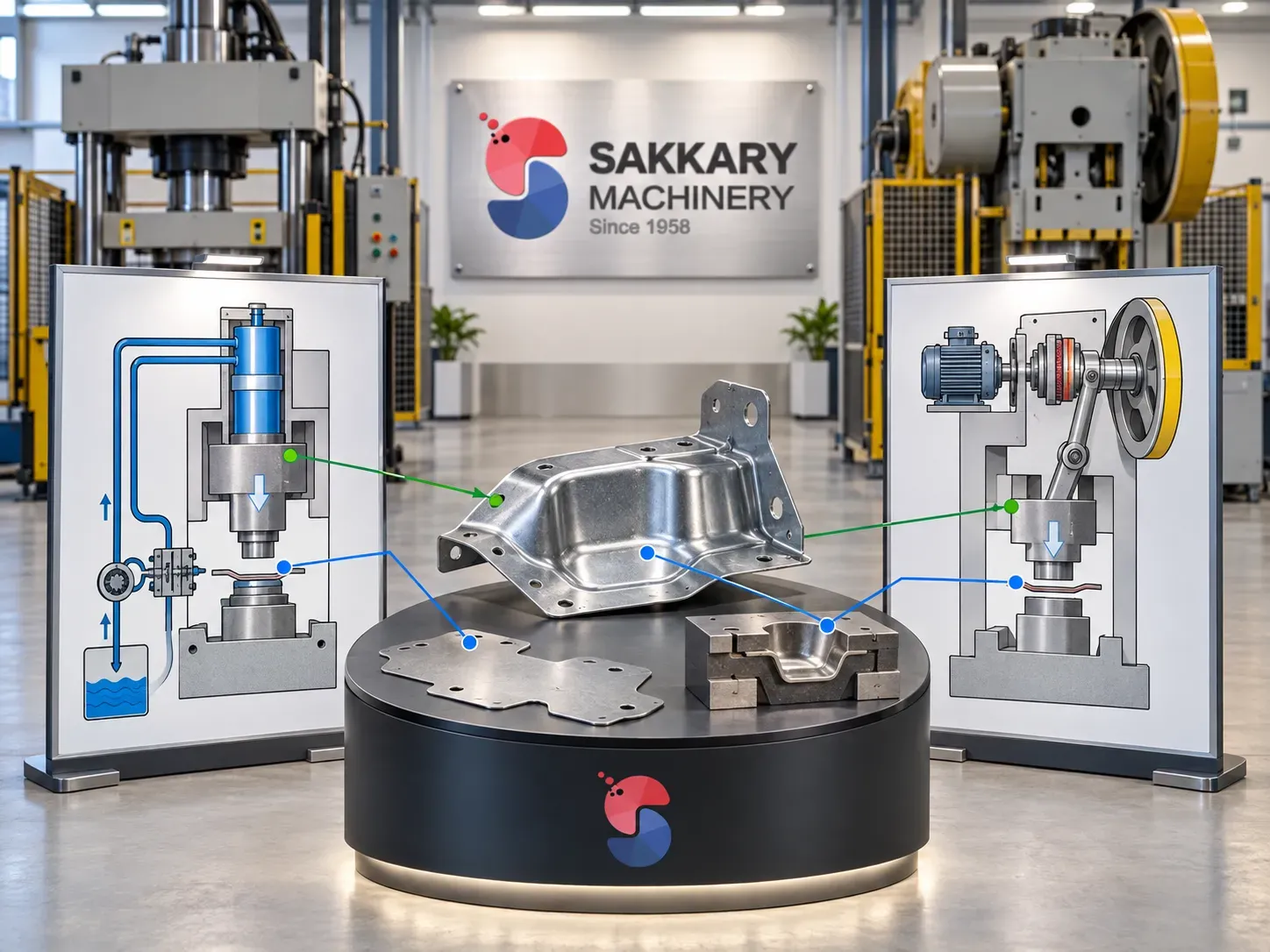
Choose the press from the forming process and die, not press type alone. Define force through the stroke, energy, speed, dwell, accuracy, part ejection, feeding and production rate, then match a verified press configuration and safety system.
Build the process load case
Document material, blank, operation sequence, force or energy calculation, stroke, shut height, bed area, off-center load and die weight using approved engineering methods.
Compare production behavior
Hydraulic and mechanical systems deliver force and motion differently. Compare the required profile, repeatability, speed, dwell and energy recovery against the actual operation.
Integrate die and feeding safety
Review guards, controls, die protection, feeding, transfer, lubrication, scrap, ejection and maintenance access. A press cannot be selected independently from its tooling and automation.
Decision inputs
• Part and forming sequence
• Approved force or energy calculation
• Stroke and die geometry
• Speed, dwell and output
• Feeding, transfer and ejection
• Safety and maintenance concept
Frequently Asked Questions
Is a higher tonnage always safer?
No. Capacity, structure, off-center loading, tooling and process control must all be verified.
Which press is faster?
Speed depends on the required motion, feeding, die and complete cycle.
Next step
Submit the part, material, die concept and production target for a controlled press review.
Suggested internal links
• Relevant machine category or solution page
• Closest published selection guide
• Relevant cost or maintenance article
• Technical request form
Sources and verification status
Sources used: SAKKARY MACHINERY controlled product-content schema and website governance, plus general process references. Any model-specific capacity, material, application or commitment must be verified against that exact model's official catalogue before publication. Status: Needs Verification.
Need a machine, tooling or a service visit?
Request a price