Short Answer
Before buying Press Brakes, fix the application, output, quality, site and cost data; normalize supply scope, trial a real sample, and document acceptance, training and support. A written checklist prevents unequal comparisons.
1. Application and part file
Required force changes with material, thickness, bend length, V-opening and bending method. Calculate actual cases with a suitable operating margin.
2. Capacity and configuration
Machine geometry, crowning, backgauge, tooling, material condition, program and operator capability work together.
3. Operation and auxiliaries
Compare tool change, program library, simulation, angle measurement and repeat families. In high-mix work, setup can matter more than motion speed.
4. Trial and acceptance
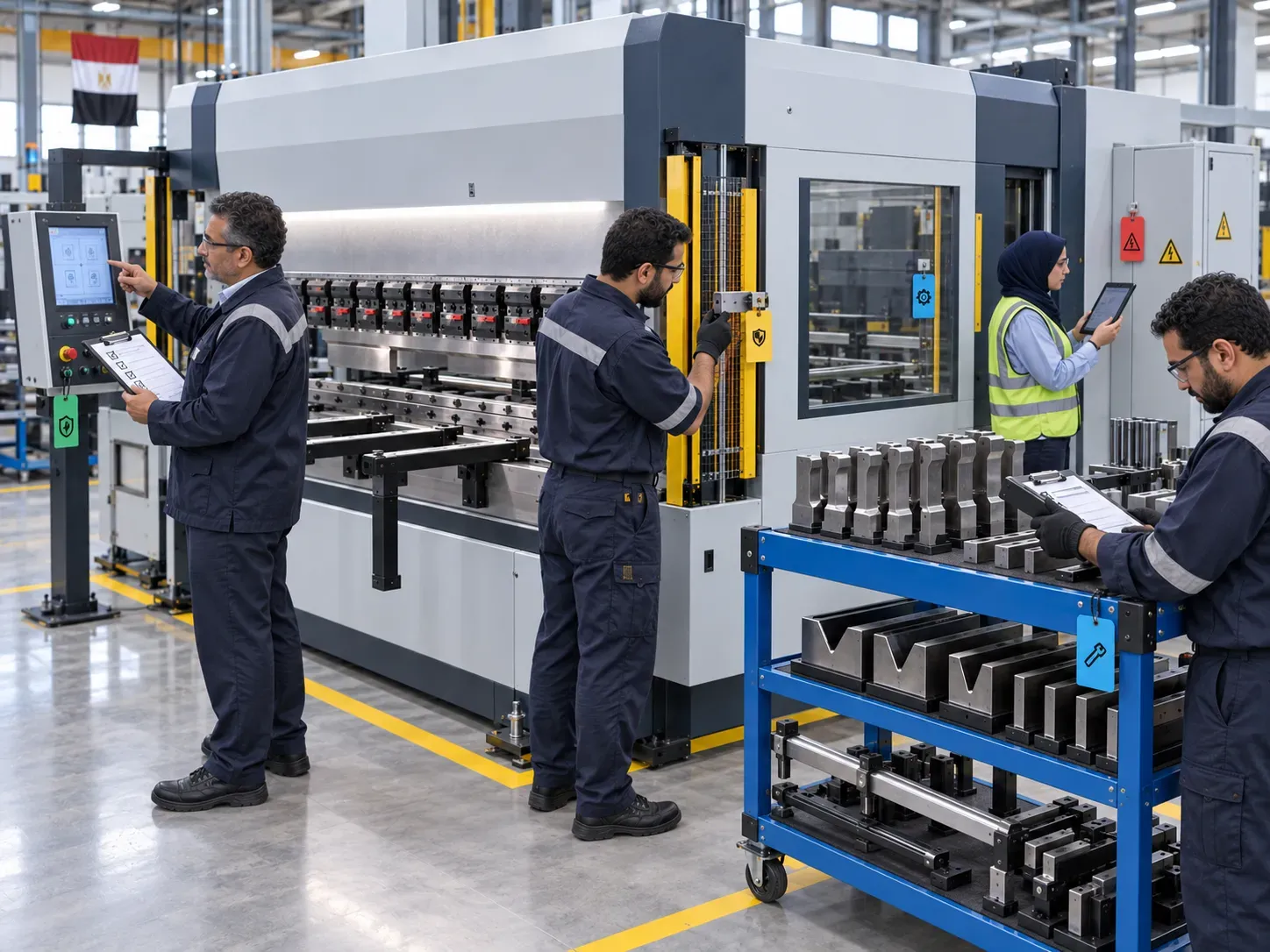
Review guarding and safe work procedures, then test long, short and feature-sensitive parts representative of production.
5. Supplier and support
Document site, installation, commissioning, training, warranty, spares, ticket channels and escalation responsibilities. Ask for named owners and closure records rather than verbal assurances.
6. Commercial decision
Compare total cost, payment terms, currency and collection risks where relevant, and time to stable production. Record why the option was selected and which assumptions will be measured after startup.
Frequently Asked Questions
Is price comparison enough?
No. Normalize application fit, supply scope, support and total cost.
When should the checklist be issued?
With the RFQ and before final comparison.
Who approves it?
Production, technical, finance, procurement and management according to investment risk.
Next Step
Share your part, material, target output and site requirements with SAKKARY MACHINERY for a technical review of press brakes.
Need a machine, tooling or a service visit?
Request a price