Blog Machinery Selection & Buying Guides
Press Brake Selection Guide for Sheet Metal Factories
1 min read
Short Answer
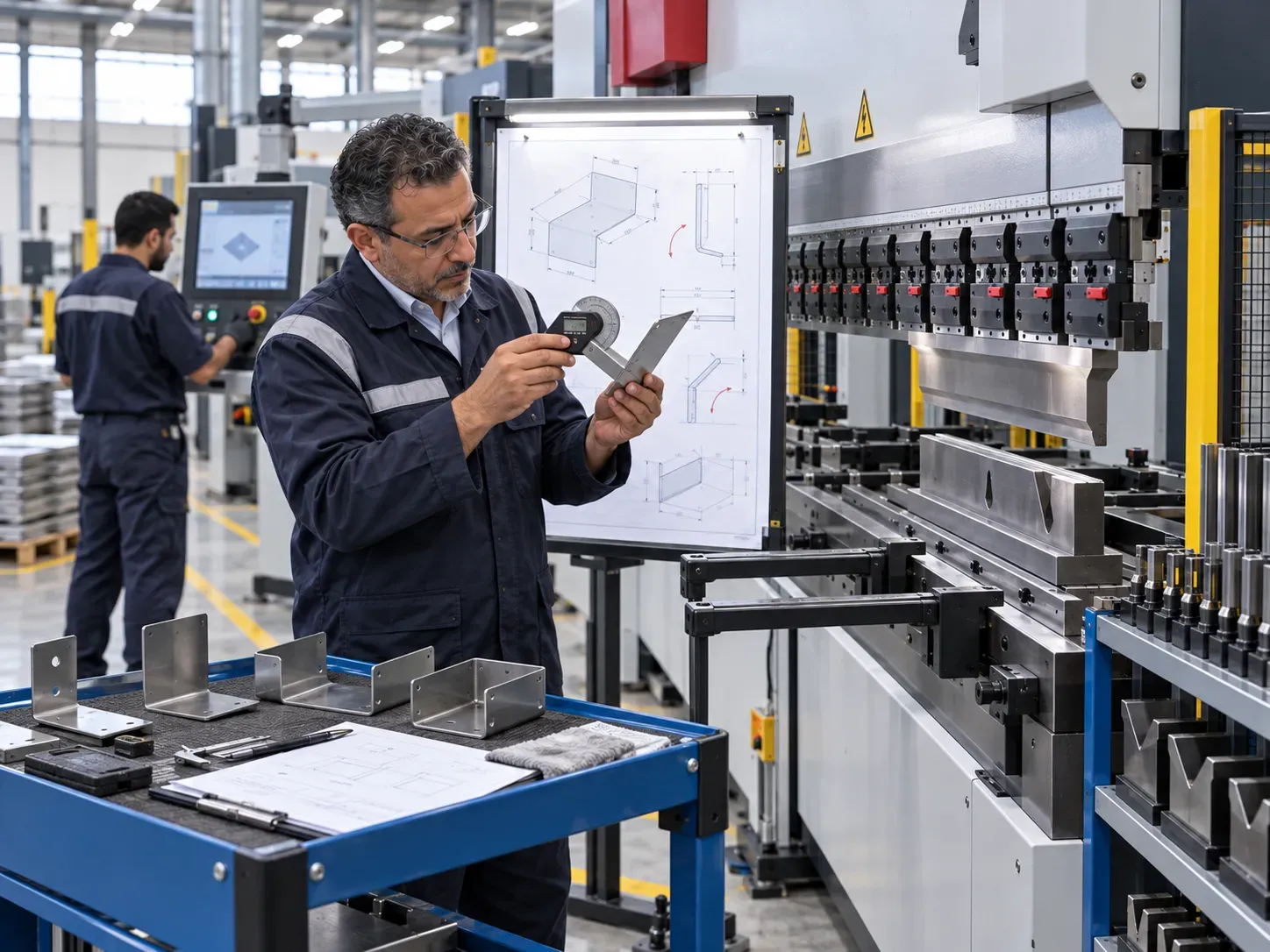
Press brake selection is based on the hardest part family: bend length, material, thickness, die opening and bending method. After tonnage, review axes, tooling, crowning, control, safety and setup speed.
Tonnage is not isolated
Required force changes with material, thickness, bend length, V-opening and bending method. Calculate actual cases with a suitable operating margin.
Accuracy comes from a system
Machine geometry, crowning, backgauge, tooling, material condition, program and operator capability work together.
Reduce setup time
Compare tool change, program library, simulation, angle measurement and repeat families. In high-mix work, setup can matter more than motion speed.
Safety and acceptance
Review guarding and safe work procedures, then test long, short and feature-sensitive parts representative of production.
Frequently Asked Questions
How is tonnage calculated?
From material, thickness, bend length, die opening and method; it should be professionally verified.
Are more axes always better?
Only when part geometry uses them to reduce setup or errors.
Why does tooling matter?
It affects angle, marking, radius and repeatability.
Next Step
Send part drawings and material-thickness data for a press brake range review.
Need a machine, tooling or a service visit?
Request a price