Short Answer
Laser welding can increase speed and reduce distortion in suitable applications, but it requires controlled joints, surface preparation and gaps plus strict optical safety, extraction and training. Trial your parts before deciding.
Evaluate the joint first
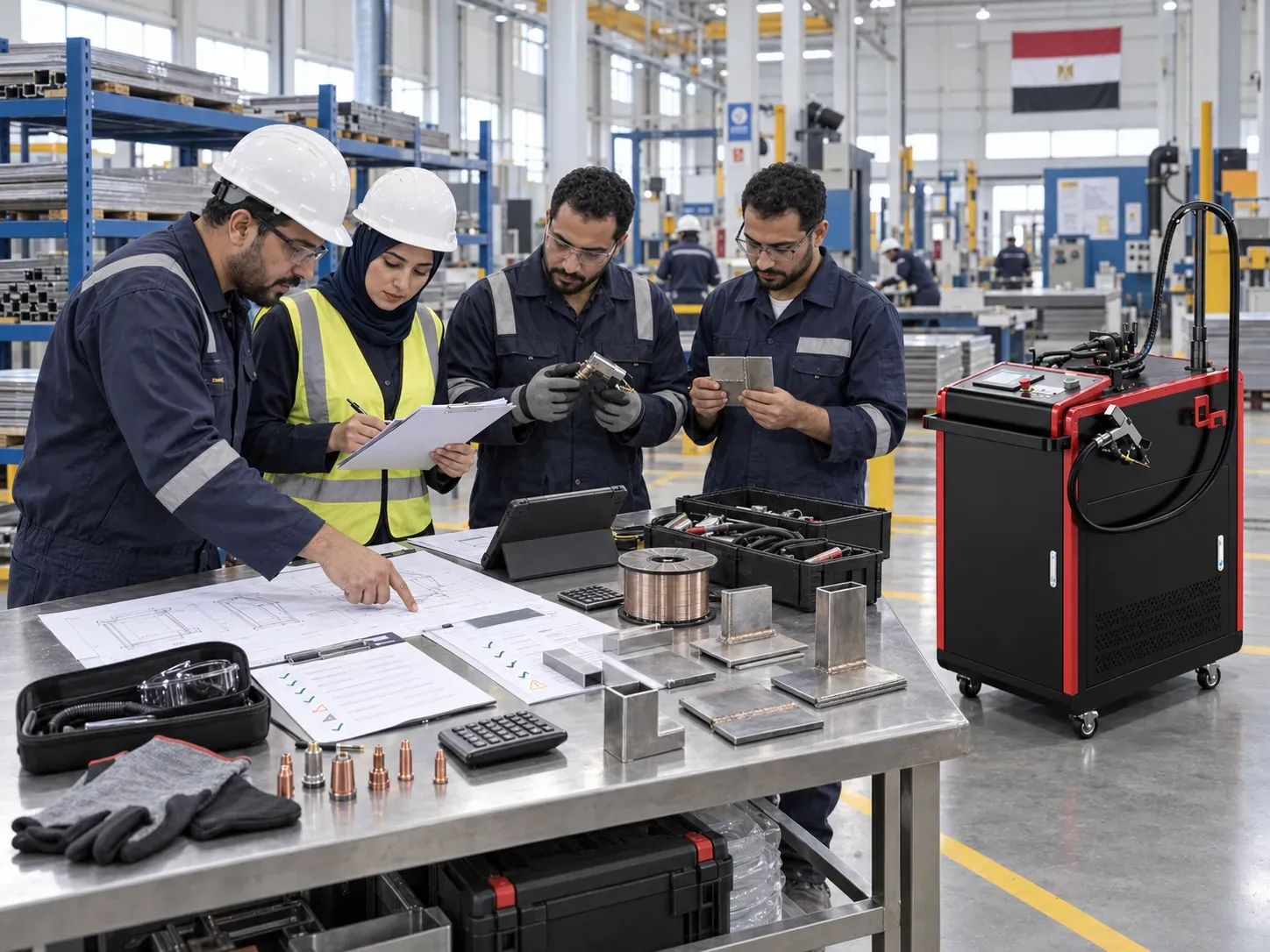
Define material, thickness, joint, gap, edge condition and access. Fit-up variation can influence results more than source power.
Compare the full process
Compare preparation, welding, cleaning, rework and inspection, not beam travel alone. Calculate cost per accepted part and distortion.
Safety is non-negotiable
Use a site risk assessment, suitable enclosure, approved protection, reflection control and fume extraction under supplier and local requirements.
Training and acceptance
Train operators in setup, operation, inspection and daily care. Define samples and quality tests appropriate to the application.
Frequently Asked Questions
Does it replace every welding process?
No. Fit depends on material, joint, gap, access and quality requirement.
Does distortion disappear?
No. It may be reduced in suitable applications but is not universally eliminated.
What is the first test?
A representative joint and material sample with defined quality inspection.
Next Step
Share joint images, material, thickness and quality requirements for a technical evaluation.
Need a machine, tooling or a service visit?
Request a price