Blog Machinery Selection & Buying Guides
How to Compare Woodworking Machinery Line Offers Fairly
1 min read
Short Answer
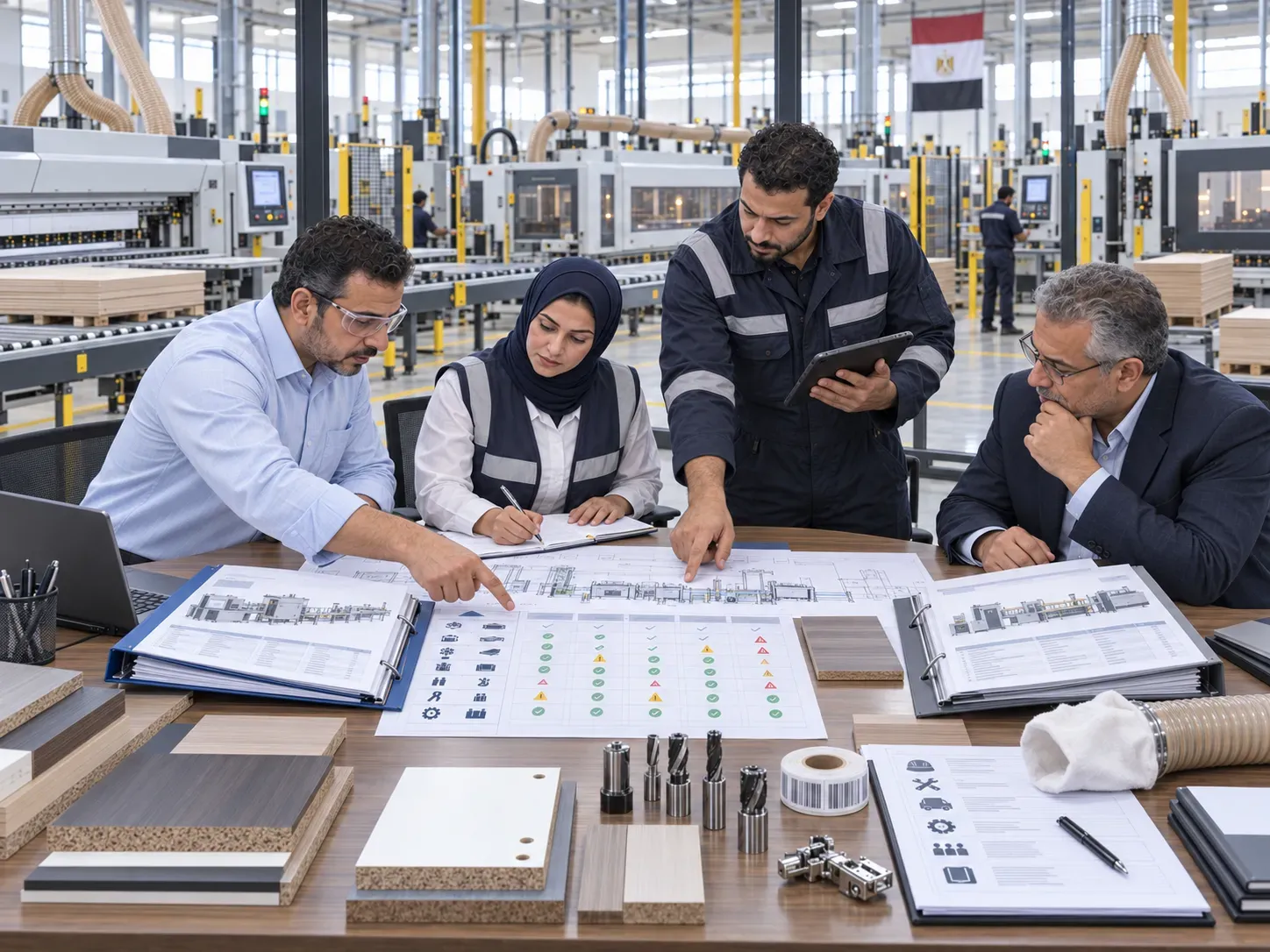
To compare Woodworking Machinery Lines offers fairly, standardize application data, supply scope and acceptance criteria, then score fit, good output, quality, auxiliaries, support, total cost and risk with declared weights.
Normalize scope
List included and excluded machine, auxiliaries, tooling, software, installation, training, warranty, freight and services.
Technical fit
Define products, sizes, materials, operations, sequence, inspection points, scrap and rework. Separate standard production from custom work.
Output and flow
Calculate good parts per hour at every station including loading, changeover and cleaning. Do not plan around one catalogue speed.
Solution completeness
Review dimensional accuracy, edges, adhesive and finish plus dust extraction, guarding, noise and safe handling. Dust affects quality, health and uptime.
Trial and support
Connect work orders, programs, cut lists and materials, with daily care, preventive maintenance and critical spares.
Cost and risk
Use total cost and a downside case. Score delay, currency, downtime, spares and skills risks. Do not weight price so heavily that it cancels trust and quality.
Frequently Asked Questions
Should a score be used?
Yes, with weights agreed before offers are opened.
How are different specifications compared?
Map every offer to common requirements and expose deviations.
When should the lowest price be rejected?
When it fails a critical requirement or creates higher cost or risk.
Next Step
Share your part, material, target output and site requirements with SAKKARY MACHINERY for a technical review of woodworking machinery lines.
Need a machine, tooling or a service visit?
Request a price