Short answer
The right bandsaw repeatedly cuts the real material mix to the accepted length, squareness and surface condition while fitting loading and downstream flow. Start with routine work, then verify the rare maximum.
Define the cutting envelope
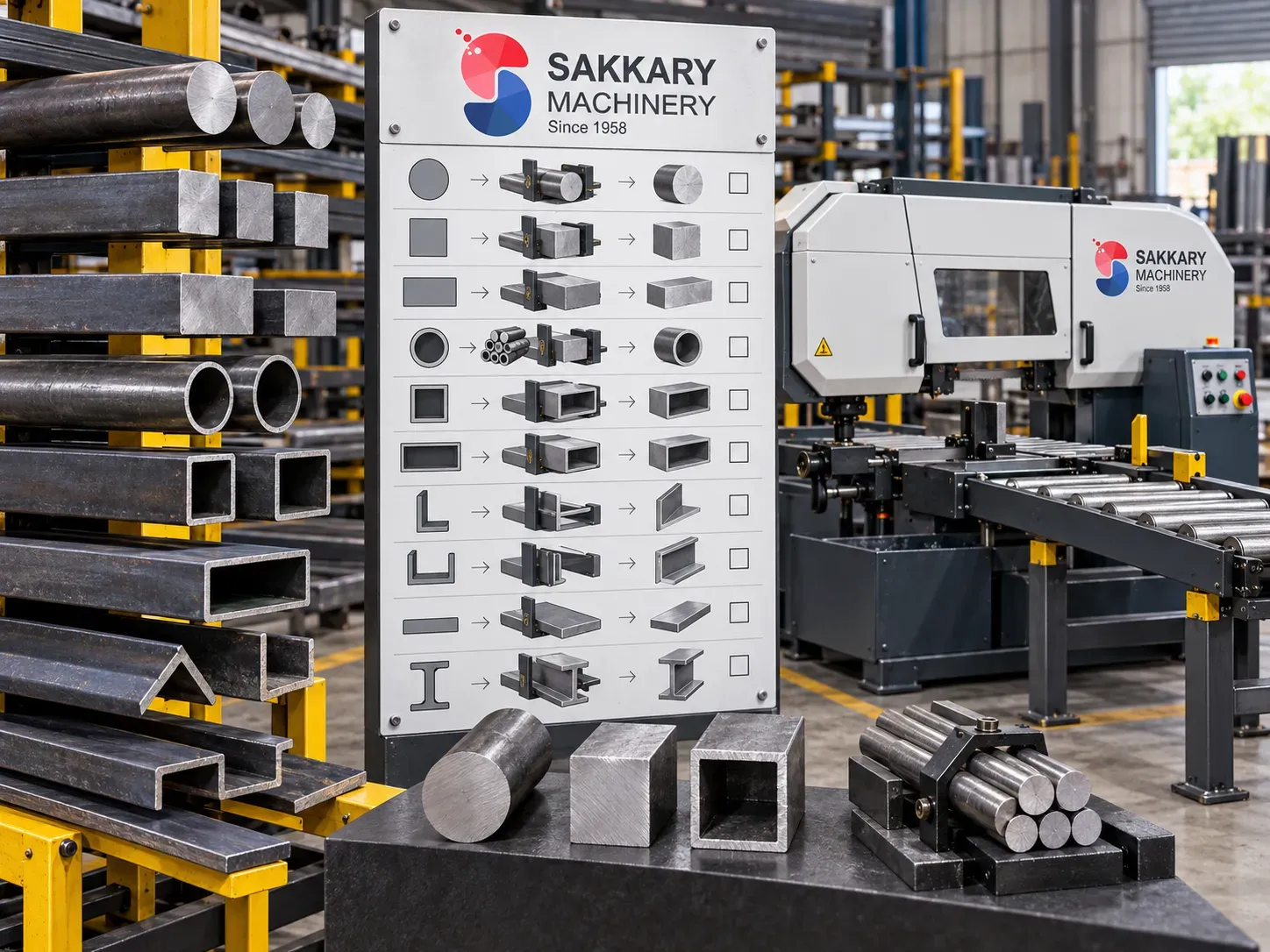
List solid bar, tube, profile and bundle dimensions, material grades, cut angles, length tolerance and surface protection. Separate routine and occasional cases.
Match blade and process
Use manufacturer-approved blade selection and cutting data for the material and section. Include break-in, tension, guides, coolant, chip removal and blade-life records.
Plan material movement
Review infeed and outfeed rollers, stock support, length stops, remnant handling, cranes and operator access. Handling can dominate cycle time and safety risk.
Decision inputs
• Material and section mix
• Routine and maximum capacity
• Angle and length requirements
• Bundle-cutting need
• Blade and coolant guidance
• Infeed, outfeed and handling
Frequently Asked Questions
Should the saw be sized only for the largest job?
No. Evaluate the routine mix and the cost of rare maximum work.
Is blade life a fixed number?
No. It depends on material, section, setup, cutting data and maintenance.
Next step
Send a representative cut list with materials, sections and quantities for saw selection.
Suggested internal links
• Relevant machine category or solution page
• Closest published selection guide
• Relevant cost or maintenance article
• Technical request form
Sources and verification status
Sources used: SAKKARY MACHINERY controlled product-content schema and website governance, plus general process references. Any model-specific capacity, material, application or commitment must be verified against that exact model's official catalogue before publication. Status: Needs Verification.
Need a machine, tooling or a service visit?
Request a price