Blog Machinery Selection & Buying Guides
Double-Head Saw or Aluminium Profile Machining Center?
1 min read
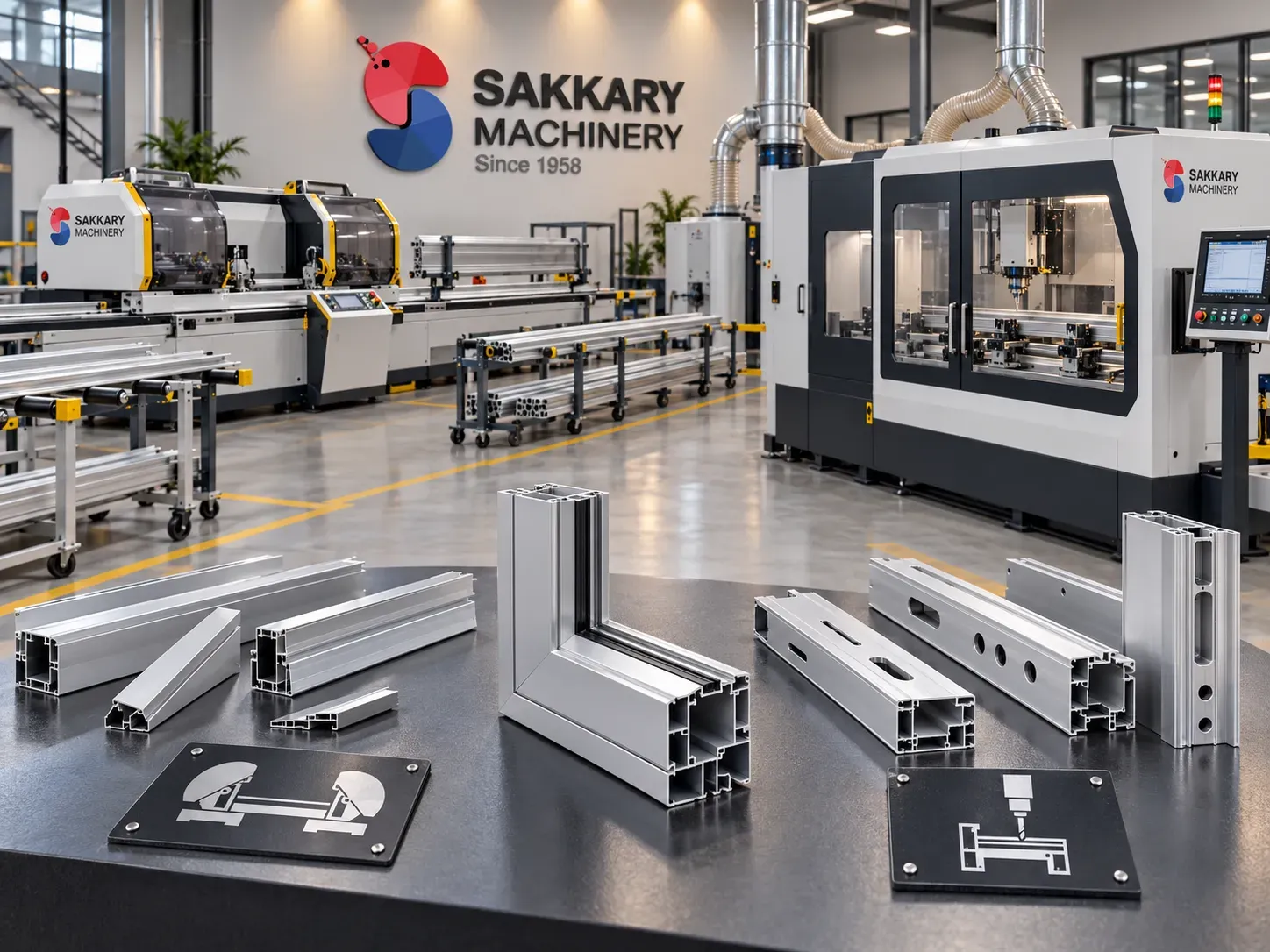
Short answer
A double-head saw focuses on productive length and angle cutting; a machining center can add drilling, milling and routing depending on its verified configuration. Many factories need a balanced combination rather than a simple replacement decision.
List every profile operation
Record cut angle, length, holes, slots, drainage, lock and hinge machining, end work and special features. Separate operations done before and after cutting.
Compare changeover and data
Measure profile setup, clamping, tool change, program creation, barcode or cut-list integration and operator handling for the real mix.
Check profile protection
Verify clamping, support and chip management on representative coated profiles, including visible surfaces and long or flexible sections.
Decision inputs
• Profile systems and sections
• Cut and machining feature list
• Length, angle and tolerance
• Batch mix and changeovers
• Programming and data flow
• Surface and handling requirements
Frequently Asked Questions
Does a machining center eliminate sawing?
Not necessarily; the answer depends on the verified machine configuration and production route.
Which is more accurate?
Accuracy must be defined for the accepted unit and proven by representative trials.
Next step
Submit representative profile drawings and routing for a controlled process comparison.
Suggested internal links
• Relevant machine category or solution page
• Closest published selection guide
• Relevant cost or maintenance article
• Technical request form
Sources and verification status
Sources used: SAKKARY MACHINERY controlled product-content schema and website governance, plus general process references. Any model-specific capacity, material, application or commitment must be verified against that exact model's official catalogue before publication. Status: Needs Verification.
Need a machine, tooling or a service visit?
Request a price