Short answer
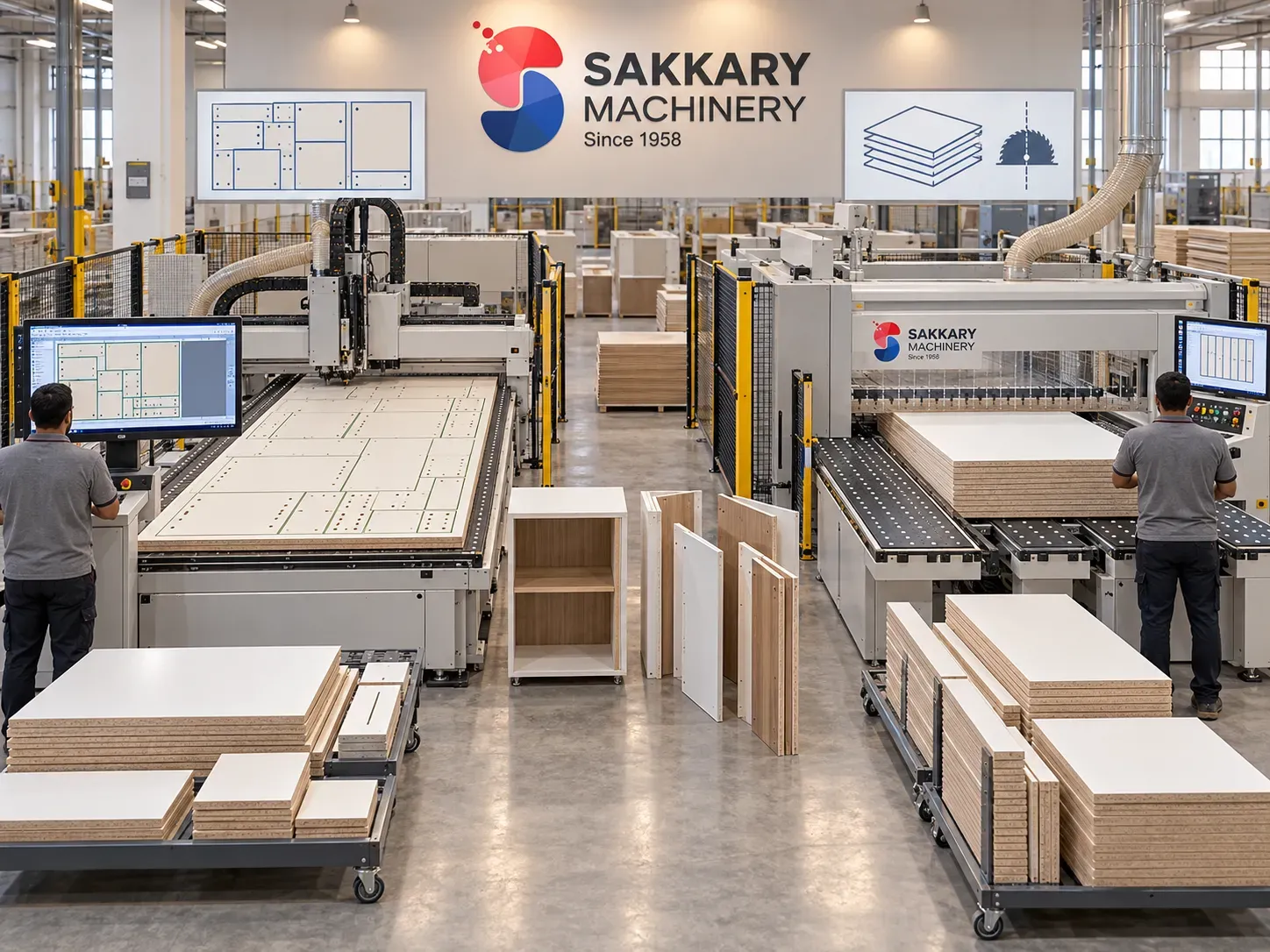
Nesting can combine contouring, routing and drilling on individual sheets, while a beam saw can be strong for repeatable stacked rectangular cutting. The right process depends on mix, batch pattern, secondary operations and the capacity of edging, drilling and assembly.
Separate rectangular and routed parts
Measure how much work is rectangular cutting versus shaped parts, pockets, drilling or grooves. Include how often designs change and how parts are identified.
Compare yield and handling
Use the same order mix to compare sheet yield, remnants, loading, unloading, labels, sorting and labour. Do not compare only machine cycle time.
Test downstream impact
Confirm whether edging and drilling can absorb the release pattern. A faster cutting method may increase sorting and queues.
Decision inputs
• Rectangular versus routed part share
• Batch size and variation
• Board mix and nesting yield
• Drilling and routing content
• Loading, labels and sorting
• Downstream capacity
Frequently Asked Questions
Is nesting only for small batches?
No. Suitability depends on the complete part mix and integrated operations.
Is a beam saw always faster?
Not for every order; compare the full route and accepted sets.
Next step
Run both alternatives against one representative order mix before selecting the process.
Suggested internal links
• Relevant machine category or solution page
• Closest published selection guide
• Relevant cost or maintenance article
• Technical request form
Sources and verification status
Sources used: SAKKARY MACHINERY controlled product-content schema and website governance, plus general process references. Any model-specific capacity, material, application or commitment must be verified against that exact model's official catalogue before publication. Status: Needs Verification.
Need a machine, tooling or a service visit?
Request a price