

Precision TIG Welding Solutions
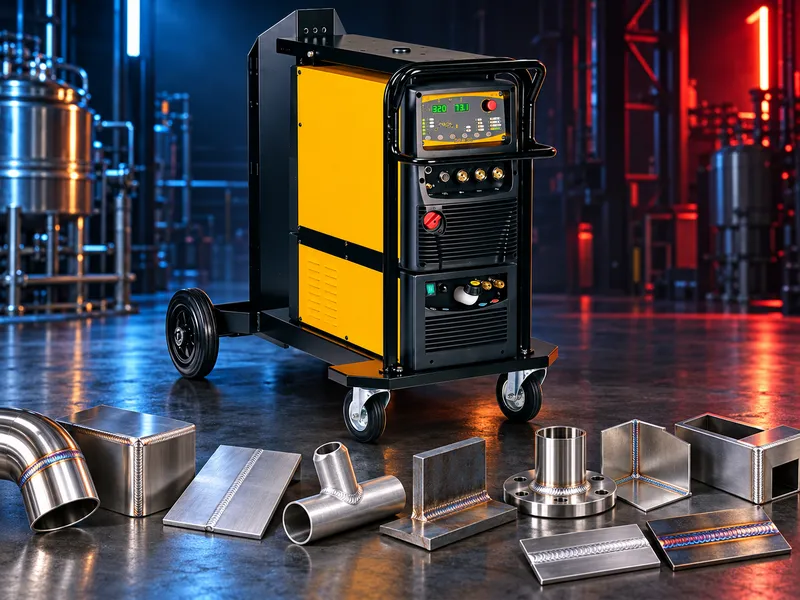
TIG AC/DC Multifunction Welding Machine
Professional inverter welding solution for TIG AC, TIG DC and MMA welding, designed for precision welding applications across different metals, thicknesses and industrial production requirements.
TIG AC/DC welding machines provide a versatile solution for precision welding applications by combining TIG AC, TIG DC and MMA welding in one system. TIG AC operation is suitable for applications requiring alternating-current TIG welding, while TIG DC provides controlled welding performance with advanced pulsed welding functions. Depending on the machine configuration, high-frequency pulsed TIG can provide improved arc control and reduced heat input when welding thin materials. Advanced functions such as Pulsed TIG, Synergic Pulsed TIG, Dynamic Arc, Quick Start, Multi-Tack and Quick Spot can support different welding stages, from initial joining and tack welding to controlled welding of thin components. These welding systems are suitable for precision fabrication and industrial applications including high-precision construction, petrochemical applications and food-industry fabrication.
Welding Processes
- TIG AC welding
- TIG DC welding
- Pulsed TIG DC
- Synergic Pulsed TIG
- MMA welding
Typical Applications
- Precision metal fabrication
- Thin sheet welding
- High-precision construction
- Petrochemical applications
- Food-industry fabrication
- Industrial equipment
- Stainless steel fabrication
- Applications requiring controlled heat input and accurate TIG welding
Advanced TIG Functions
Pulsed TIG
Pulsed TIG alternates welding current according to controlled pulse parameters, providing additional control over the welding process and heat input.
High-Frequency Pulsed TIG
Depending on machine specification, high-frequency pulsed TIG can be used for welding thin materials with controlled arc behavior and reduced heat input.
Synergic Pulsed TIG
Synergic Pulsed TIG uses pre-set balanced parameters to simplify pulsed welding, allowing the operator to adjust the welding process primarily through the welding current.
Quick Start
Quick Start assists during the initial joining stage. The welding system temporarily uses a controlled pulsed mode to support formation of the initial joint, particularly where joint preparation or gaps are not completely uniform.
Multi-Tack
Multi-Tack uses a sequence of short arc strikes separated by cooling intervals to reduce heat input during joining of light-gauge components and help limit thermal deformation.
Dynamic Arc
Dynamic Arc automatically modifies welding current in response to changes in arc voltage, helping maintain controlled welding power as the arc length changes.
Quick Spot
Quick Spot is designed for rapid tack welding of light-gauge sheet. A short, controlled high-current pulse creates the tack while limiting heat transfer to the surrounding material.
TIG AC Functions
Advanced TIG AC systems can include specialized functions designed to improve control of the weld pool, penetration and welding behavior on different applications.
Cooling & System Configuration
Depending on the machine specification and application, the welding system can be configured with:
- Welding power source
- TIG torch
- Water cooling unit
- Welding trolley
- Electrode holder
- Remote control
- Gas regulator and flowmeter
- Torch controls
- Related TIG welding accessories
How to Choose a TIG AC/DC Welding Machine
- 1. Identify the metals to be welded.
- 2. Determine the minimum and maximum material thickness.
- 3. Define whether TIG AC, TIG DC or both are required.
- 4. Determine whether MMA welding is required.
- 5. Define the required welding current range.
- 6. Determine whether pulsed TIG is required.
- 7. Specify the required duty cycle.
- 8. Select air- or water-cooled torch configuration according to the application.
- 9. Identify the required remote controls and accessories.
- 10. Confirm the electrical supply before final machine selection.
Questions we are asked
What is a TIG AC/DC welding machine?
A TIG AC/DC welding machine provides alternating-current and direct-current TIG welding within one system and can also include MMA welding depending on the machine configuration.
What is the difference between TIG AC and TIG DC?
TIG AC uses alternating current, while TIG DC uses direct current. The appropriate process depends on the material and welding application.
What is Pulsed TIG welding?
Pulsed TIG alternates the welding current according to controlled pulse settings, providing additional control over the weld pool and heat input.
Why is pulsed TIG useful for thin materials?
Higher-frequency pulsed TIG can provide more controlled arc behavior and lower heat input, which is useful when welding light-gauge components.
What is Multi-Tack used for?
Multi-Tack uses short arc strikes with intervals between them to reduce heat input during joining and help limit deformation of light-gauge components.
What is Quick Spot used for?
Quick Spot is intended for fast, controlled tack welding, particularly on light-gauge sheet metal.
What should I consider when choosing a TIG AC/DC welding machine?
Consider the materials, thickness range, required TIG AC/DC processes, welding current, pulse requirements, duty cycle, cooling system, electrical supply and required accessories.
Tell us the part you need to make
An engineer reads every request. Usually the same working day.
Related
- Robotic Welding Solutions Flexible robotic welding solutions configured around the workpiece, welding process, production volume, and handling requirements. Available concepts include collaborative robots, positioners, industrial workstations, and gantry-based systems.
- Handheld Fiber Laser Welding Machine Handheld fiber laser welding solution for joining metal sheets, tubes and fabricated components with a concentrated laser beam and controlled heat input.
- Automated Continuous Fiber Laser Welding Machine Automated continuous fiber laser welding solution for repeatable welding of metal components, with configurable process parameters and an optional wobble welding head for wider process control.