

Robotic Welding Workpiece Handling
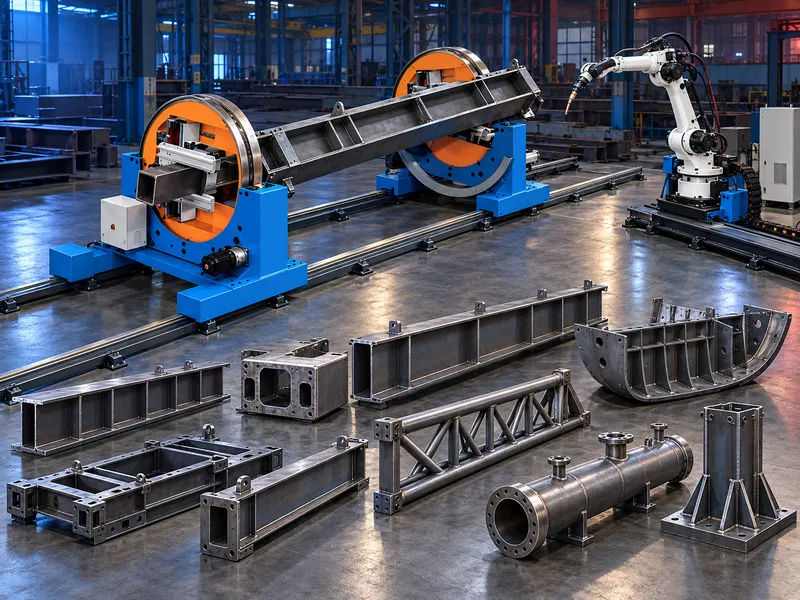
Automatic Steel Structure Flipping & Repositioning Machine for Robotic Welding
Automatic flipping and repositioning equipment for steel structural parts, designed to work with intelligent robotic welding workstations and reduce workpiece handling and repositioning time during automated welding.
The Steel Structure Flipping Machine is designed for automatic flipping and repositioning of steel structural parts used in steel structure buildings, ships, bridges, mechanical equipment and other heavy fabrication applications. The equipment works together with an intelligent robot welding workstation, allowing the workpiece to be rapidly flipped or repositioned before the welding robot continues the next welding operation. By reducing repeated handling and repositioning, the system helps shorten non-welding time and improve the utilization of robotic welding equipment. Two equipment configurations are identified in the supplied source: Double-Axis Rotation Head & Tail Positioner and Double-Arm Hydraulic Tilting Machine.
Applications
- Steel structure fabrication
- H-beams and structural components
- Large welded assemblies
- Steel building structures
- Shipbuilding structures
- Bridge components
- Mechanical equipment structures
- Robotic welding production lines
- Heavy metal fabrication
Main Functions
- Automatic workpiece flipping
- Automatic workpiece repositioning
- Workpiece positioning between welding operations
- Integration with intelligent robotic welding workstations
- Reduced handling between welding sequences
- Faster preparation for subsequent weld positions
- Support for automated robotic welding workflows
Available Configurations
Double-Axis Rotation Head & Tail Positioner
Designed to support and rotate suitable structural workpieces between head and tail units, providing controlled repositioning for different welding orientations.
Double-Arm Hydraulic Tilting Machine
Uses a double-arm hydraulic tilting arrangement to flip and reposition suitable steel structural components for subsequent robotic welding operations.
The correct configuration should be selected according to workpiece weight, dimensions, geometry, center of gravity, required rotation or tilting movement and welding process.
Integration with Robotic Welding
- Load and secure the workpiece.
- Position the workpiece for the first welding operation.
- Robot performs the programmed welding sequence.
- Flipping equipment repositions or turns the workpiece.
- Robot continues welding from the new orientation.
- Repeat the sequence as required by the workpiece and welding program.
Production Benefits
- Reduces time required for workpiece flipping and repositioning
- Improves utilization of robotic welding equipment
- Supports automated handling between welding operations
- Can reduce reliance on repeated overhead-crane handling for suitable applications
- Supports consistent workpiece positioning
- Suitable for integration into automated steel fabrication workflows
- Helps reduce manual intervention during welding production
How to Select the Correct Flipping System
- Maximum workpiece weight
- Workpiece length, width and height
- Workpiece geometry
- Center of gravity
- Required rotation or tilting angle
- Required positioning method
- Welding positions
- Robot working envelope
- Loading and unloading method
- Production cycle
- Required integration with the welding workstation
Send the workpiece drawing, dimensions, weight and required welding positions to determine the appropriate flipping and positioning configuration.
Questions we are asked
What is a steel structure flipping machine?
It is auxiliary workpiece-handling equipment designed to flip and reposition steel structural parts between robotic welding operations.
Why is a flipping machine used with a welding robot?
It allows the workpiece to be repositioned so the welding robot can access different weld locations and orientations without relying on repeated manual repositioning.
What types of steel structures can it handle?
It is intended for steel structural components used in buildings, ships, bridges, mechanical equipment and other fabrication applications. Exact suitability depends on workpiece dimensions, weight and geometry.
What configurations are available?
The supplied information identifies two configurations: Double-Axis Rotation Head & Tail Positioner and Double-Arm Hydraulic Tilting Machine.
Can it replace an overhead crane for workpiece turning?
For suitable workpieces and correctly engineered installations, the flipping system can reduce reliance on overhead-crane handling for repeated turning and repositioning. The actual handling method must be selected according to workpiece weight, dimensions, center of gravity and site requirements.
Can it work with an intelligent robot welding workstation?
Yes. The equipment is described as being used together with an intelligent robot welding workstation for automatic flipping and repositioning between welding operations.
How do I choose between a Head & Tail Positioner and a Hydraulic Tilting Machine?
Selection depends on the workpiece geometry, weight, dimensions, center of gravity, required movement and welding positions.
What information is required before selecting the machine?
Provide the workpiece drawing, maximum dimensions, weight, center of gravity where available, required welding positions and production requirements.
Tell us the part you need to make
An engineer reads every request. Usually the same working day.
Related
- Robotic Welding Solutions Flexible robotic welding solutions configured around the workpiece, welding process, production volume, and handling requirements. Available concepts include collaborative robots, positioners, industrial workstations, and gantry-based systems.
- Handheld Fiber Laser Welding Machine Handheld fiber laser welding solution for joining metal sheets, tubes and fabricated components with a concentrated laser beam and controlled heat input.
- Automated Continuous Fiber Laser Welding Machine Automated continuous fiber laser welding solution for repeatable welding of metal components, with configurable process parameters and an optional wobble welding head for wider process control.