Blog Feasibility, Costing & ROI
What Determines the Operating Cost of CNC Milling Machines?
1 min read
Short Answer
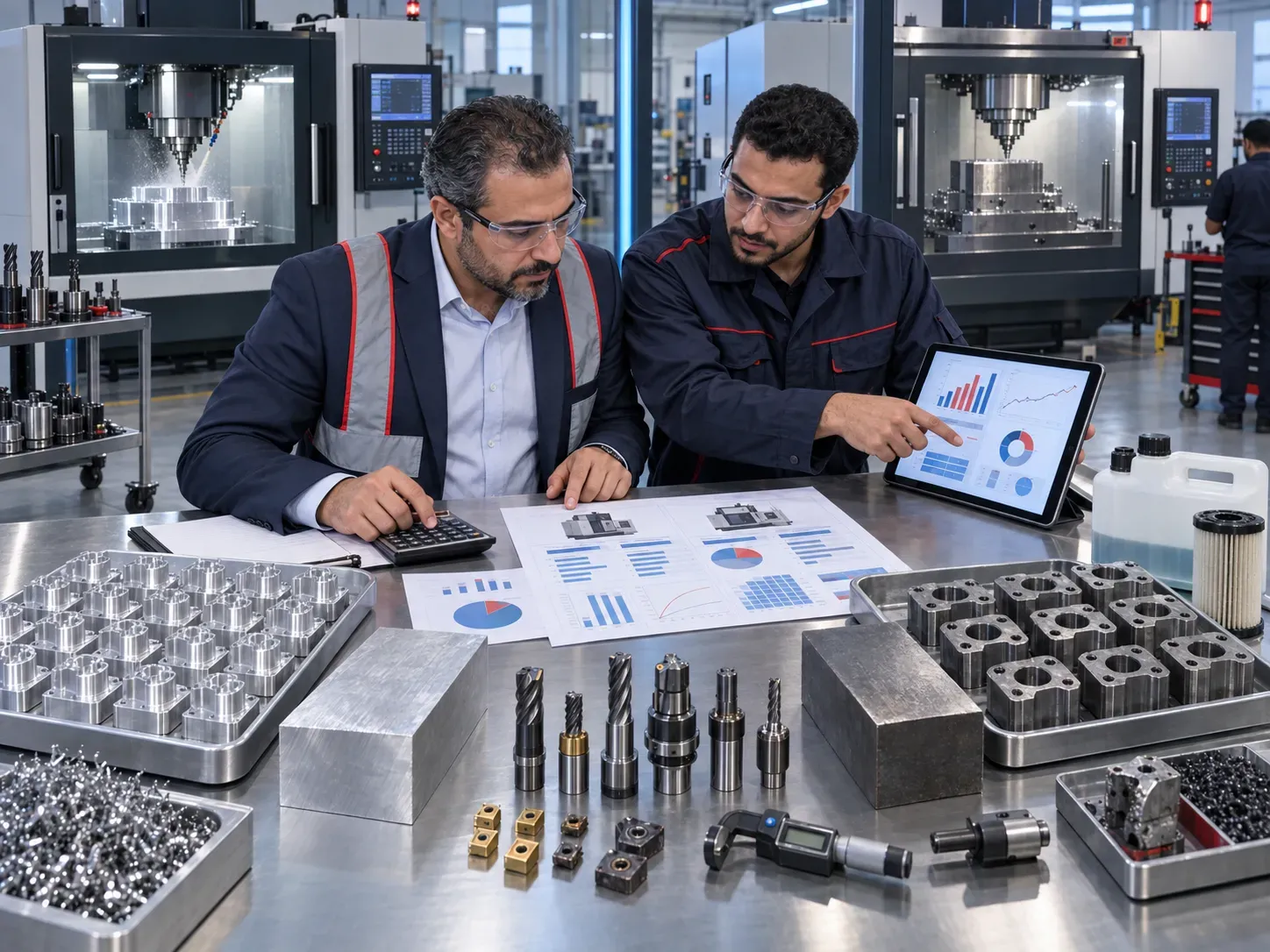
CNC Milling Machines operating cost is not only power or consumables. Calculate cost per good part or productive hour from investment, financing, material, energy, tooling, labor, maintenance, scrap, downtime and support.
Investment and capital
Spread purchase, site work, tooling, software, training and financing over realistic utilization, not theoretical maximum output.
Variable operating cost
Speed and torque depend on material, tool diameter and cutting mode. Build a complete tooling, probing, coolant and CAM plan.
Productivity and utilization
Compare vertical, horizontal and multi-axis configurations by required setups. Travels alone are insufficient; verify workholding area, tool access, table load and chip evacuation.
Quality and scrap
Collect drawings for the product family, including work envelope, combined fixture weight, material, cutting depth, holes, finishes and tolerances.
Maintenance and downtime
Define a test part, dimensional acceptance, cycle time, operator and maintenance training, plus preventive maintenance and critical spares.
Decision equation
Cost per good part equals all relevant period costs divided by accepted parts. Stress-test utilization, exchange rate and downtime.
Frequently Asked Questions
What is the best cost unit?
Good part, good metre or productive hour according to the process.
Is catalogue consumption enough?
No. Use trials, actual readings and an operating range.
How often should cost be updated?
Monthly or after material, currency, utilization or downtime changes materially.
Next Step
Share your part, material, target output and site requirements with SAKKARY MACHINERY for a technical review of CNC milling machines.
Need a machine, tooling or a service visit?
Request a price